After spending two weeks on the island of Madeira we flew back to Lisbon where we picked up a leased car and headed south on what is going to be a six week journey around the southwest, south, and east coast of the Iberian Peninsula. This blog post is for the first part of that trip – nine days in southern Portugal. For the first two of those days we visited the Alentejo region, including several southwest coast villages and the incredible beach cliffs at Odeceixe . Then we headed down to the Algarve Region which comprises the entire south coast of Portugal. We based ourselves at an AirBnB in a town called Quarteira, which put us within about 90 minutes drive from each end of the Algarve. Over the course of the week, we visited several towns, all the way between the far southwest village of Sagres and the far southeast town of Vila Real de Santo António at the border of Spain. In each town we walked their main plaza area(s) and beach promenades, and usually sat for a coffee and a coke. We were pleasantly surprised by the amount of greenery we saw – there are a lot of trees both in the countryside and in the towns.
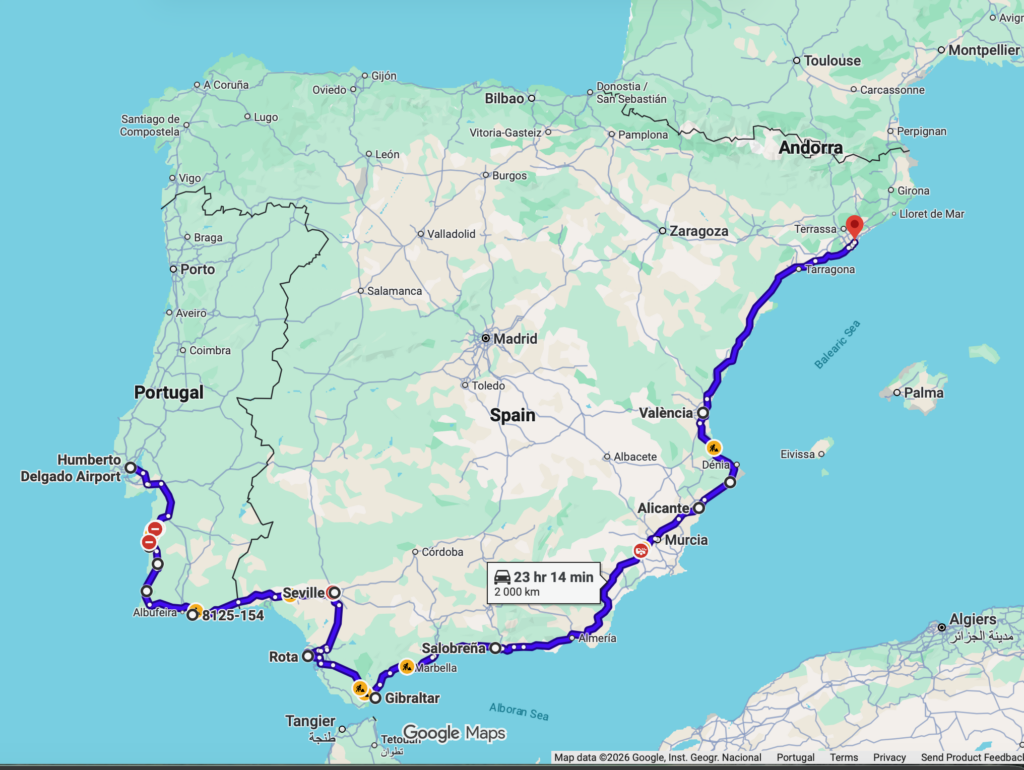
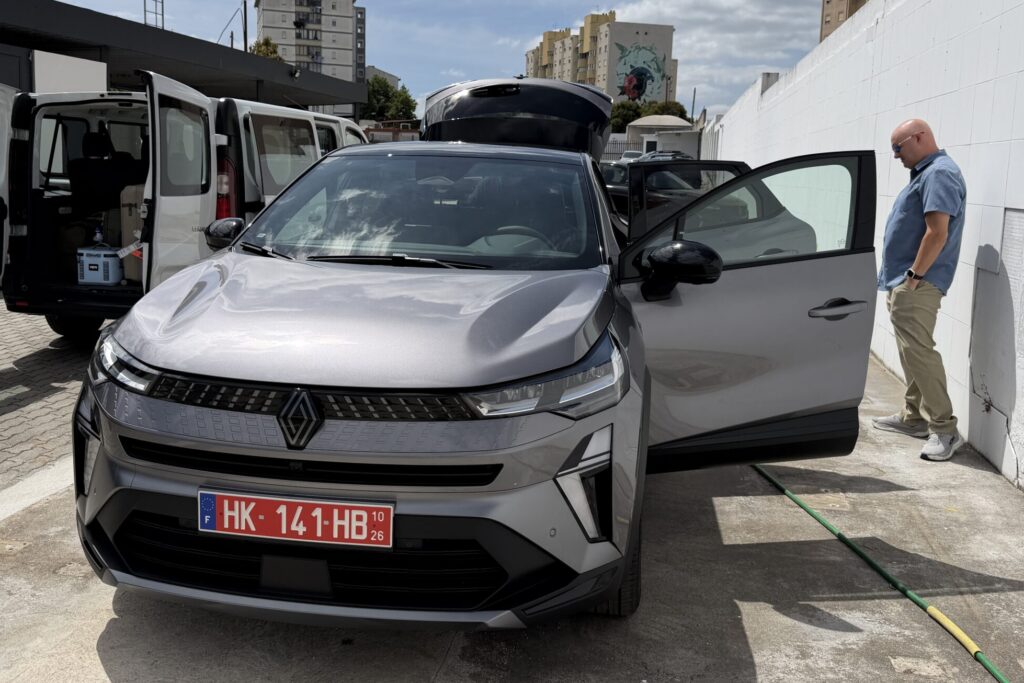
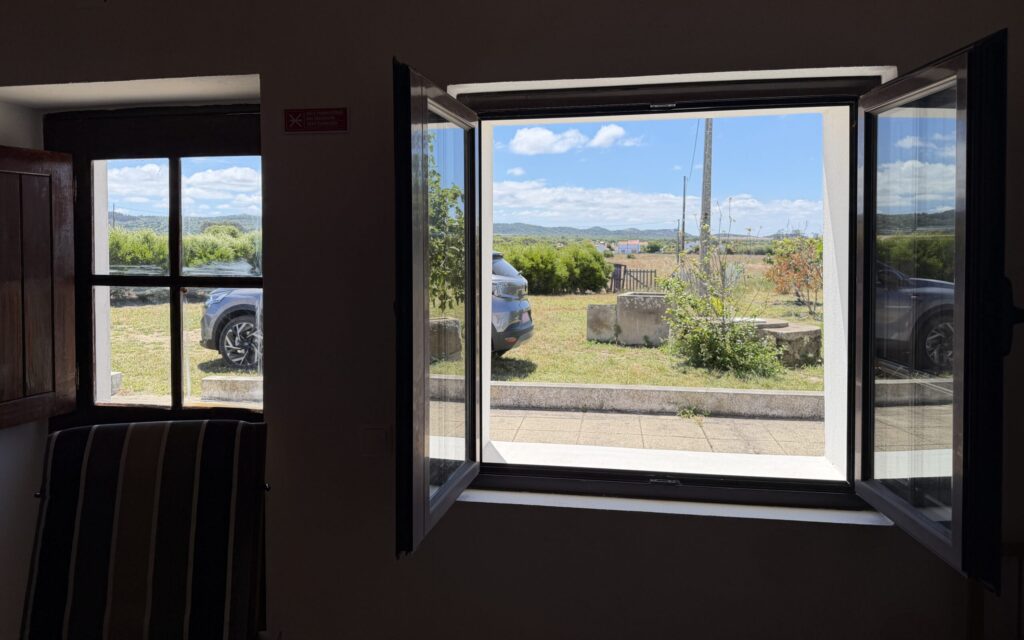
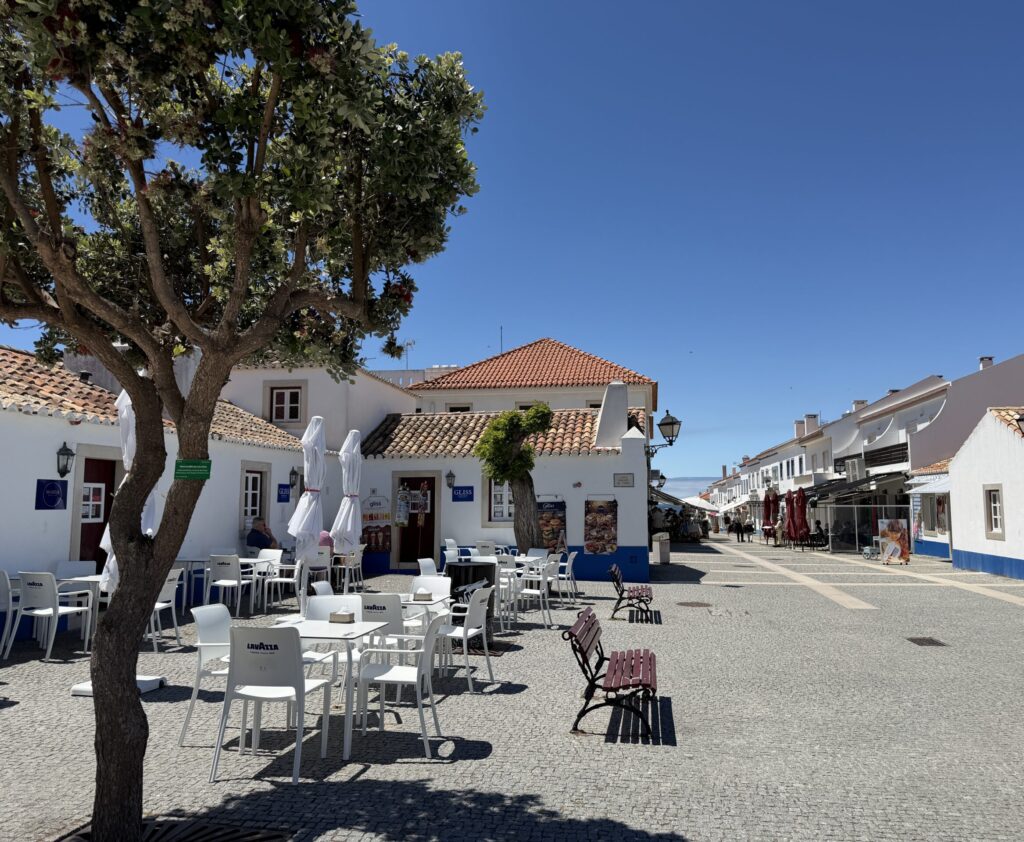
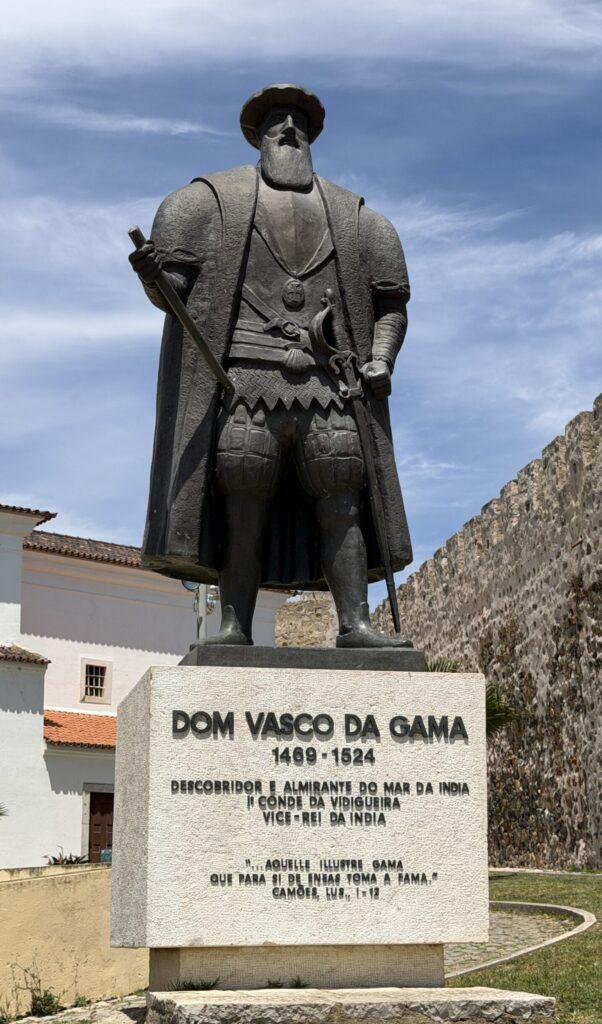
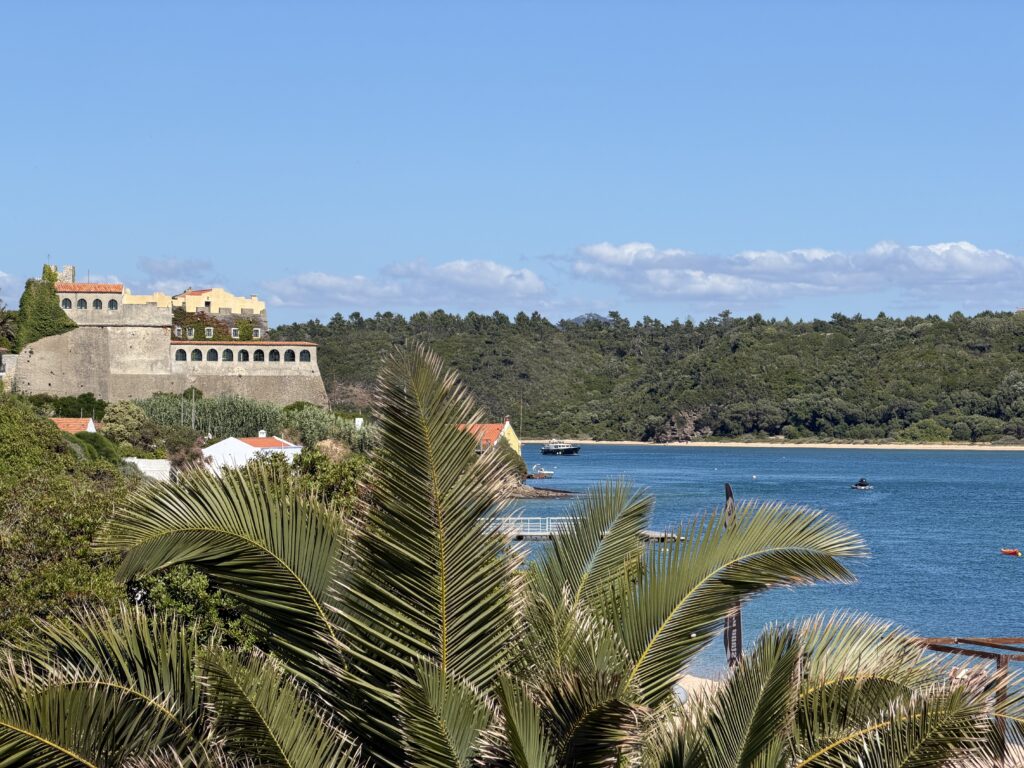
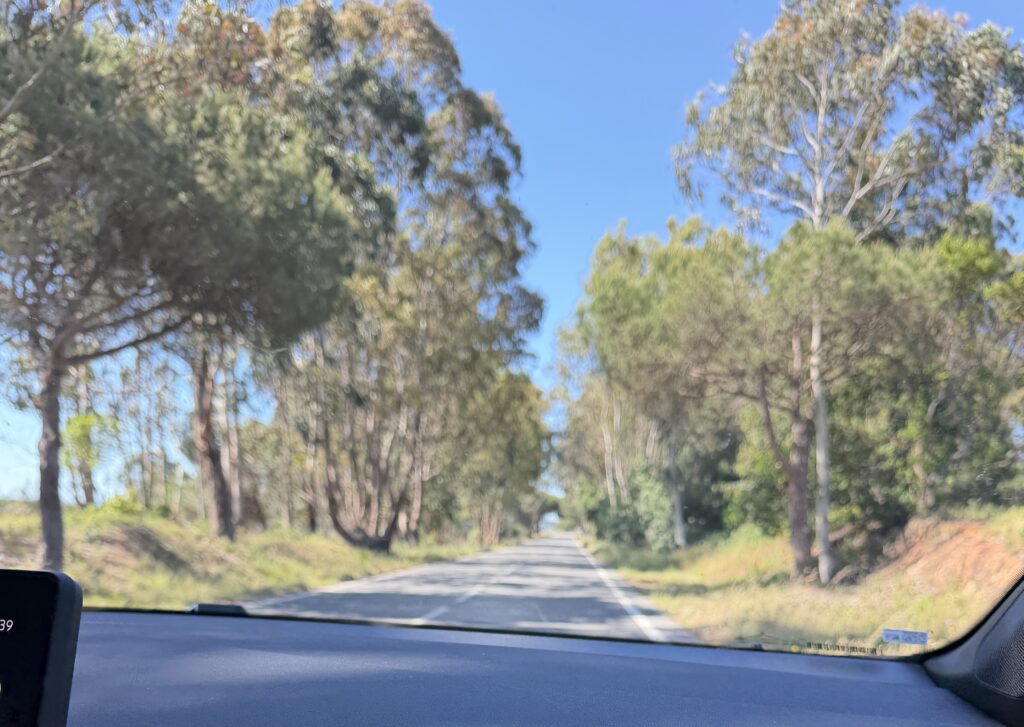
This is a general depiction of the entire route we are in the process of following in our rental car from Lisbon to Barcelona. It will take 44 days and we will stay in six different places. This particular blog post covers just the section in Portugal. Coastal Spain and Gibraltar will be covered in future posts.Our car is actually a leased vehicle from Renault (a “Captur” hybrid) They have a program, called Renault Eurodrive, that allows non-European Union citizens to lease a car in one of several cities in Europe and then return it in a different city. Regular car rentals in Europe are not normally allowed to be returned in a different country from where it was picked up so using this particular program allowed us to do a one way rental. The red license plate surprised us – it apparently flags us as non-European and on a lease.Our first two nights back on the mainland of Portugal were spent in a coastal area about two hours south of Lisbon. Our AirBnB was a traditional typical Alentejo house located in the rural area of Porto Covo, on a small hill overlooking the Cercal mountain range to the east and the sea to the west. Our closest neighbor was at least 400 meters (1/4 mile) away – and yet we were only a 5-10 minute drive into the nearby village of Porto Covo.The small town of Porto Covo has a year round population of about 1,100 people. It had a charming plaza and main street with excellent restaurants. Most importantly, though, it marks the northern end of what is called “The Fisherman’s Trail” (Trilho dos Pescadores). It is a 230 km (143 miles) long-distance coastal hiking route in southwestern Portugal. The trail hugs the Atlantic coastline through the Alentejo and Algarve regions, and is celebrated as one of the most breathtaking coastal trails in the world.Just a few miles north of Porto Covo is the town of Sines, a historic port city on the Alentejo coast of Portugal. It was the birthplace of one of the most famous European explorers of the end of the 15th century, Vasco da Gama. Sines is also a major industrial hub with a lot of oil refineries and huge docks. We found it difficult to enjoy the charm of the beach and harbor while ignoring the huge industrial infrastructure immediately next to it. It is a good example of how different a place can look in person versus what you read about.Vila Nova de Milfontes is another small coastal town along the “Fisherman’s Trail”, about 20 minutes south of Porto Covo. This particular view shows how green the coastal area is.We were very pleasantly surprised by the amount of trees in the landscape throughout both the Alentejo and Algarve regions.
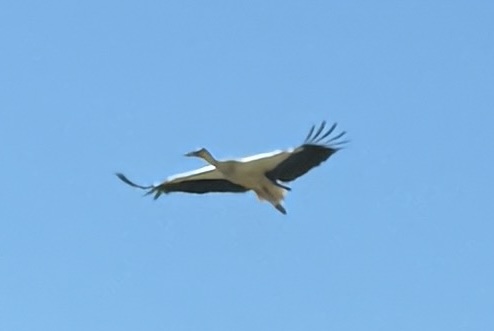
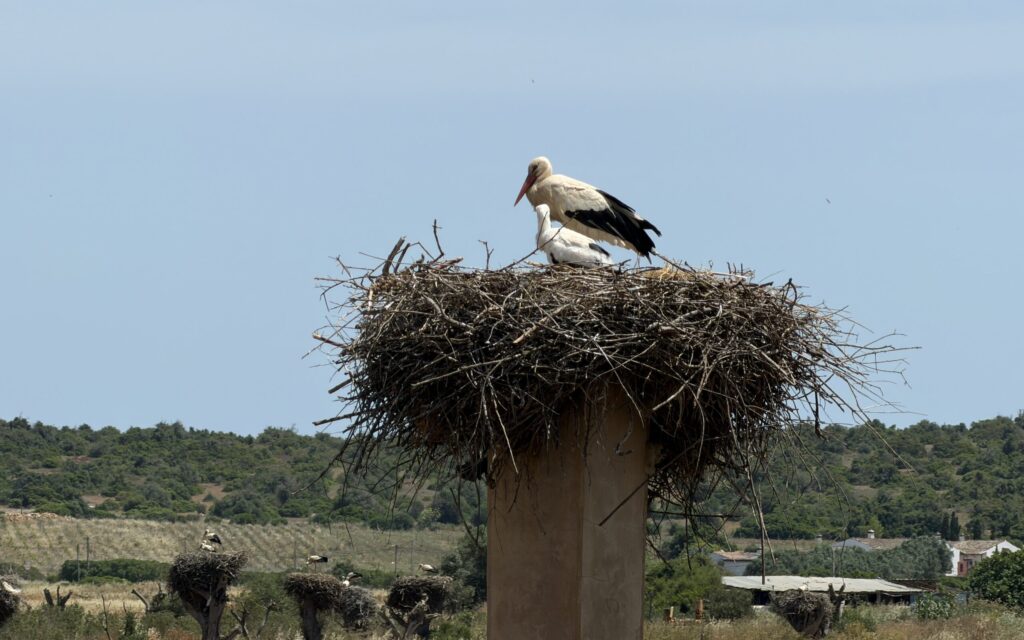
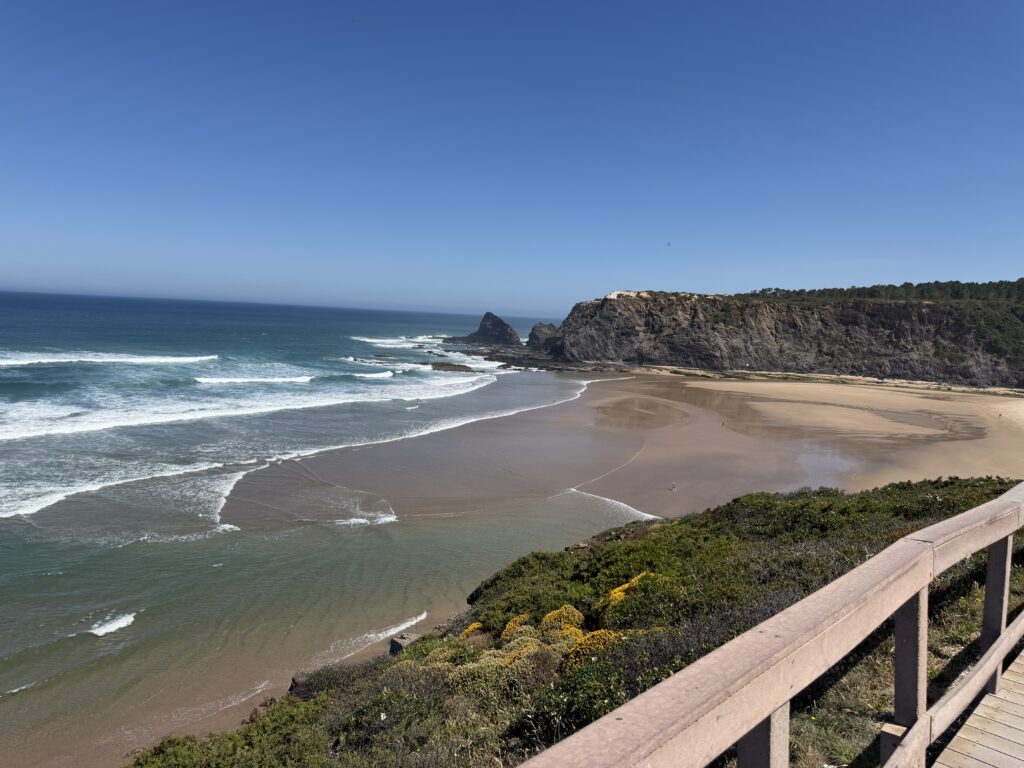
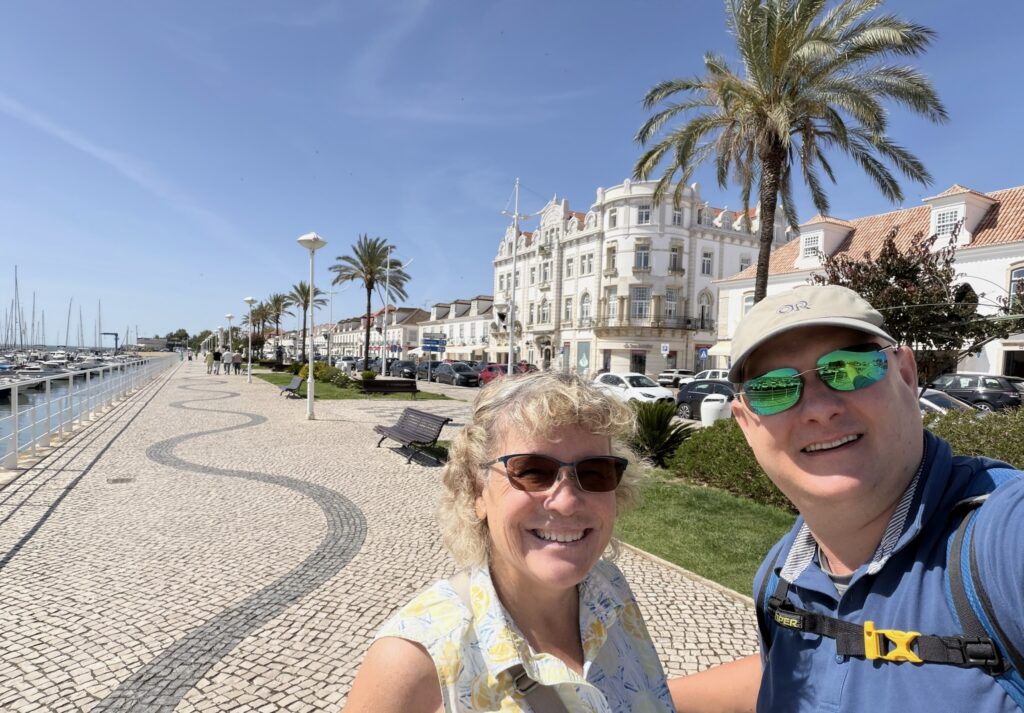
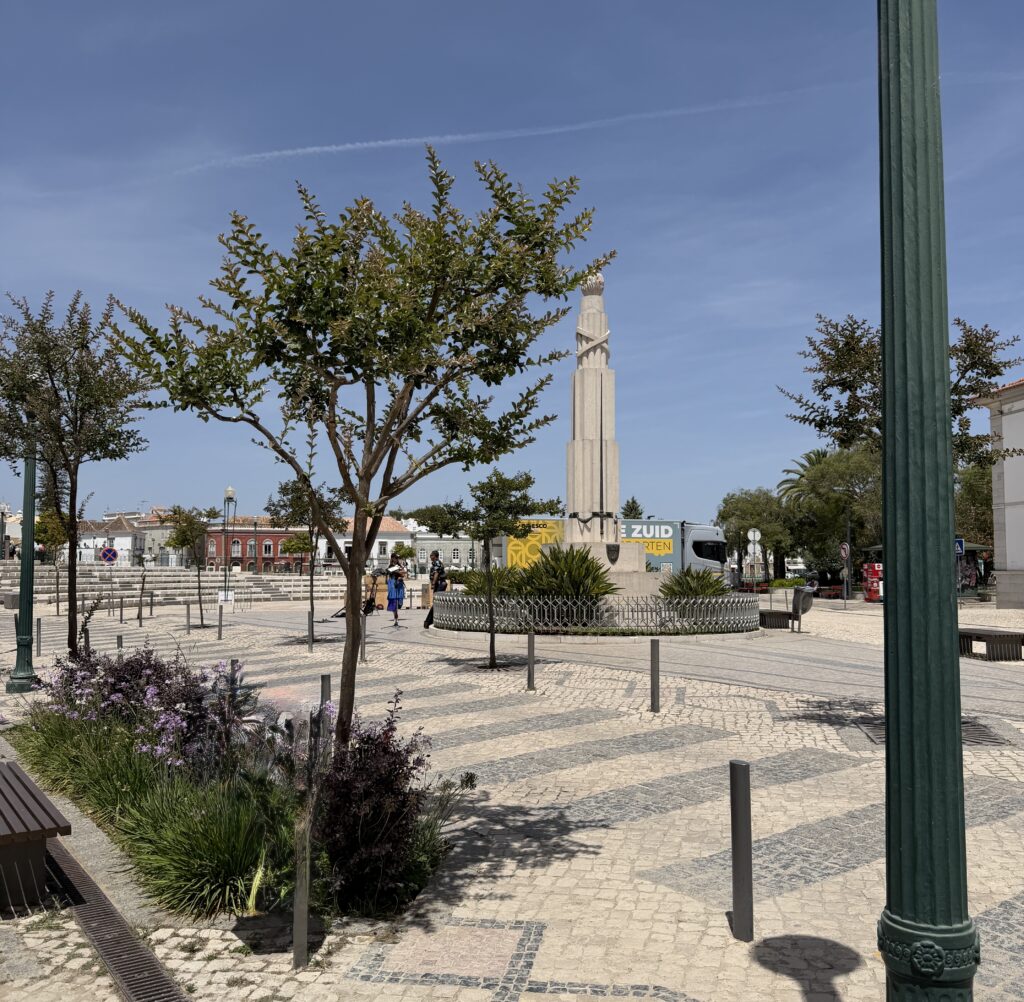
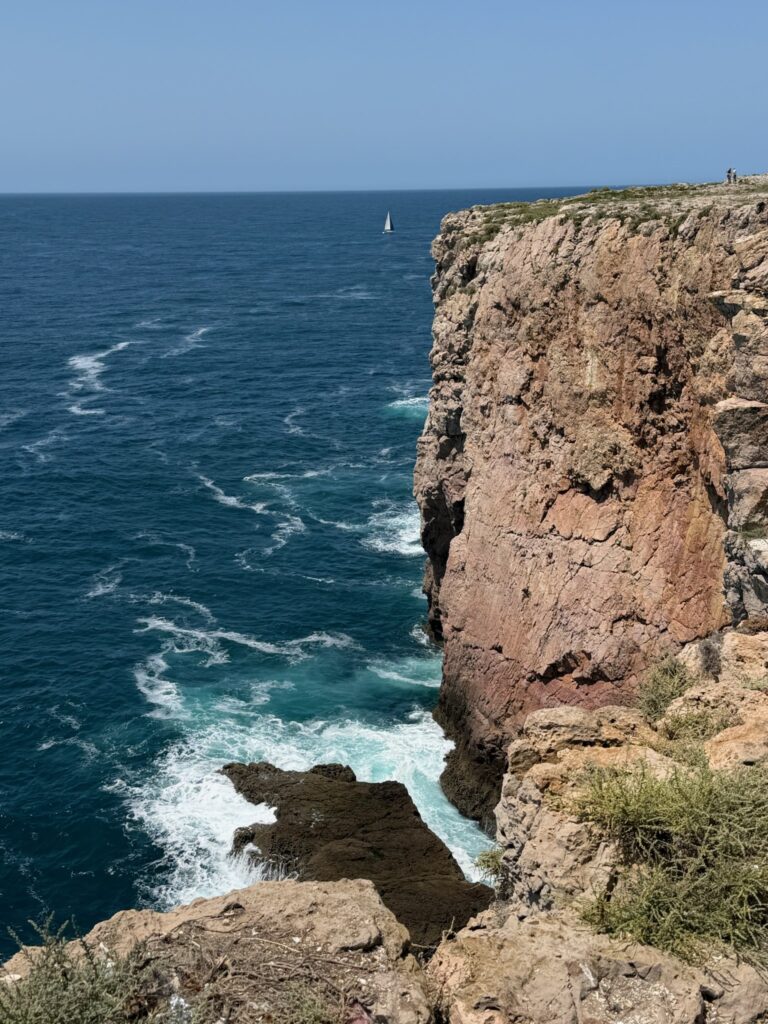
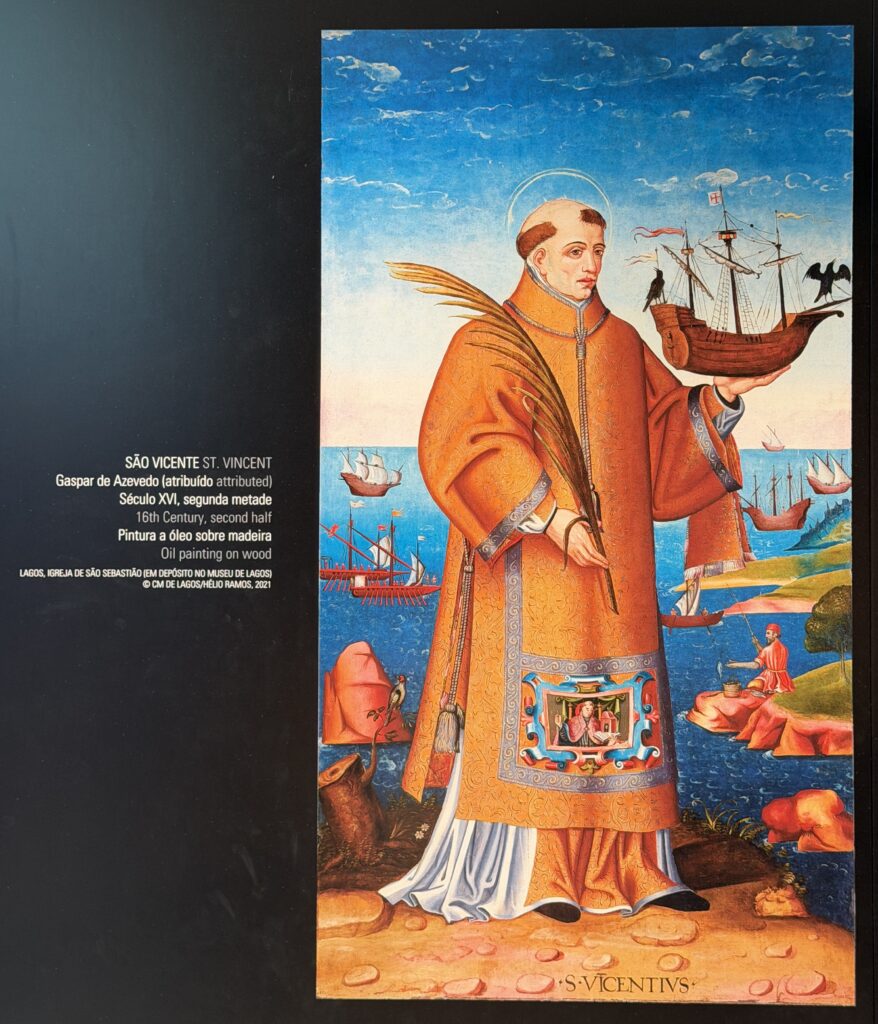
The White Stork (Ciconia ciconia) is a large, iconic wading bird celebrated in European folklore as a bringer of luck. Standing 39–45 inches tall with a wingspan up to 85 inches, it is instantly recognized by its striking white plumage, black flight feathers, and long red bill and legs. We saw these birds and their huge nests along both the regions we traversed in Portugal. I was lucky to catch this in-flight, albeit blurry, picture of one.The white storks of Europe build massive nests on top of chimneys, telephone poles, church steeples and in trees. Portuguese law protects the nests which are made of sticks, branches, grass and twigs. The same nests are used year after year and they can weigh a hundred pounds or more. It is believed some nests have been in continuous use for a hundred years. We saw dozens of nests along our journey through Portugal.Odeceixe Beach (Praia de Odeceixe) is a stunning, Blue Flag-certified beach on Portugal’s southwestern coast, famous for where the Seixe River loops into the Atlantic Ocean. This unique geography creates a beautiful golden horseshoe of sand, offering gentle, calm river waters on the river side and lively surf waves on the ocean side. The famous Fishermans Trail passes directly through this beach and it features a shark fin shaped rock on the far shoreline. This is a place where photos simply cannot do it justice.Vila Real de Santo Antonio (VRSA) is the farthest southeast town in Portugal, just across the mouth of the Guadiana River from the town of Ayamonte, Spain. The town has a year round population of about 20,000 people. Unlike most organic Algarve towns, VRSA was built in just five months using the same Enlightenment Era grid layout used to rebuild Lisbon after the 1755 earthquake. It also had a long a beautiful waterfront promenade, just like most of the coastal towns we visited. The town of Tavira is in the eastern Algarve and has a population of about 30,000. In the 8th century BC it became one of the first Phoenician settlements in the Iberian West, making it one of the oldest cities in Portugal. Today, the old town of Tavira straddles the Gilão River near its mouth to the Mediterranean Sea. There are plazas and a small promenade on both sides of the river.Sagres is a rugged, laid-back surf town at the southwesternmost tip of mainland Portugal. It has an “end of the world” feel, along with dramatic sea cliffs. Inside the historic fort in Sagres is a museum with this picture that encapsulates a lot of Portuguese culture and history, including religion, maritime sailing and fishing, and the coastal environment that characterizes such a large part of the country.
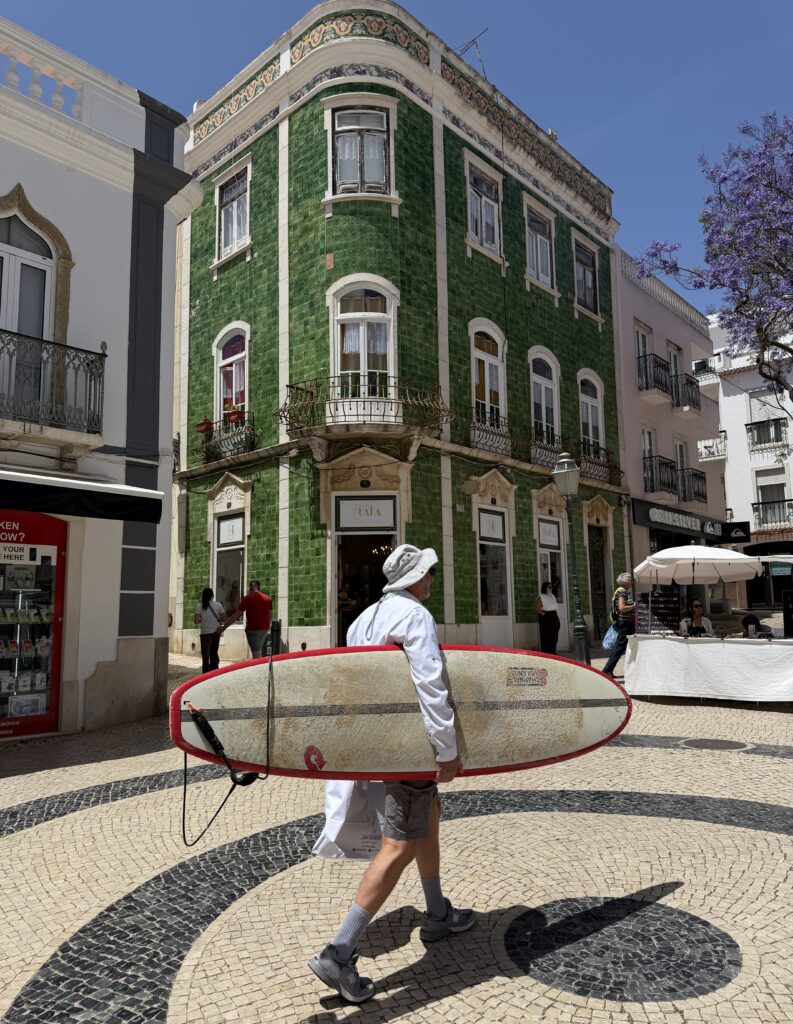
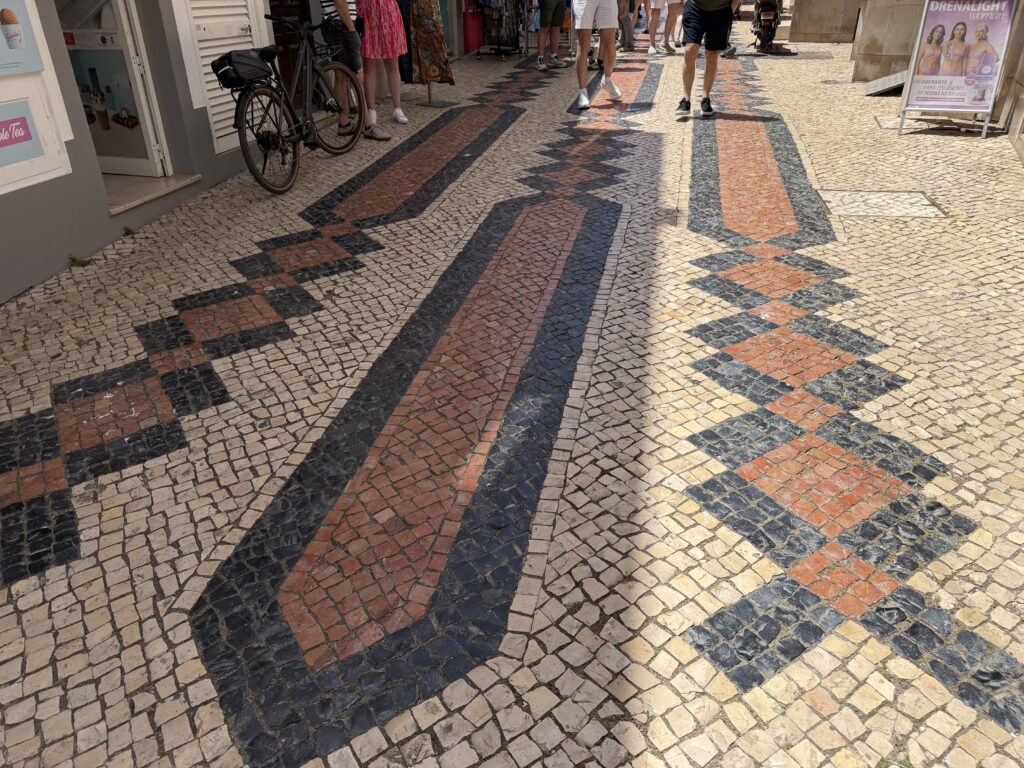
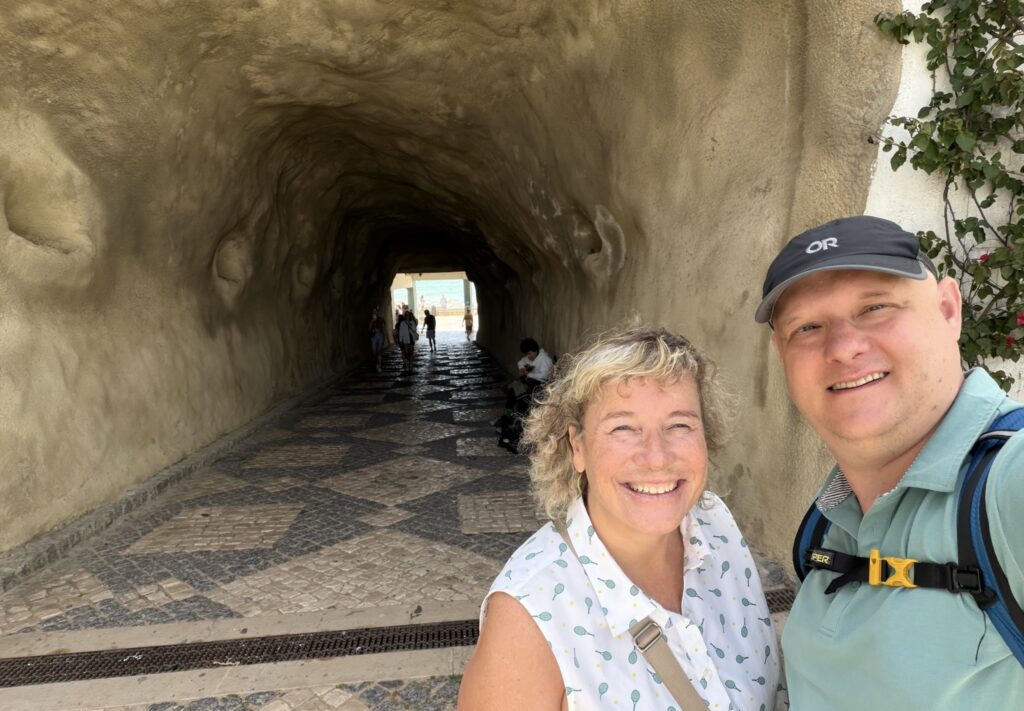
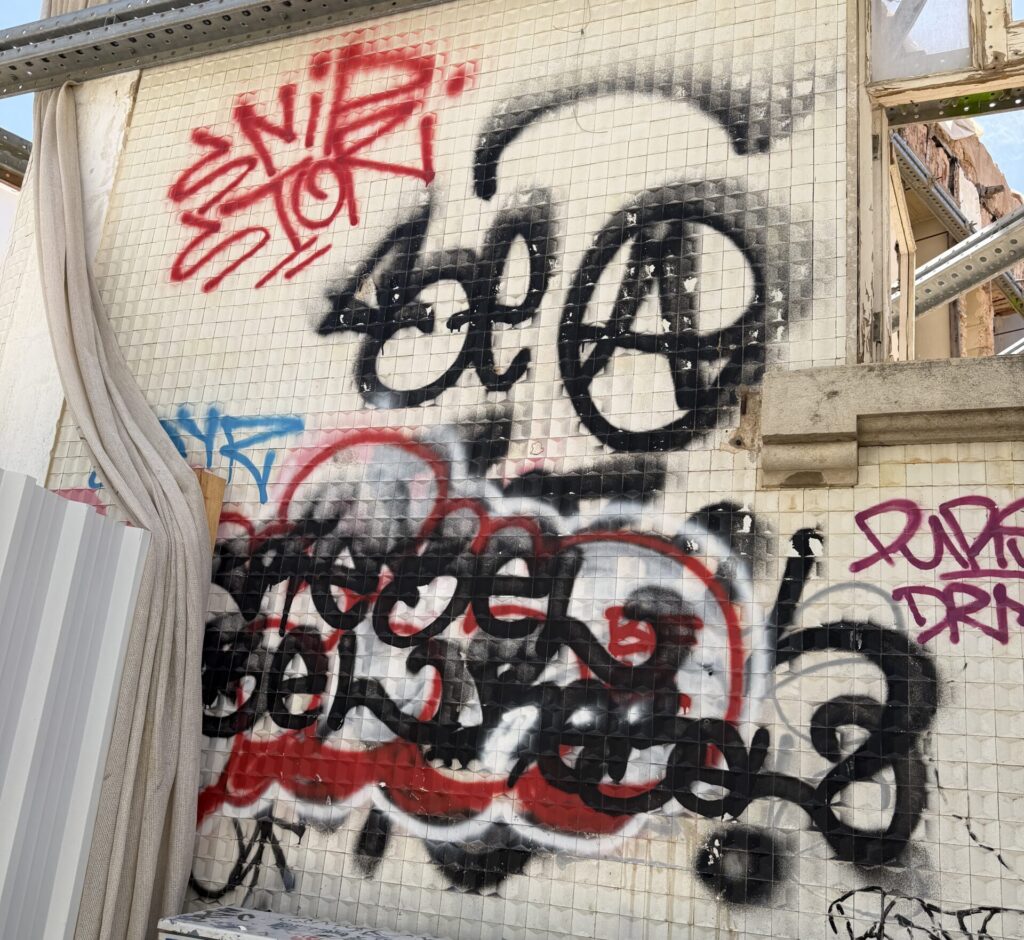
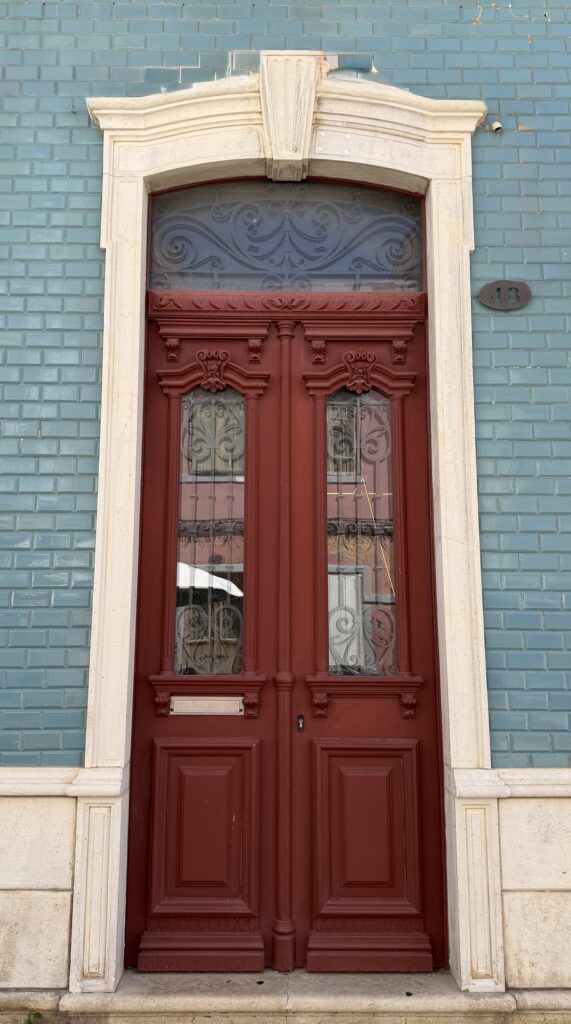
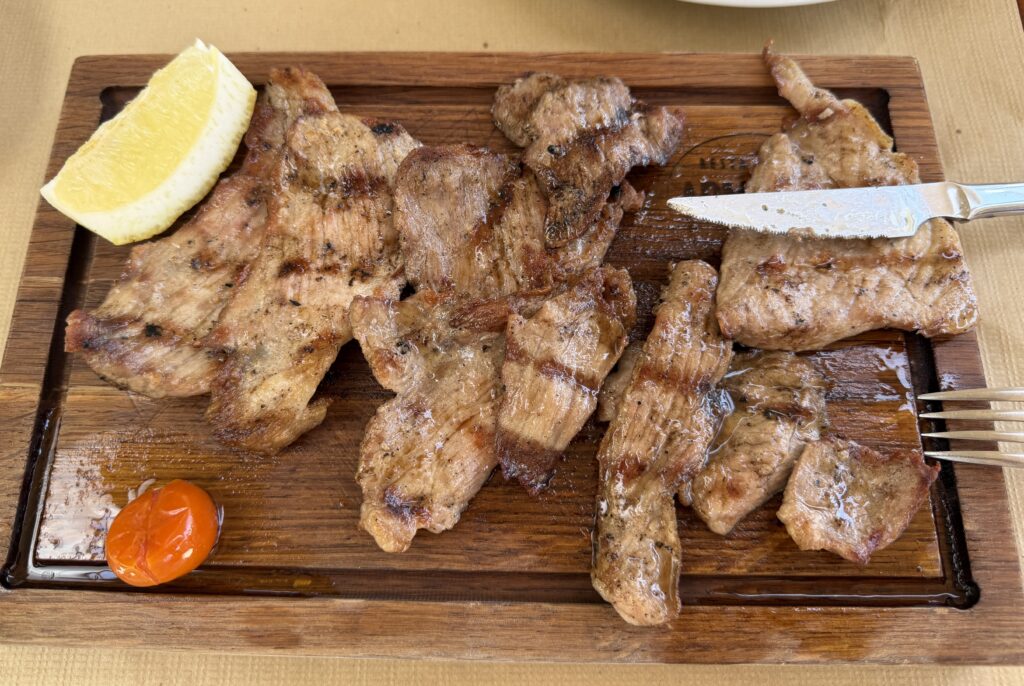
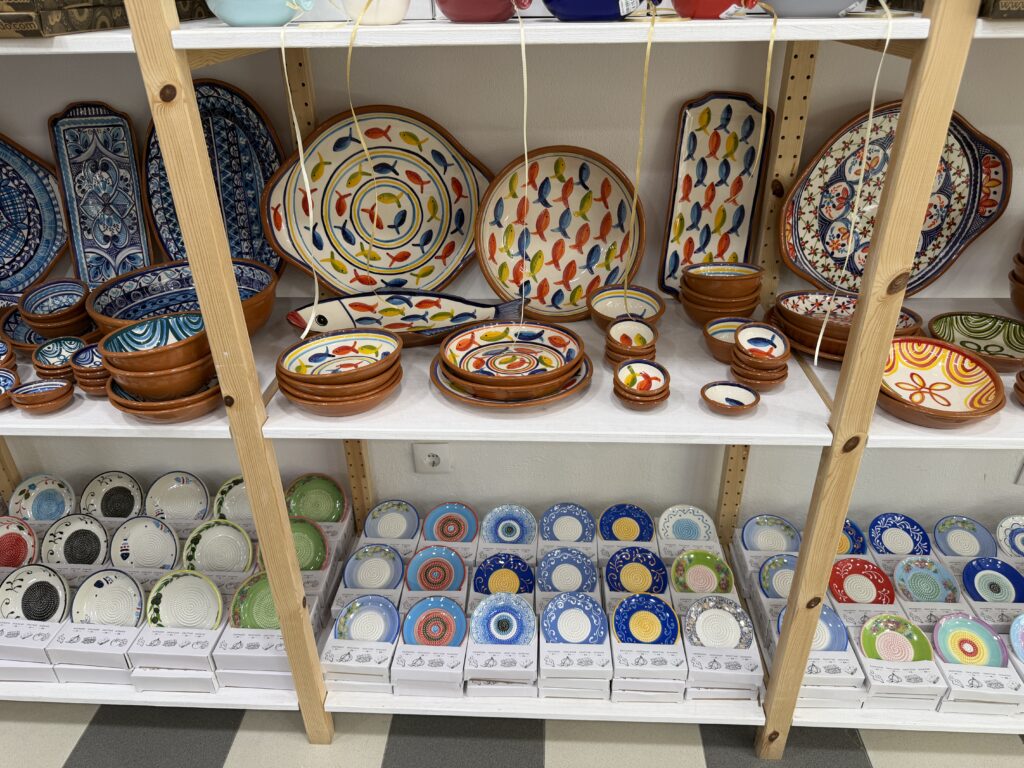
Lagos, Portugal, is a stunningly beautiful coastal city in the western Algarve region, known for its dramatic golden cliffs, crystal-clear Atlantic waters, and a vibrant, walled Old Town. This green tiled building in its old town is often seen in online pictures and videos – but my photo has the distinction of being photo-bombed by a surfer.We have previously posted about the iconic beige limestone and black basalt mosaic sidewalks that you see throughout Portugal. In the major Algarve coastal city of Lagos, we were thrown a curveball when we saw these sidewalks – this was the first time we had seen the red color added. It turns out the red color is also a limestone, mostly local to the Algarve region. One of the other towns we visited in the Algarve region of Portugal is Albufeira. Albufeira has a famous pedestrian tunnel that cuts through the cliffs linking the town square to the beach. Albufeira is also known as one of the biggest party towns on the Algarve – with a significantly active nightclub district. We feel it is important to occasionally show some of the not-so-great aspects of our travel too. We saw quite a bit of graffiti in the larger cities in southern Portugal, especially Faro and Lagos.A random old world door somewhere in southern Portugal…If you like pork you have to try the Black Iberian pork. Black Iberian pork (Jamon Ibérico) is exceptionally tasty due to its unique genetics, free-range lifestyle, and acorn-rich diet. Often called the “Wagyu of pork,” it boasts rich intramuscular fat and a buttery texture. It can look very different and have a different textures depending on which part you are using and how it is prepared. We highly recommend.If you like pottery, Portugal is the place for you. We have seen pottery stores all over the country. In many places it is sold by weight. I recall that some of the best baking stoneware we have ever owned was from Portugal.
Feel free to leave a comment. If you leave a comment it will not show up right away. We have it set up so that we have to approve comments before they can show here (we do have to filter out spam unfortunately). We check for (and respond to) comments almost every day so you should be able to see it here soon. Take care.