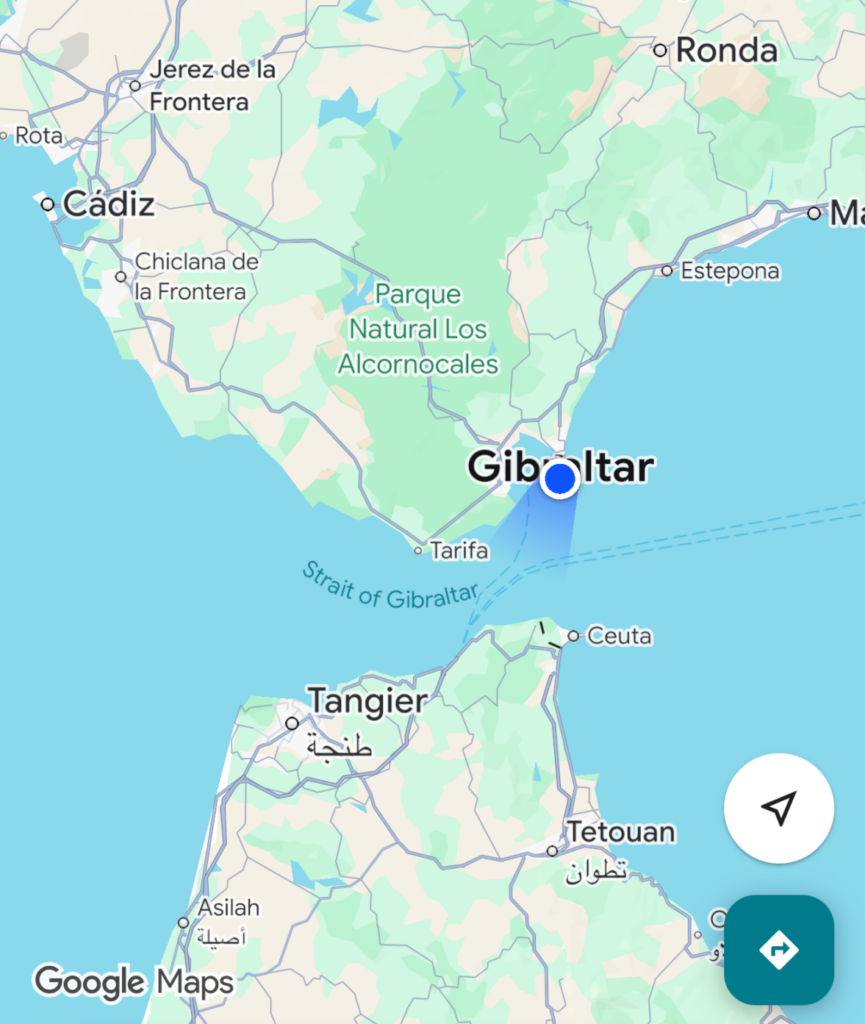
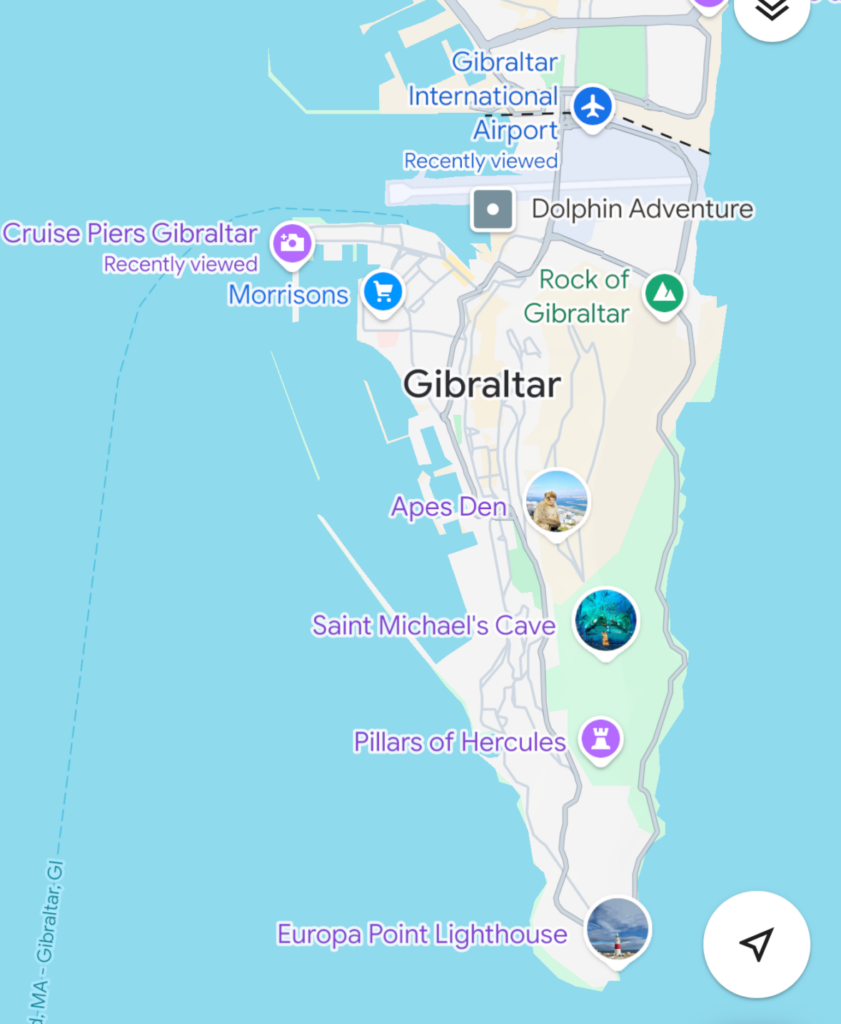
During our week in Rota, Spain in late May, we drove 90 minutes south to visit the tiny country of Gibraltar for a few hours. We parked on the Spanish side and then walked across the border – and also walked across the international runway of Gibraltar into the town (kinda cool). We located a Taxi tour from Casement Square to take us up onto the various attractions of the actual Rock of Gibraltar. On that tour we stopped at the Pillars of Hercules, Saint Michael’s Cave, the Glass Skywalk, and the military tunnel systems embedded within the Rock. At various points on the way, we viewed (up close) the wild, but very congenial, Barbary macaque monkeys. After visiting the Great Siege Tunnels and the World War II Tunnels, we walked down the monolith into the town to enjoy one of the best lunches of fish and chips that we have ever had. We then did a little shopping on the beautiful main street before walking back across the border to get our car and drive back to Rota. Although the official language of Gibraltar is English, the vast majority of its service workforce are Spanish – 15,000 of them cross the border every day to work in Gibraltar. They all speak English but we could tell their native language is Spanish. It was a long but incredibly scenic day and we enjoyed it so much that we needed the entire next day to recover.
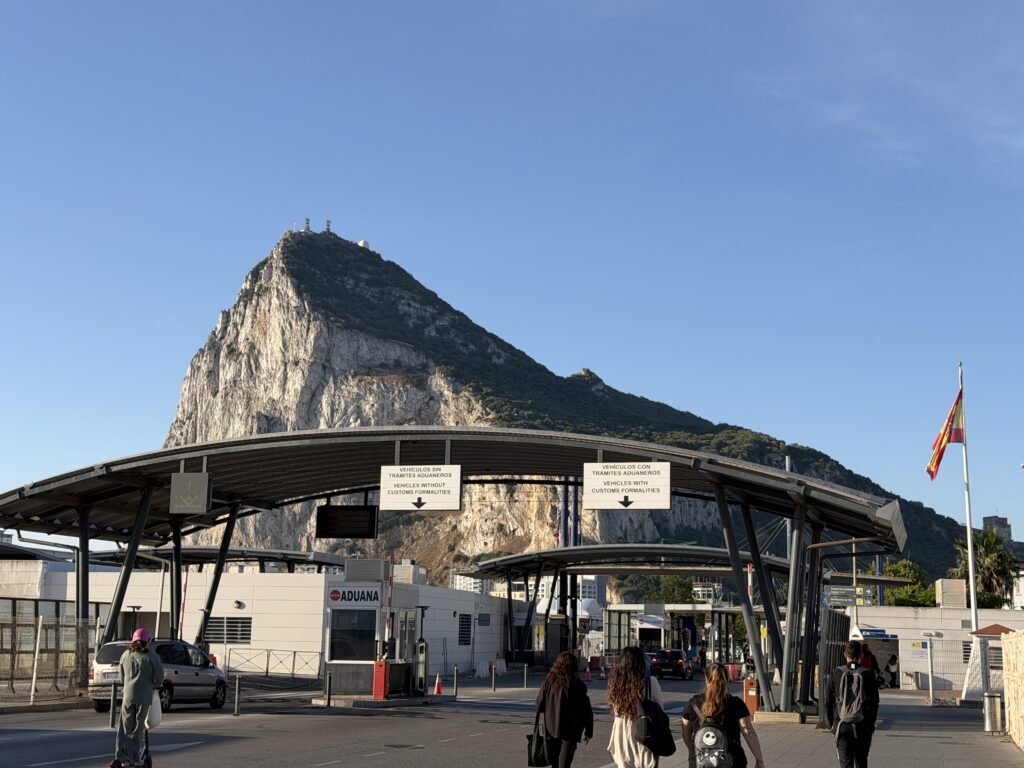
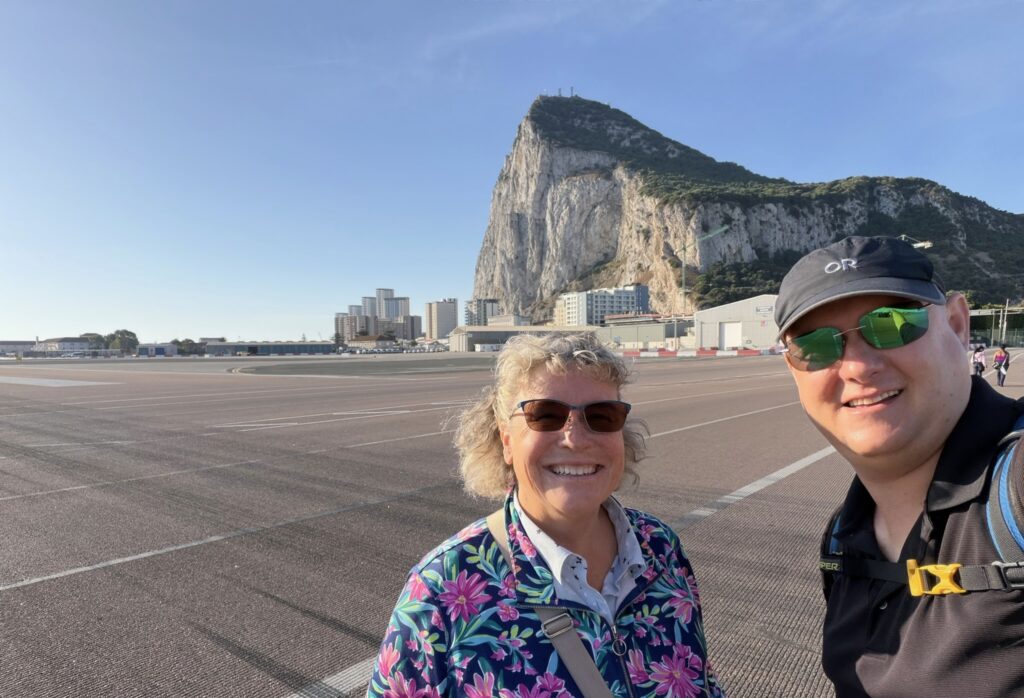
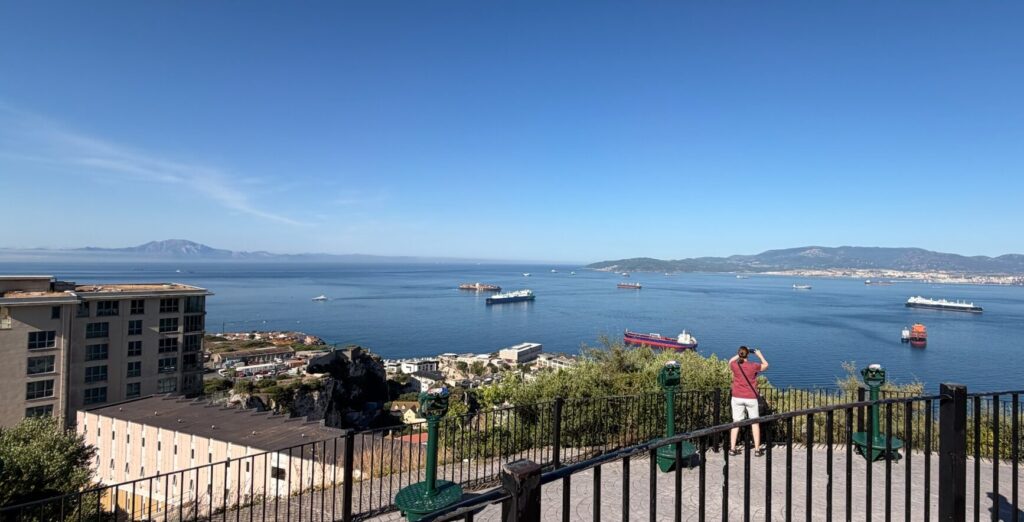
The tiny and mighty country of Gibraltar is a British Overseas Territory and city located at the southern tip of the Iberian Peninsula, on the Bay of Gibraltar, near the exit of the Mediterranean Sea into the Atlantic Ocean (Strait of Gibraltar). It has an area of 6.8 km2 (2.6 sq mi) and is bordered to the north by Spain (Campo de Gibraltar). The landscape is dominated by the Rock of Gibraltar, a gigantic monolith that is easily recognizable to most people. At the foot of the monolith is a densely populated town area. Gibraltar is home to around 34,000 people, primarily Gibraltarians. They have their own currency, the Gibraltar Pound, and it is NOT interchangeable with the British Pound.Since it was first founded in 1160, many entities have controlled the peninsula and many Sieges (think “blockade”) of it have occurred in attempts to be overthrown. In recent history, in 1704, Anglo-Dutch forces captured Gibraltar from Spain during the War of the Spanish Succession, and it was ceded to Great Britain in perpetuity under the Treaty of Utrecht in 1713. It became an important base for the Royal Navy, particularly during the Napoleonic Wars and World War II, as it controlled the narrow entrance and exit to the Mediterranean Sea, the Strait of Gibraltar, with half the world’s seaborne trade passing through it. Its economy today is basing on financial services, online gaming and tourism.The actual physical Rock of Gibraltar is so big that we could see it from a distance 20 minutes before we arrived by car. This is the view of the Rock as we were walking up to the border on the Spanish side. After we walked through both of the border passport control stations (first to exit Spain and then second to enter Gibraltar), we then walked into town, which involves crossing the Gibraltar International Airport. Pedestrians, bicycles and standing-style scooters can traverse directly across the middle of the airfield whereas cars take a tunnel that goes around the east end of the runway. In this photo we are literally standing in the middle of the runway – you can see the airplane skid marks behind us. We were not sure which was more amazing – the huge monolith of the actual Rock of Gibraltar or actually walking across the runway of an international airport.After walking across the runway and into the town, we hired a tour taxi, which is the only way (besides walking) that exists anymore for going up onto the Rock (the cable car is closed). We started our tour near the southern end of the Rock – this is the view of the Straights of Gibraltar, one of the busiest waterways in the world. You can see what are called “The Pillars of Hercules”, which are the prominent geological peaks flanking the Strait of Gibraltar, marking the historical boundary between the Mediterranean Sea and the Atlantic Ocean. The northern pillar is the Rock of Gibraltar, while the southern pillar is either Jebel Musa (Morocco) or Monte Hacho (Ceuta).
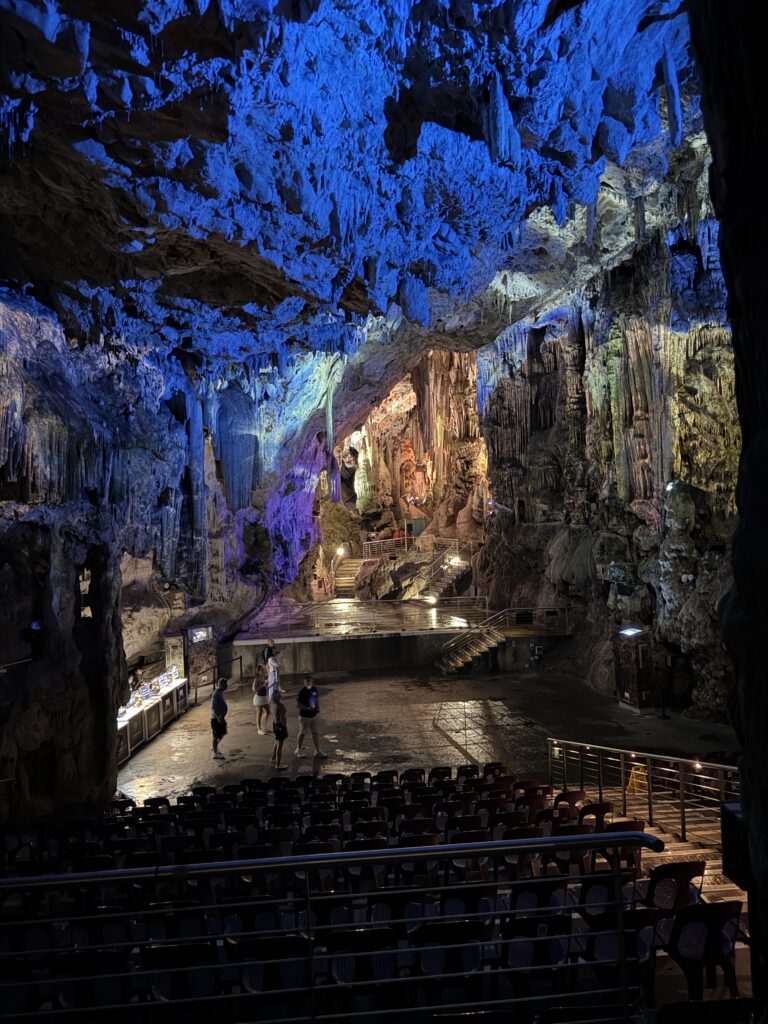
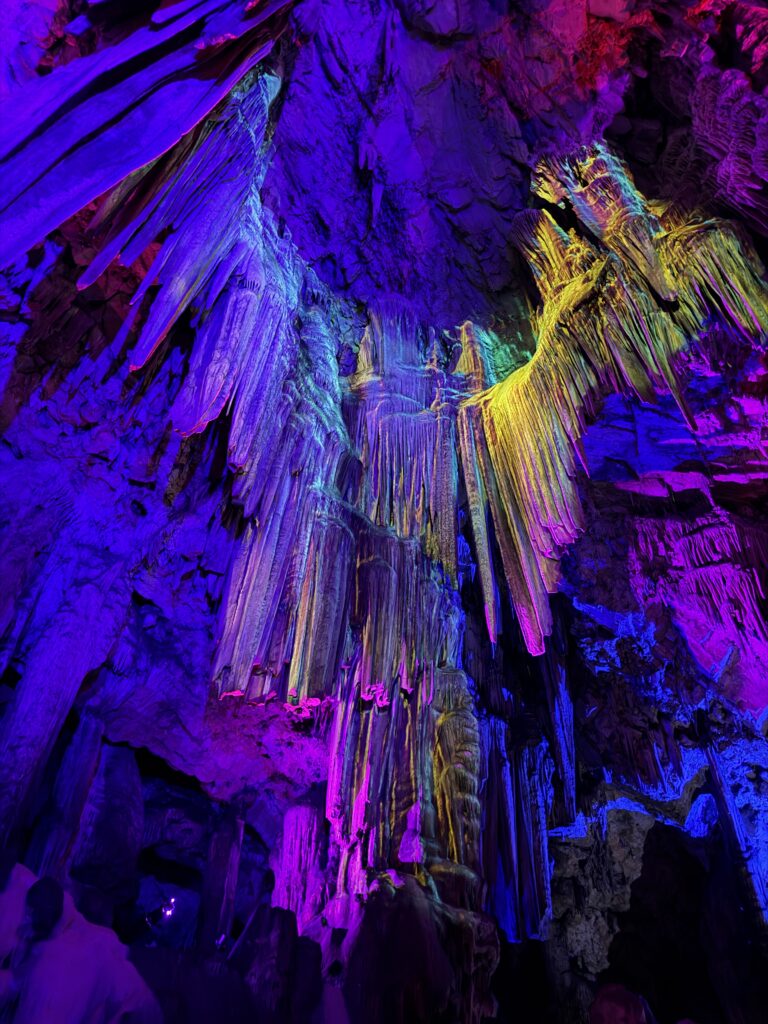
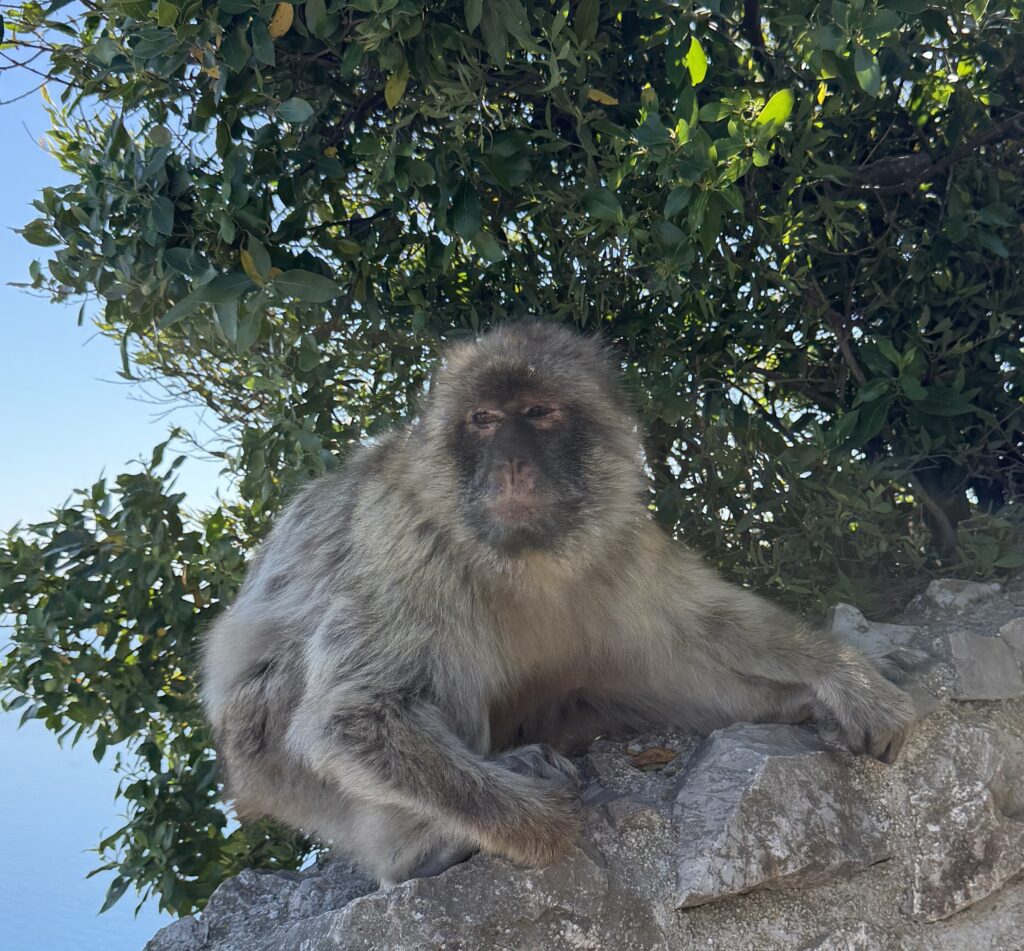
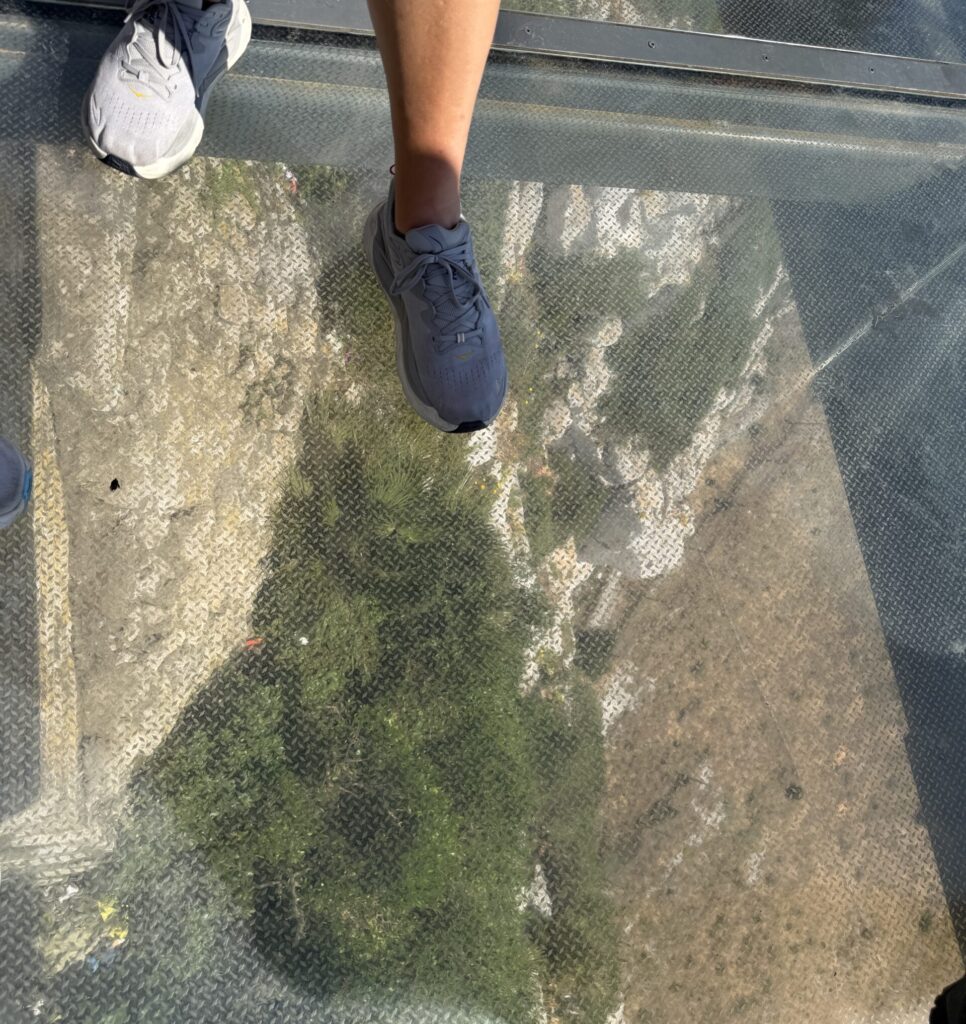
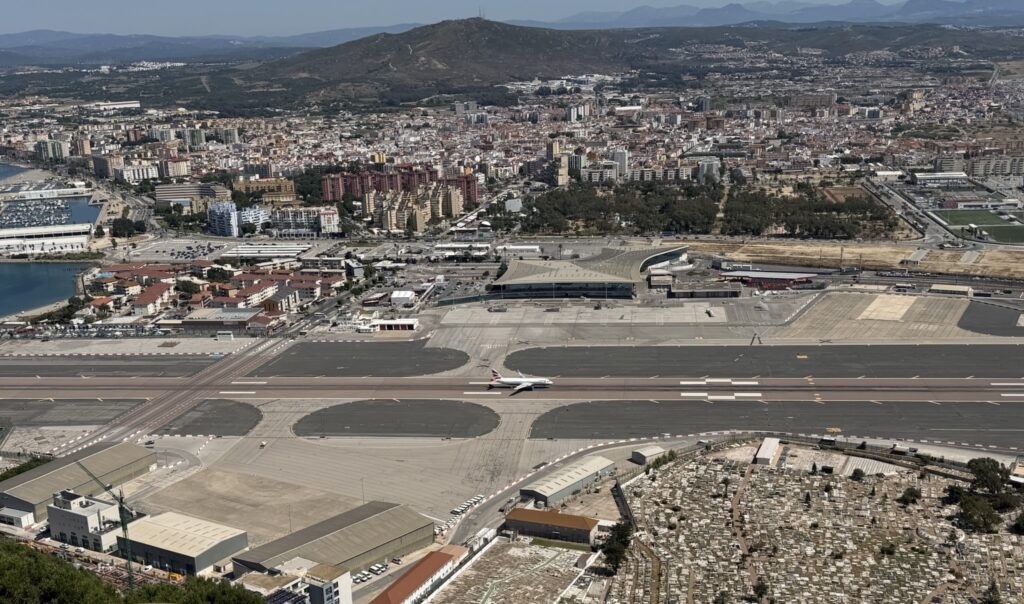
Saint Michaels Cave is one of 150 natural limestone caves located inside the Rock of Gibraltar, but still 980 ft (300 m) above sea level. Historically it was long thought to be bottomless, making St. Michael’s Cave the subject of one of Gibraltar’s most famous legends. It was believed that the cave is one end of a subterranean tunnel over 15 miles (24 km) long which passes under the Strait of Gibraltar. As the Rock of Gibraltar was thought to be one of the legendary Pillars of Hercules, the Ancient Greeks also believed the cave to be the Gates of Hades, an entrance to the underworld. In World War II the entire cave was prepared for use as an emergency military hospital but it was never used as such. Today it houses a concert hall and a six minute repeating light show for the one million visitors it receives every year.If you catch the timing just right in the 6-minute repeating light show in Saint Michael’s Cave, you can see an illumination of the natural stalagmite formation that looks like an angel. I almost nailed it in this photo. This photo was taken by my iPhone in normal automatic mode with no filters or anything special at all.There are five families of Barbary macaque monkeys that live on the Rock of Gibraltar. They are wild animals that are very accustomed to humans, so you can walk right by them without incident so long as you don’t do anything stupid. In this case, this Macaque was sitting on the wall of the staircase I was descending. He/she was so quiet I almost did not see it in the shadow next to me. If you look right at them they will usually look away, avoiding direct eye contact.At the top of the Rock there is a glass floor skywalk to test your courage on. This is the view through the glass floor looking down a couple hundred meters of the east face of the Rock.From one of the lookouts just outside the Great Siege tunnels, we enjoyed watching a British Airways flight approach and land, rolling down the same runway we had walked across earlier in the day. In this photo you can see the border just beyond the airport.
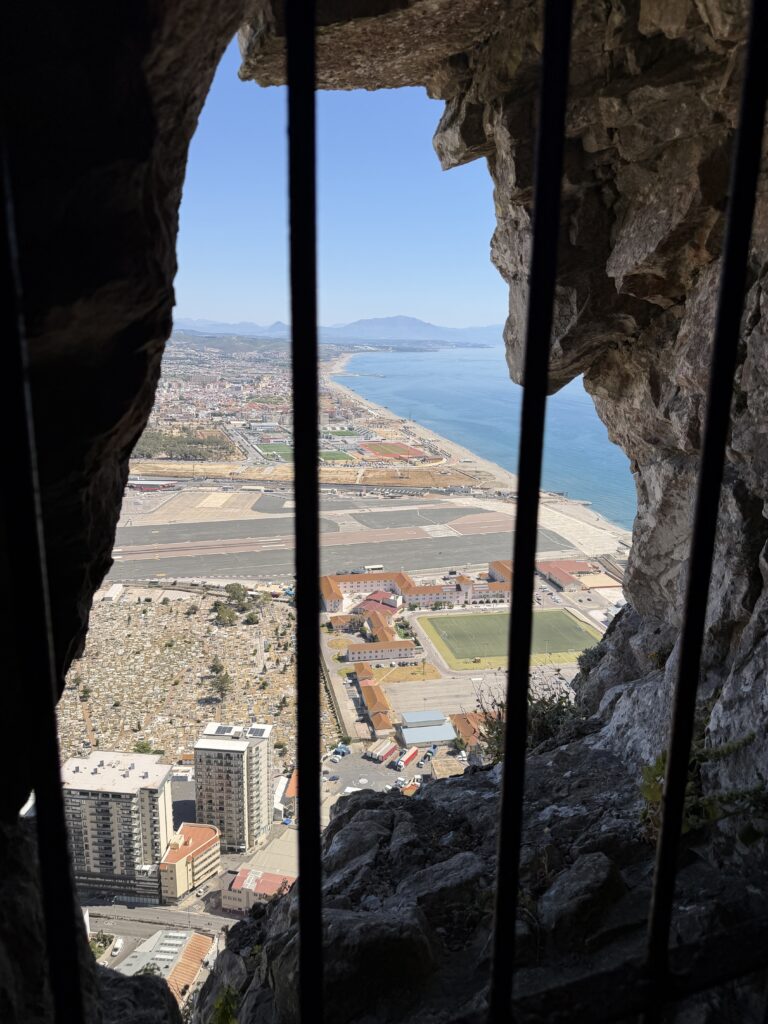
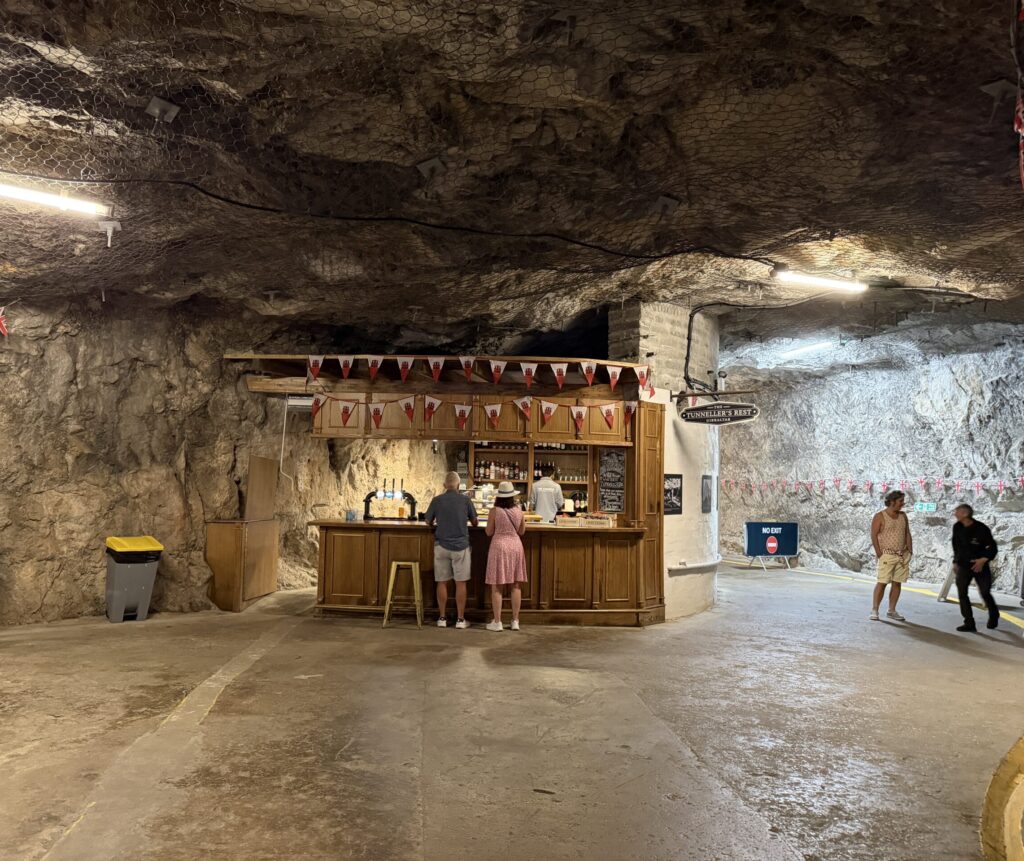
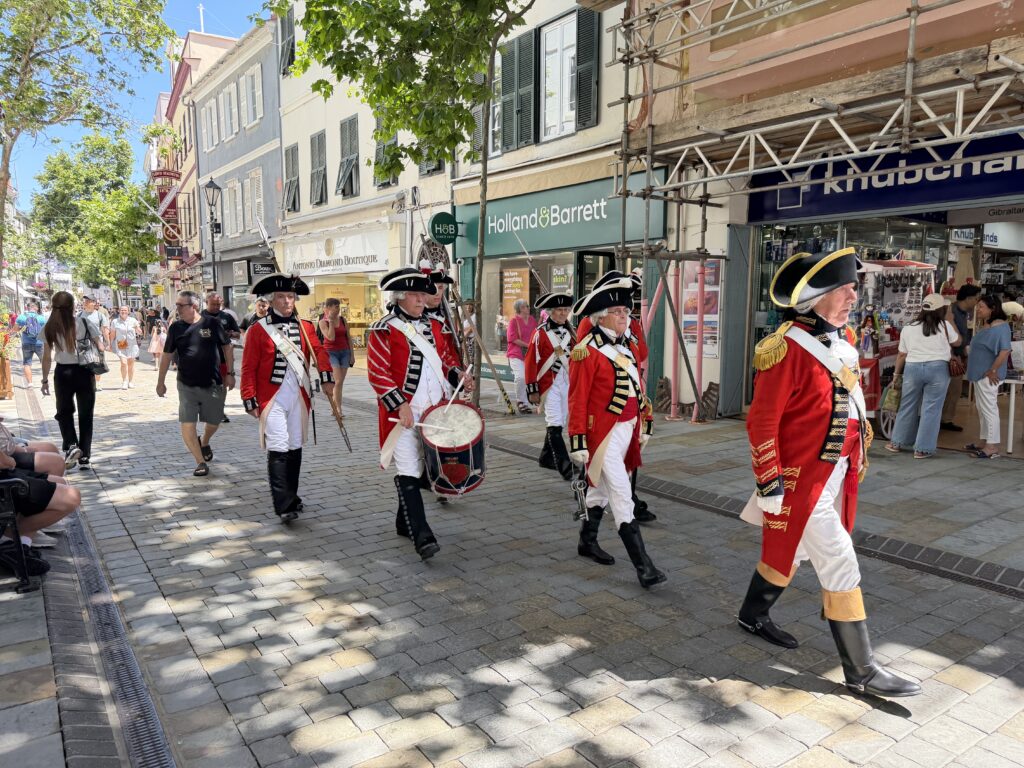
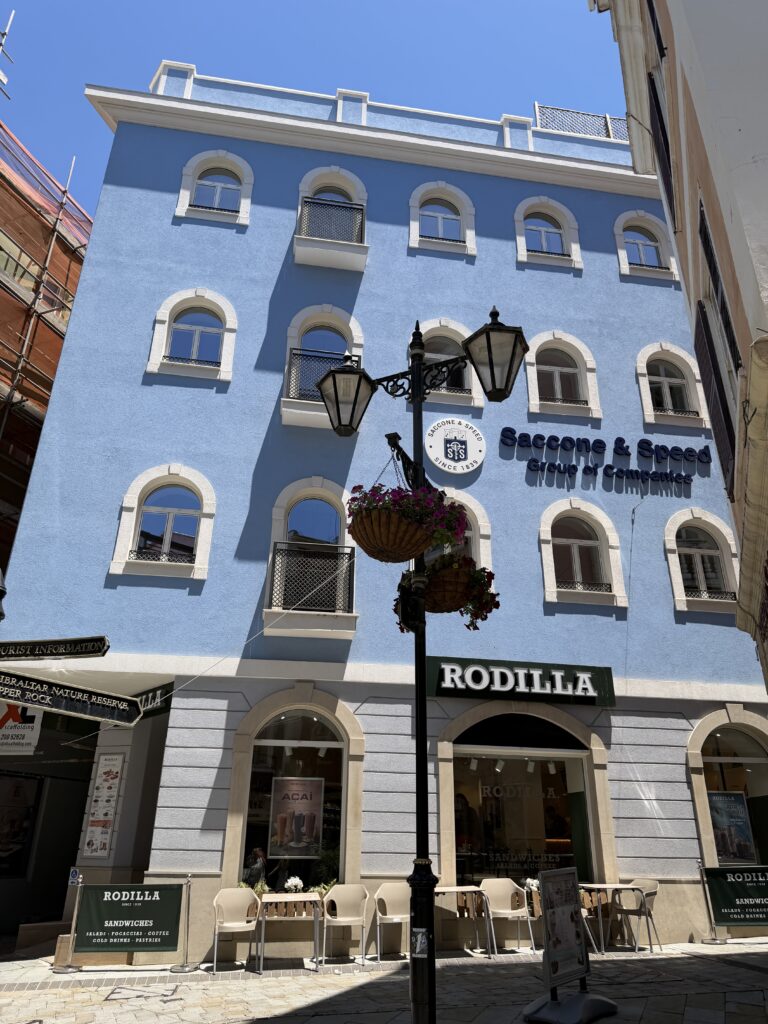
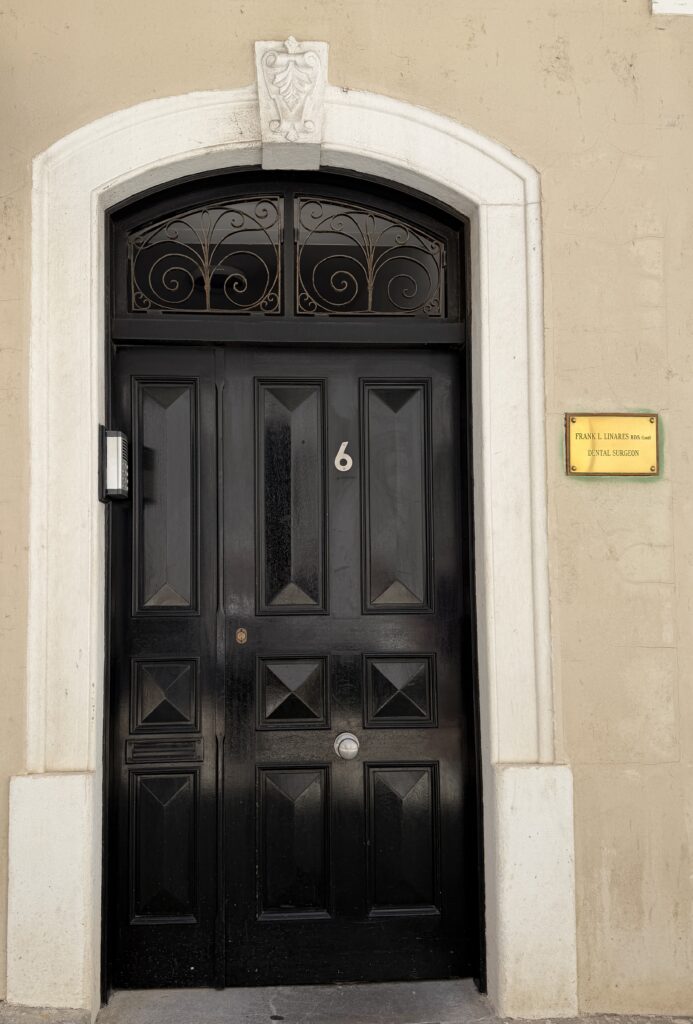
This is a view to the north through the window of one of the canon placements, in what are now known as the Great Siege Tunnels. The Great Siege of Gibraltar (1779–1783) was an unsuccessful attempt by Spain and France to capture the territory of Gibraltar from Britain during the American Revolutionary War. Spain initiated the offensive on June 21, 1779, attempting to starve the 5,000+ British defenders into submission. During the almost four years of blockade and a major assault, the Gibraltar forces dug major tunnels in the north face of the Rock of Gibraltar, to install canons and block the Spanish from approaching. It is amazing that just about anyplace in Europe has either a coffee shop or a bar, in this case inside the World War II Tunnels of the Rock of Gibraltar. The World War II tunnels are large in volume and much more extensive than the Great Siege tunnels on the north face. This is not surprising given that WWII was 150 years after the Great Siege, and technology was much improved.A group of soldiers in colonial military dress marched to the beat of their drummer through the main street of Gibraltar in front of us on the Saturday morning that we visited. We later found out this is performed by the Gibraltar Reenactment Association. They march down Main Street to revive the historical “Ceremony of the Keys,” a ritual from the Great Siege era (1779–1783) when the Port Sergeant and his escort warned aliens to leave the Rock before the city gates were locked.A random building on the main street in Gibraltar. The entire place is very clean and well kept.An old world door in the town of Gibraltar.
Feel free to leave a comment. If you leave a comment it will not show up right away. We have it set up so that we have to approve comments before they can show here (we do have to filter out spam unfortunately). We check for (and respond to) comments almost every day so you should be able to see it here soon. Take care.
8 Comments
OMG, loving living vicariously through your adventures. Thank you for sharing. Love you two.
Thanks for following our blog. Love you too.
Always love seeing your pictures and reading about your adventures. Looks amazing:)
Thanks for following the updates. They are always more fun when we share them with others ;). Looking forward to meeting up with you again down the road.
Jealous!! Looks amazing
Thanks for following along Andy!
Loved the pics; looking forward to meeting up with you in Dublin….


OMG, loving living vicariously through your adventures. Thank you for sharing. Love you two.
Thanks for following our blog. Love you too.
Always love seeing your pictures and reading about your adventures. Looks amazing:)
Thanks for following the updates. They are always more fun when we share them with others ;). Looking forward to meeting up with you again down the road.
Jealous!! Looks amazing
Thanks for following along Andy!
Loved the pics; looking forward to meeting up with you in Dublin….
See you in Dublin!