We flew from Athens to the small island nation of Malta in mid October, where we stayed for just over a month. Given that we had just moved 9 times in 7 weeks, we were ready to settle in a bit and catch our breath. Our Air BnB was large and gave us room to spread out. Vehicles are driven on the left side of the road in Malta – and we are proud that we managed to not get run over by looking the wrong way when crossing the street. The people are really kind and the bus system is modern and widely available. Maltese and English are the official languages and there is plenty to see and do.
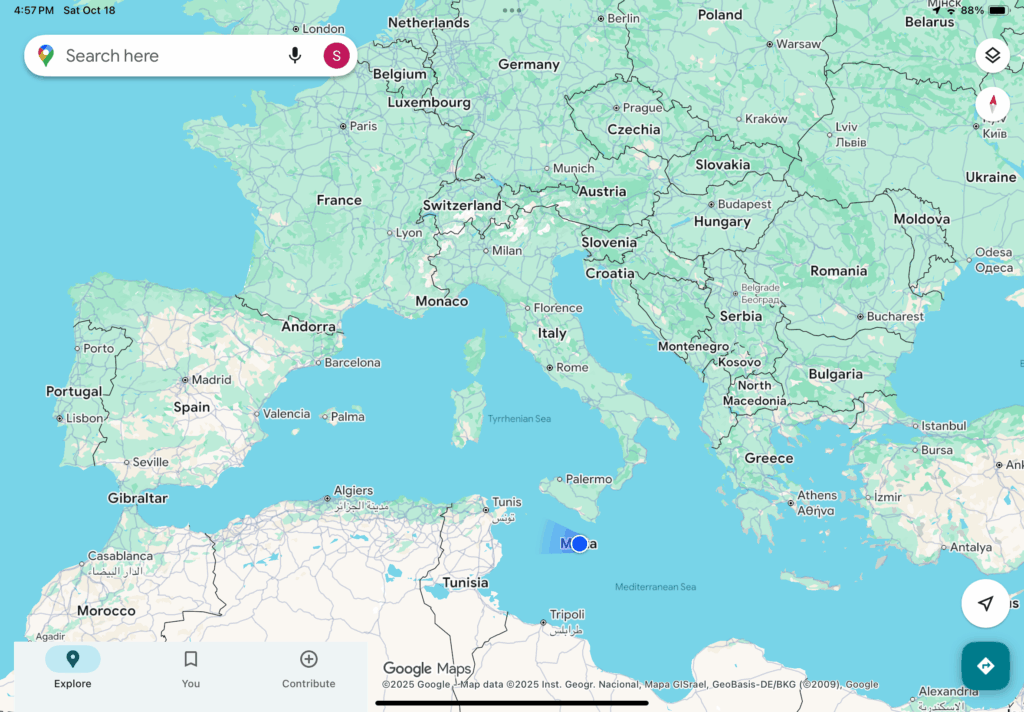
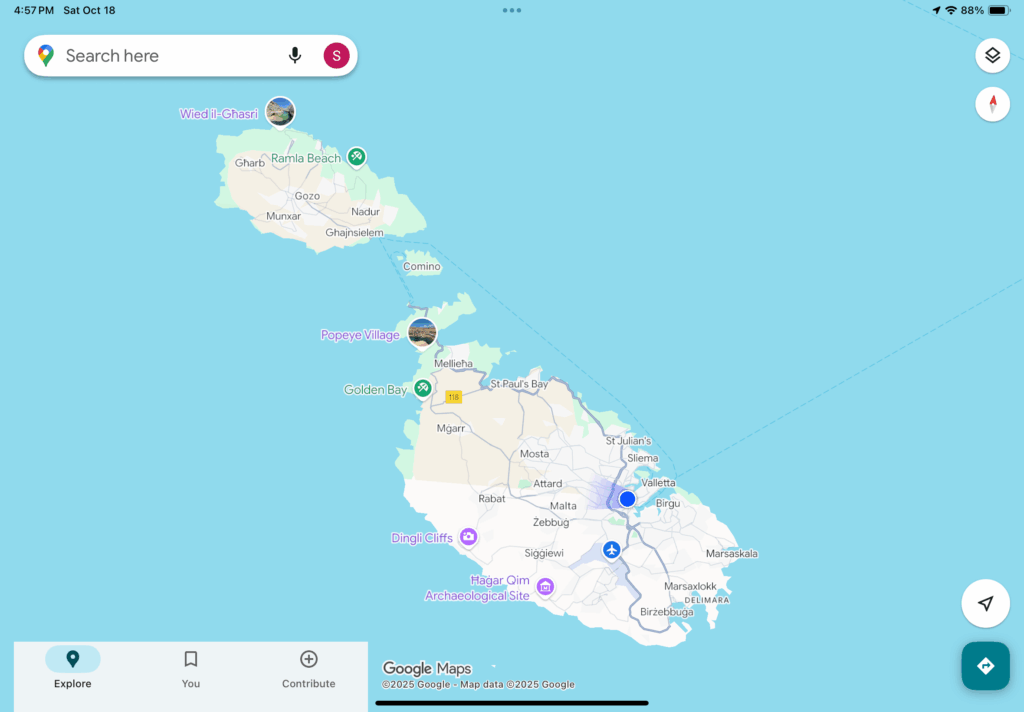
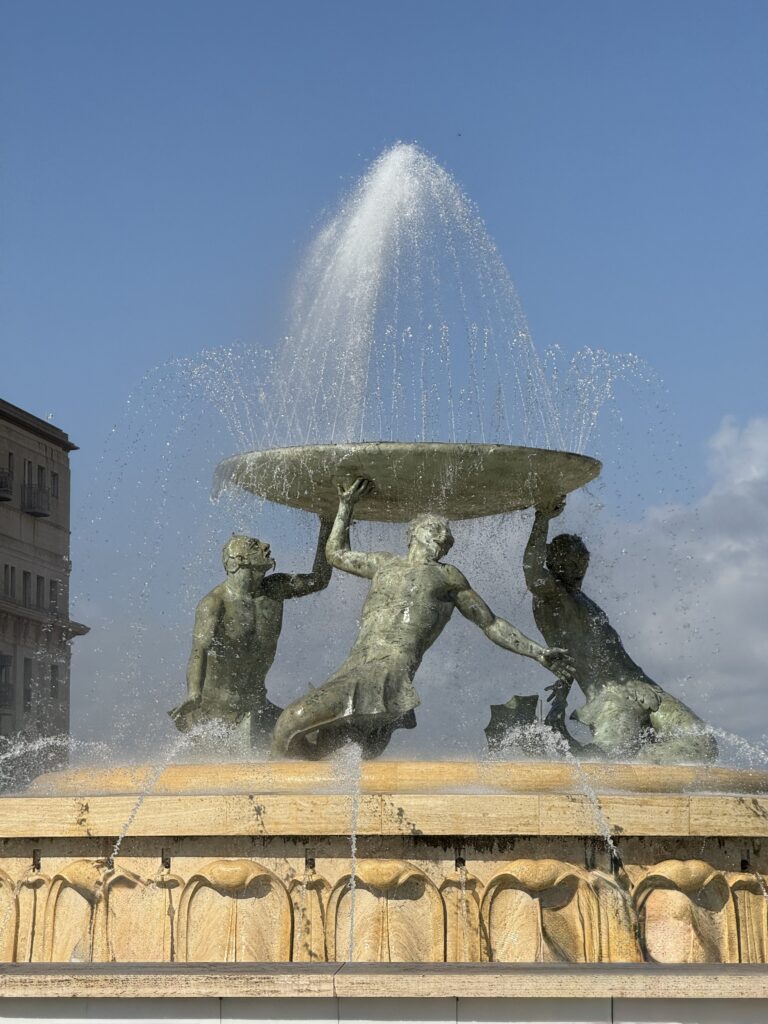
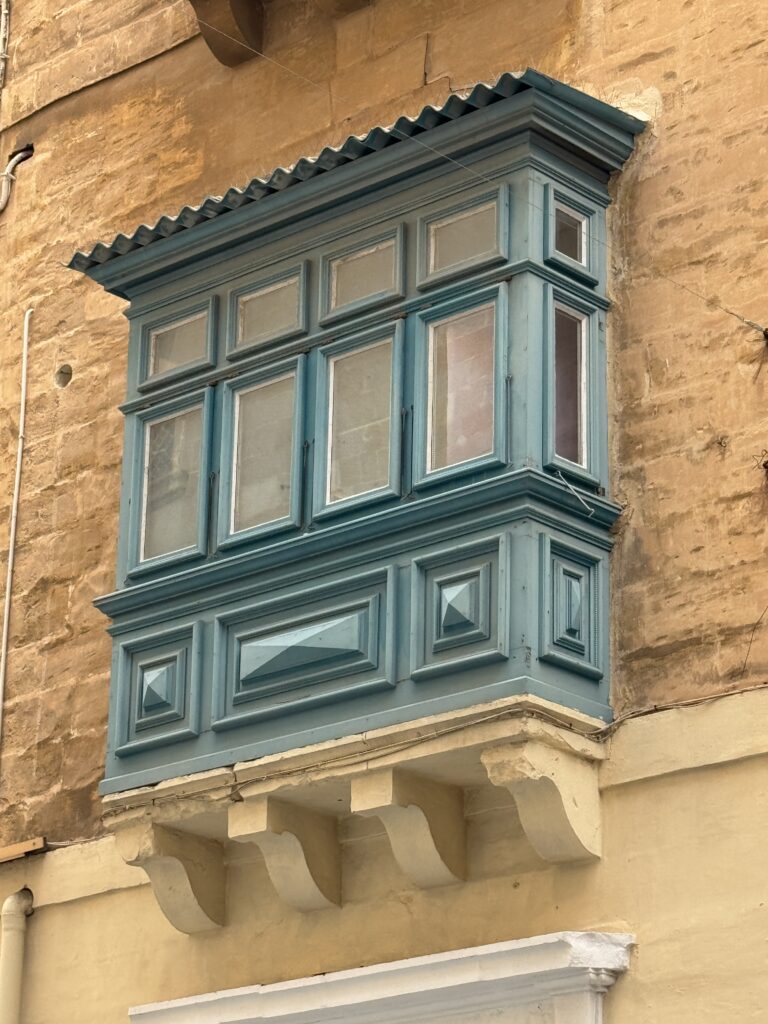
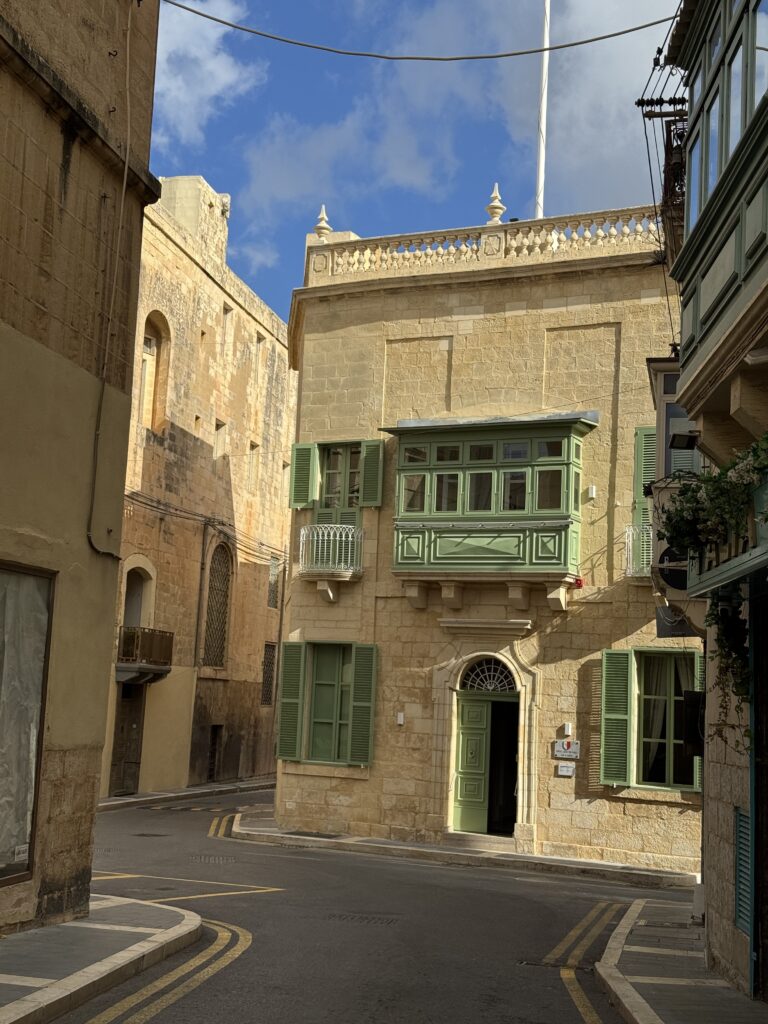
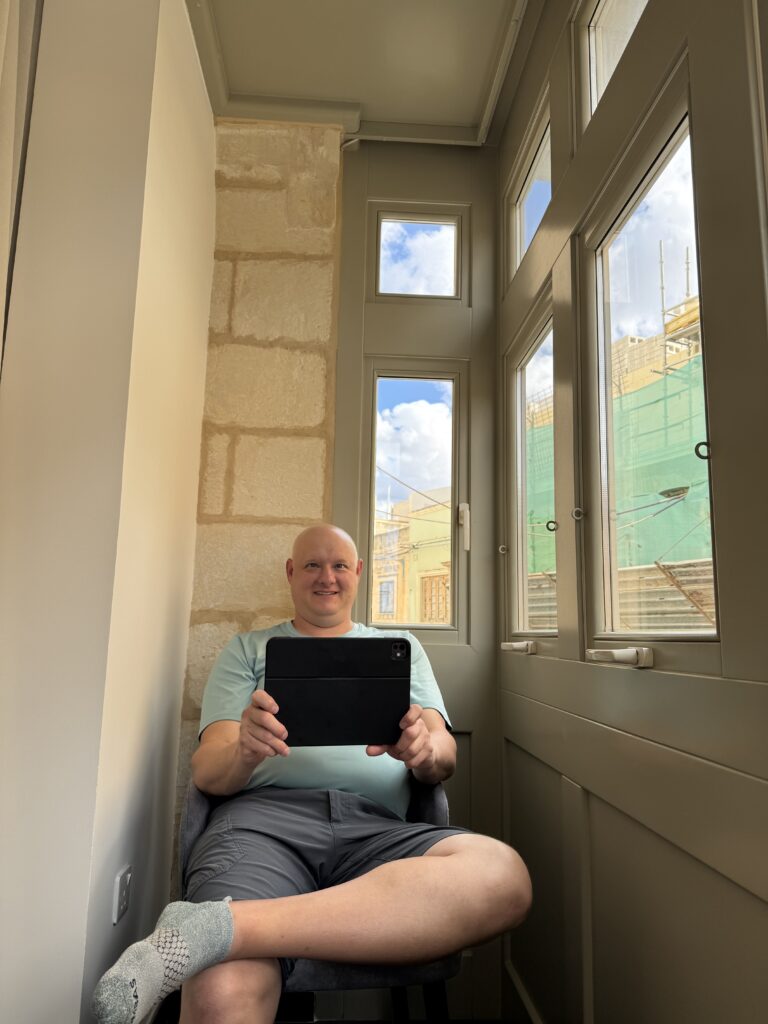
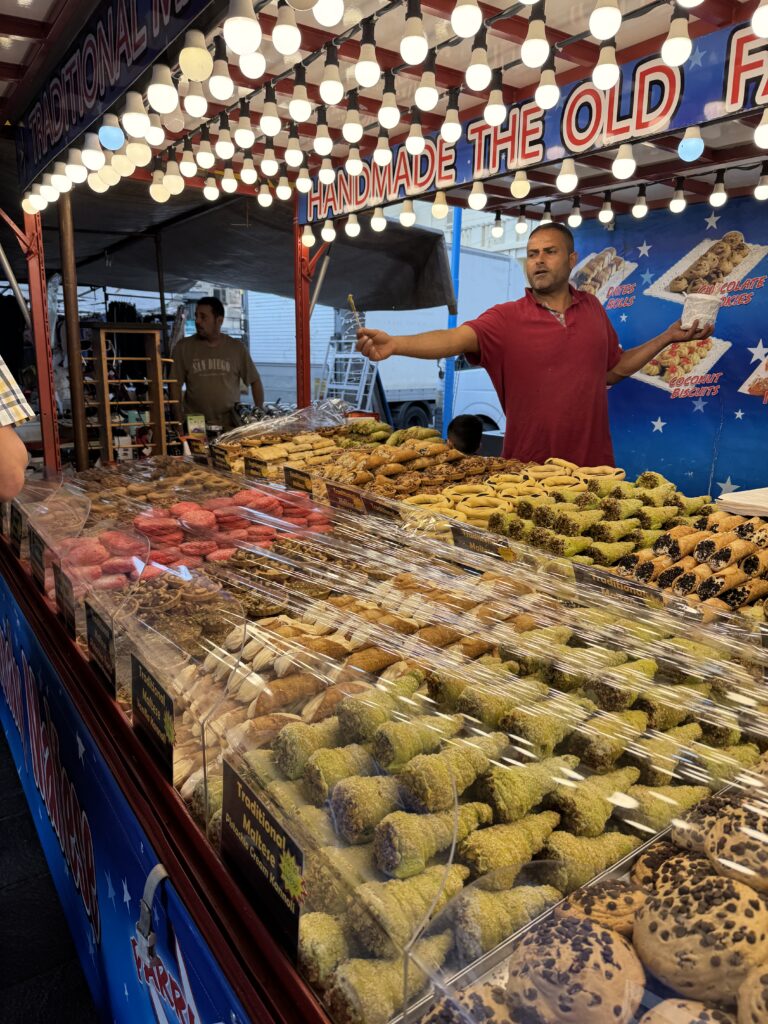
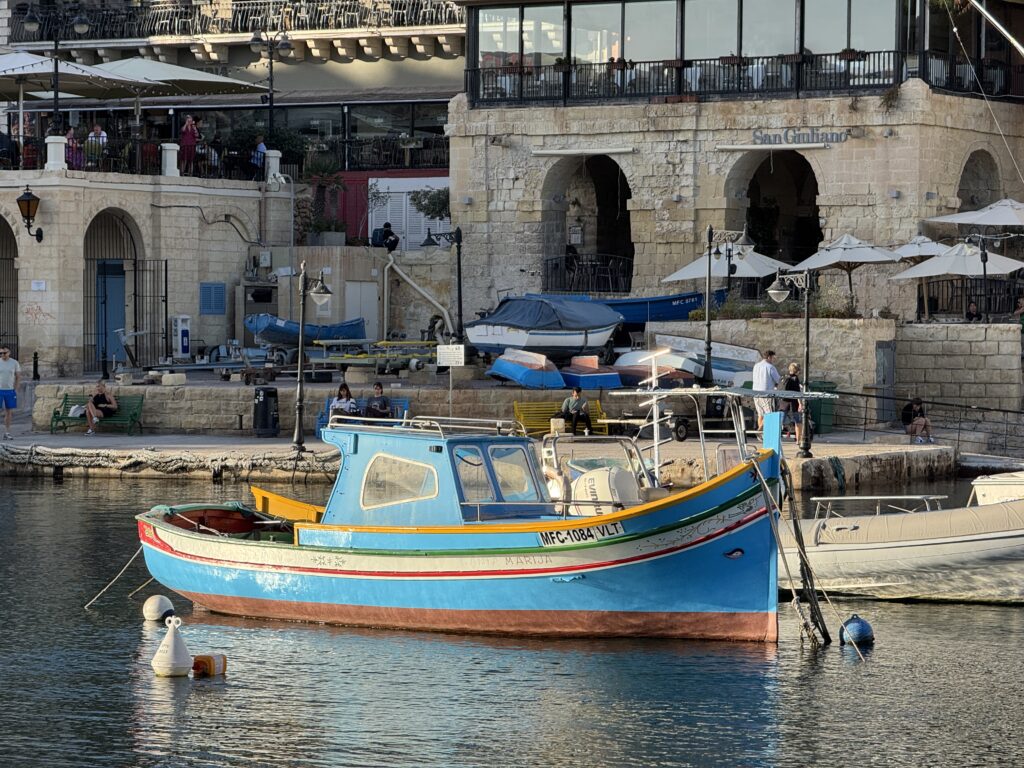
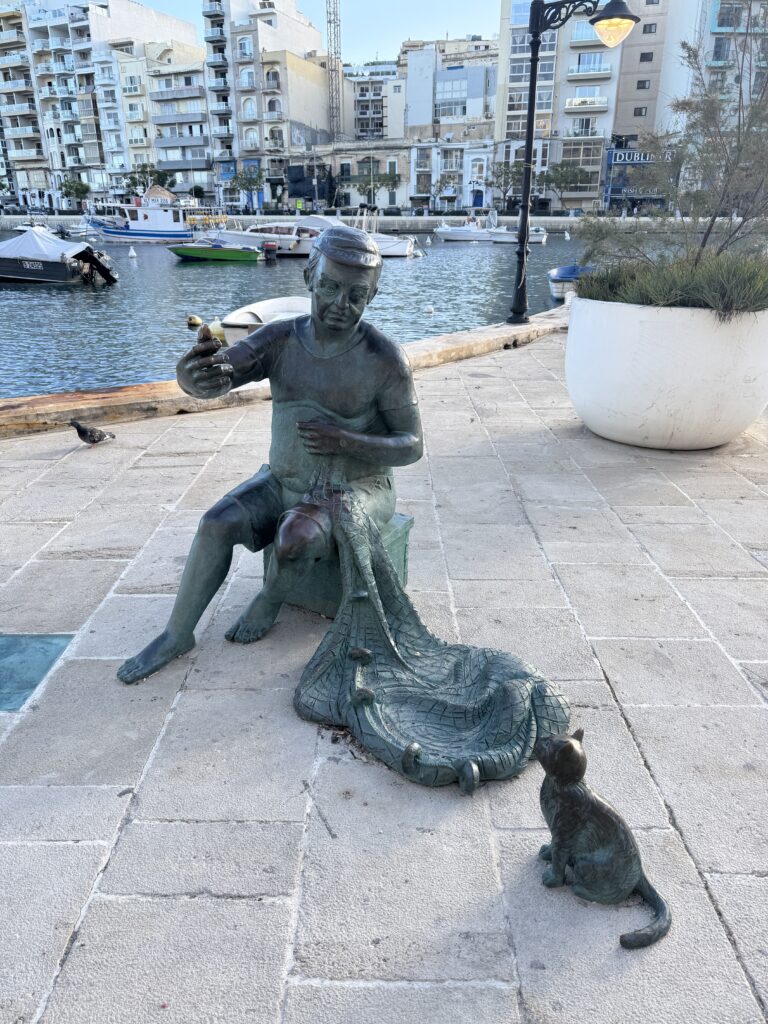
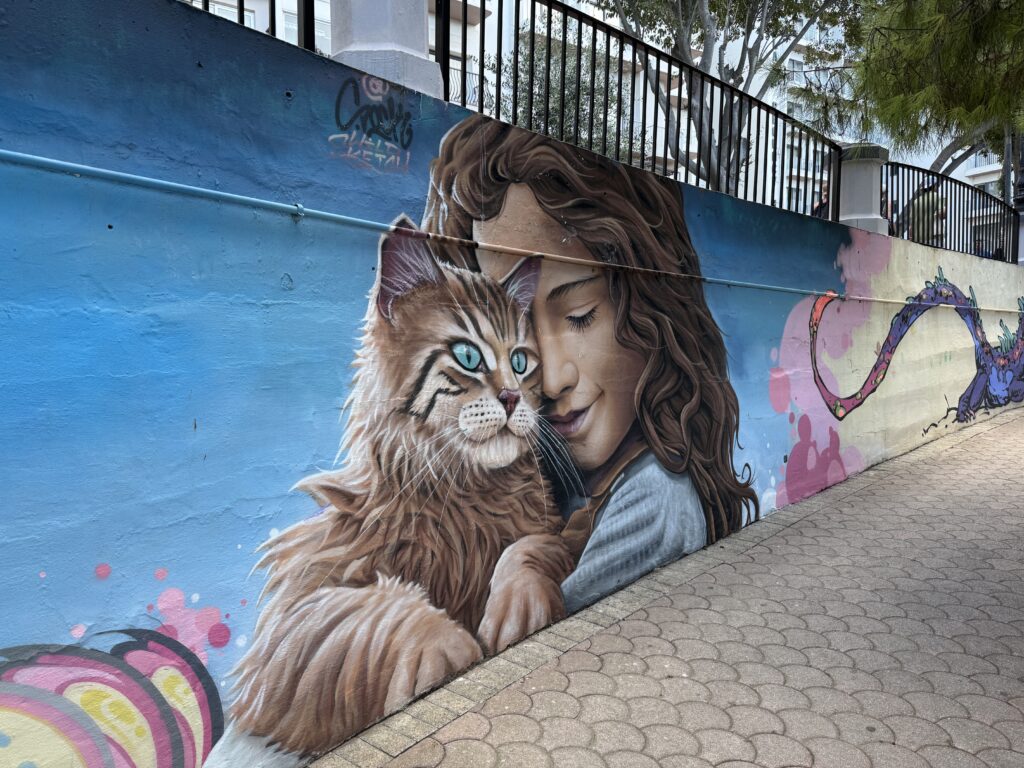
If you are not familiar where Malta is, look for the blue dot in this Google Maps screen shot, south of Sicily, Italy. Please see the next picture for a zoomed in view. Since it is pretty far south in the Mediterranean Sea, it has a warmer climate than most of Europe – and they receive about 4 million visitors a year.The tiny island nation of Malta consists of about 550k full time residents across two main islands. The main island, called Malta Island, is only 17 miles long and 9 miles wide and holds 90% of the year round population. Malta was ruled by the British from 1800 until they achieved their independence in 1964. They joined the European Union (EU) in 2004.This was our first ever trip on RyanAir, which is a very large European budget airline and unfortunately the only option available with non-stop flights from Athens to Malta. We made it to our seats after enduring the slowest baggage check line we have ever encountered, and off to Malta we went.Triton’s fountain is just outside the main gate of the old city of Valletta and is a well known landmark. It is enormous – the figures are about twice as large as human beings. We passed this fountain many times on our way into and out of Valletta.This is a unique feature of Malta called a “Gallariji”. They are traditional, enclosed wooden balconies that are a famous feature of Maltese architecture. They originated in the 17th century, inspired by North African muxrabija, and were designed to allow residents to observe the street while maintaining privacy. Today, they are an iconic symbol of Malta’s cultural heritage and they are everywhere.It is very common for “Gallariji” to be painted the same color as the main door and shutters. This photo was taken on one of the side streets in Rabat, just outside the old city of Mdina.This is what a “Gallariji” looks like from the inside. We were pleasantly surprised at how comfortable it was.The outdoor Sunday market along the harbor in the fishing village of Marsaxlokk. It was very busy and very crowded. We purchased some cooking spices and some prickly pear liquor (more on that later). A luzzu is a traditional fishing boat from the Maltese islands. They are usually painted in bright colours, while the bow has a painted pair of eyes, ostensibly to ward off evil. The harbors on the south end of the island are full of these boats.Many of the bays of Malta are rimmed by long and wide promenades for strolling around the waters’ edge. They have art installations along them as well, including this life – size statue on the north side of Spinola Bay in St Julian’s. We spent many hours walking along these promenades in various bays, enjoying the water views and the cooler air.Susan liked that there was very little graffiti anywhere on Malta and any street art we encountered was really spectacular like this one.
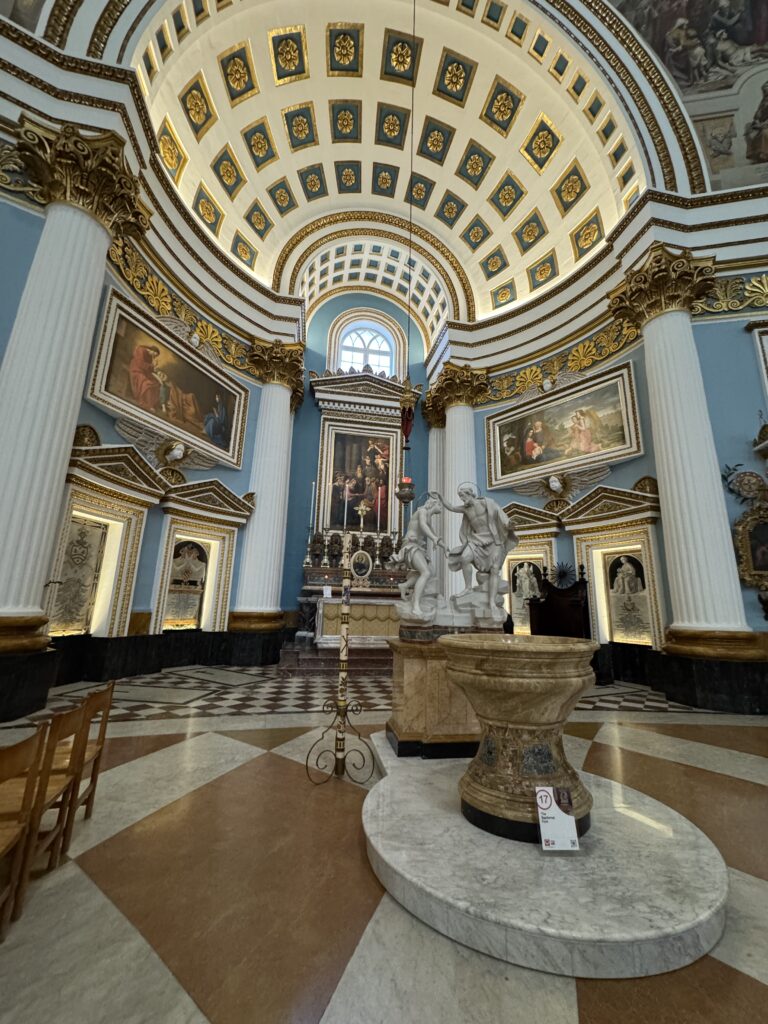
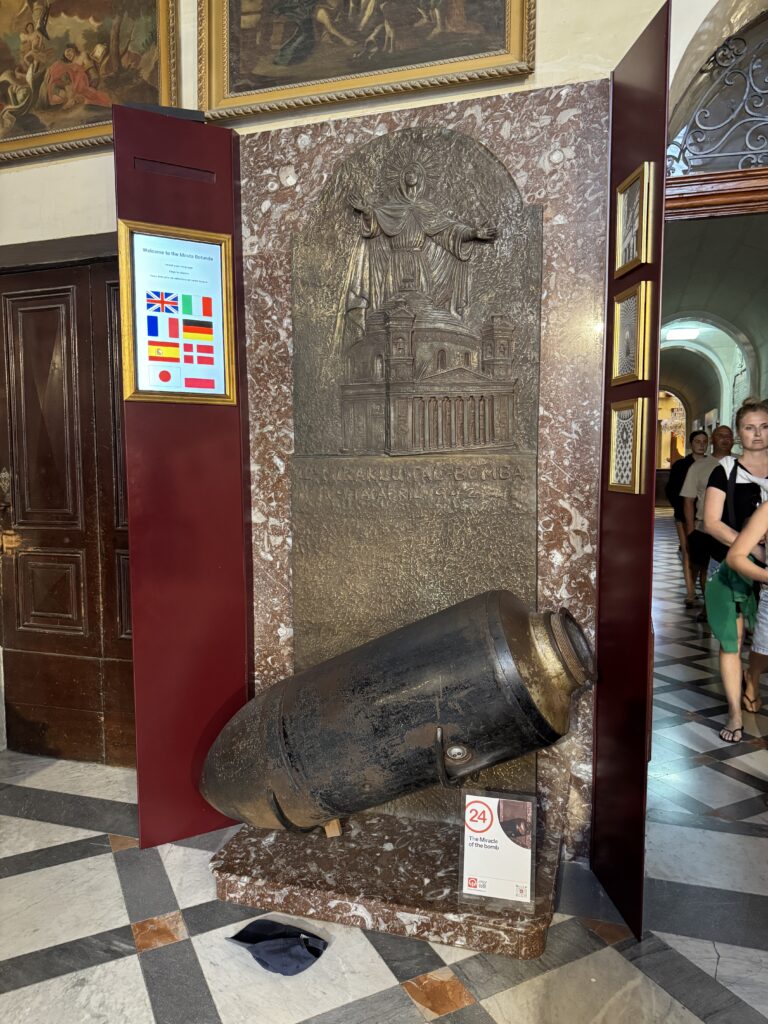
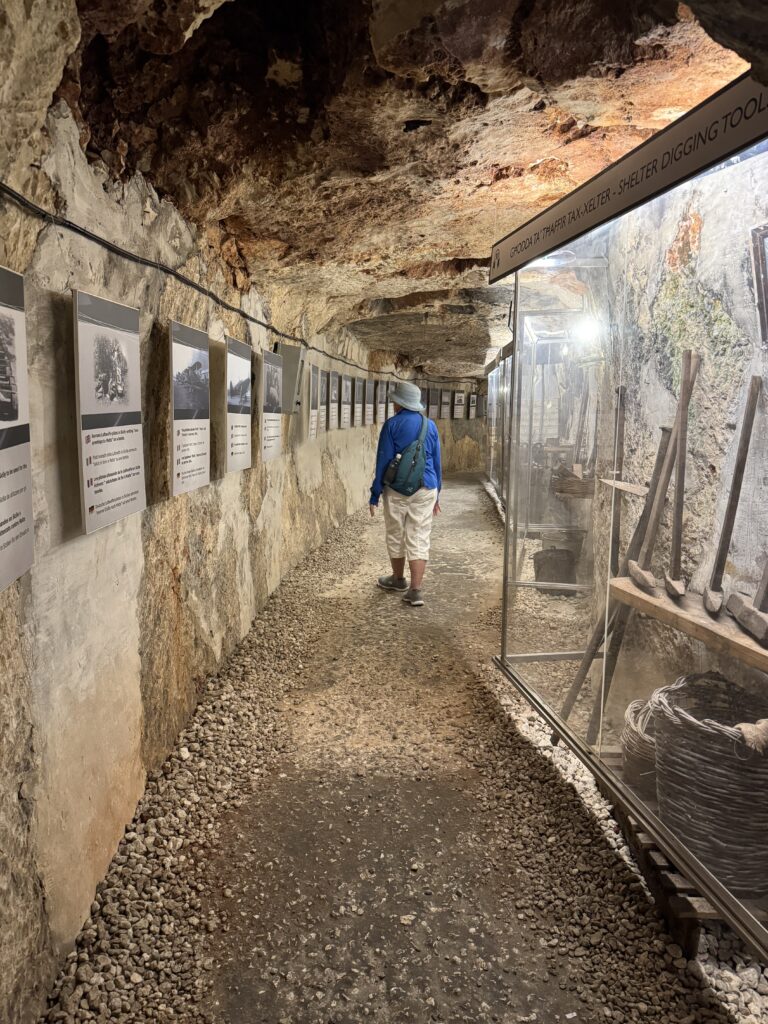
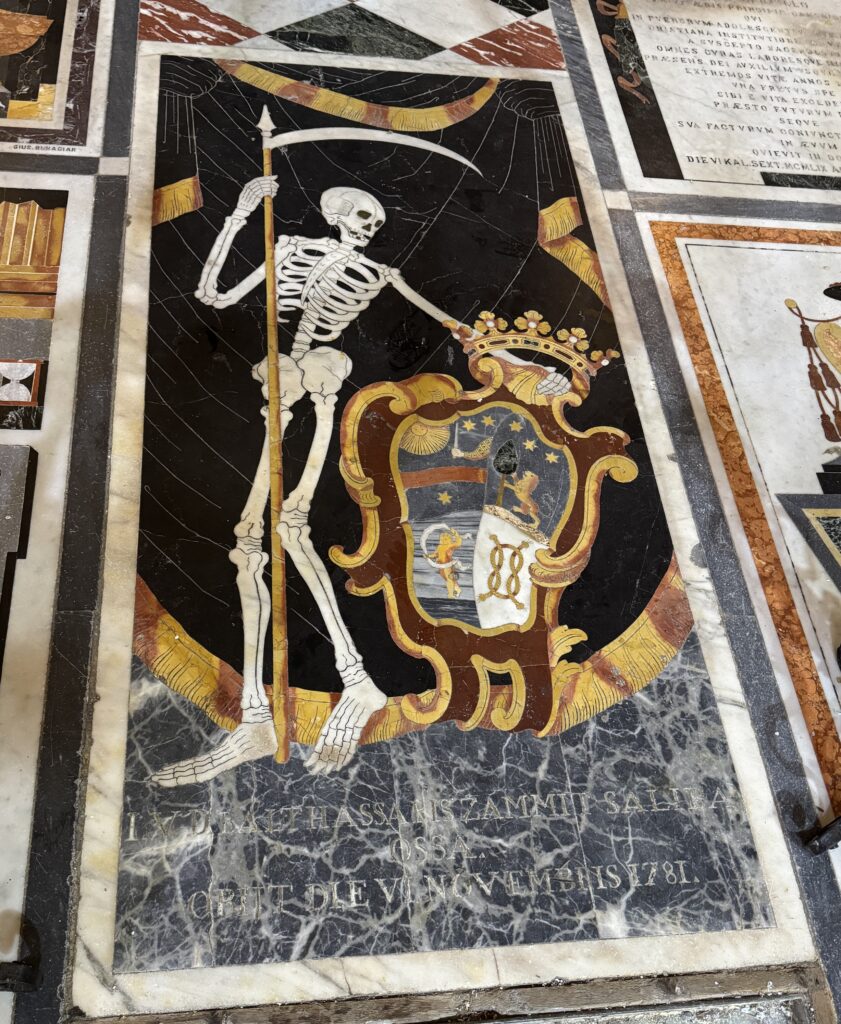
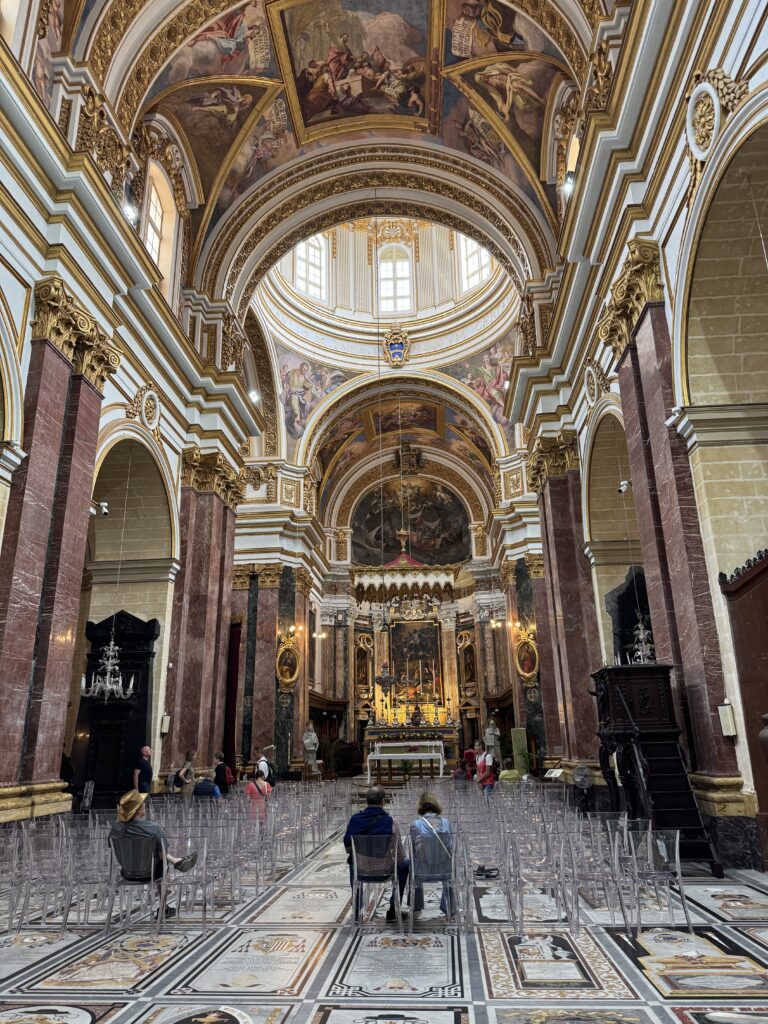
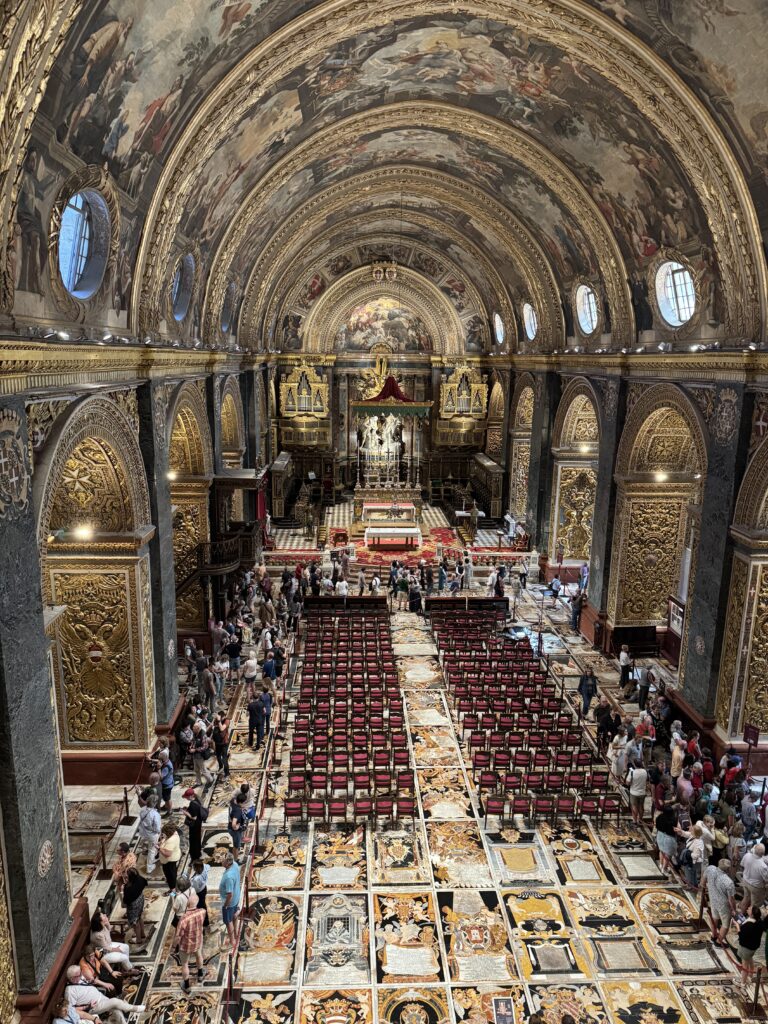
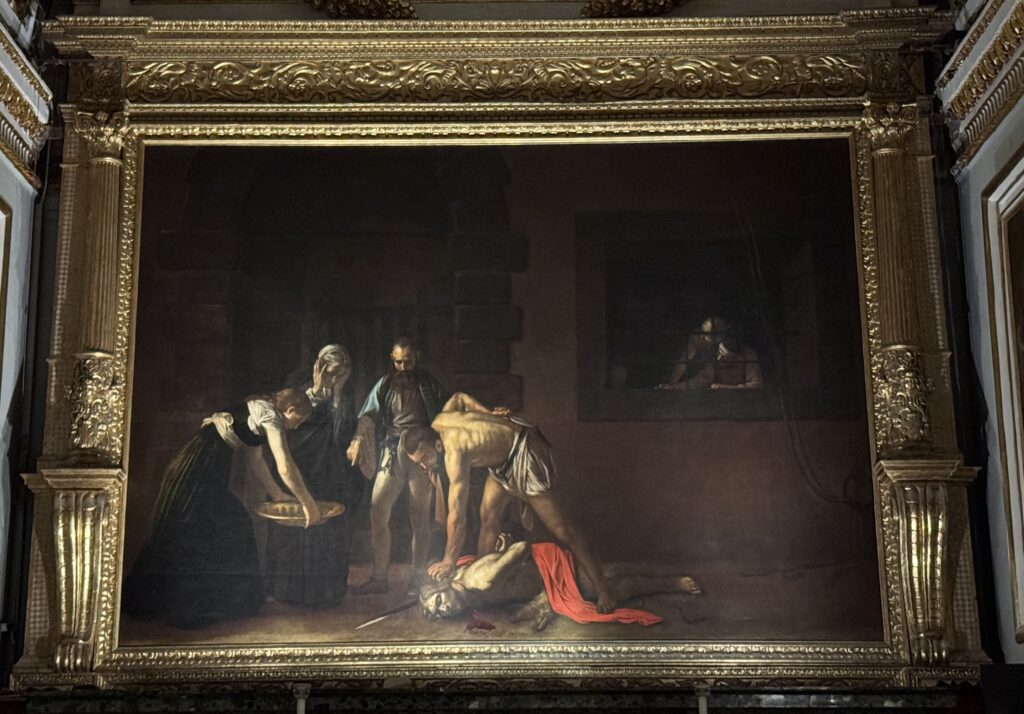
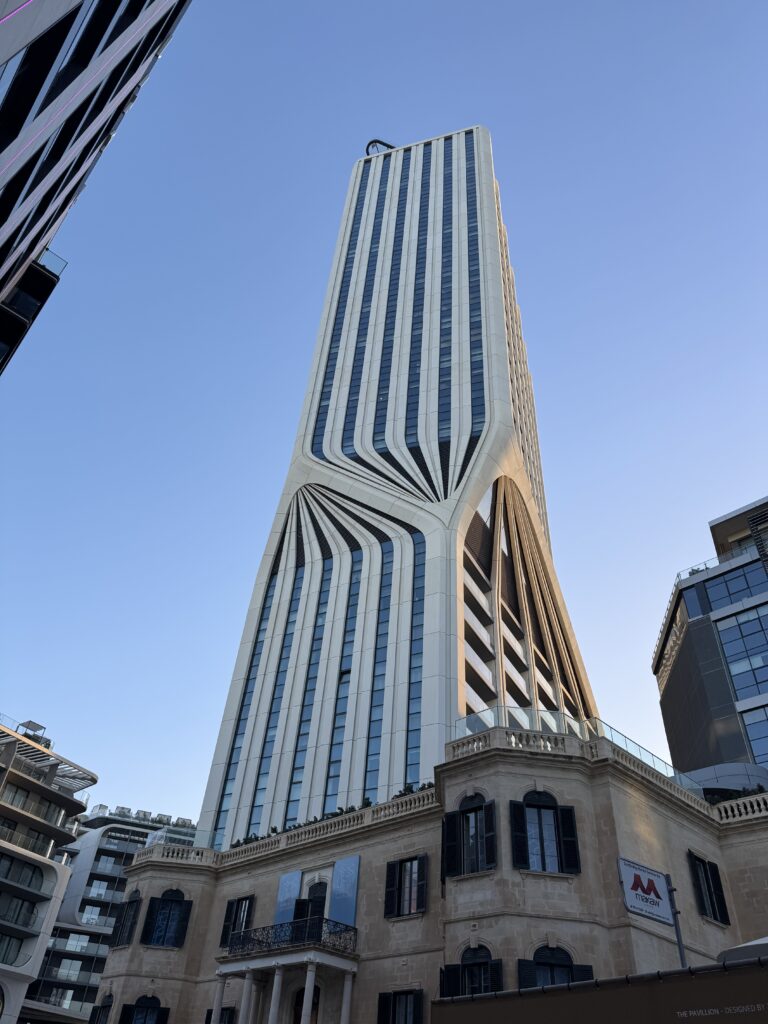
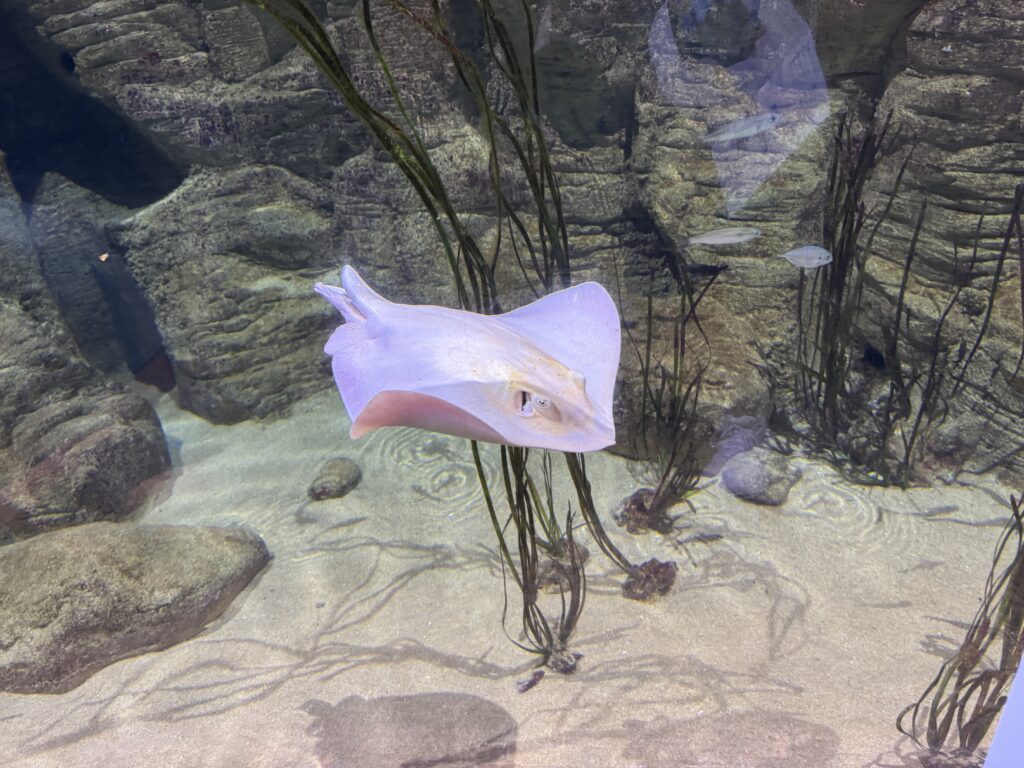
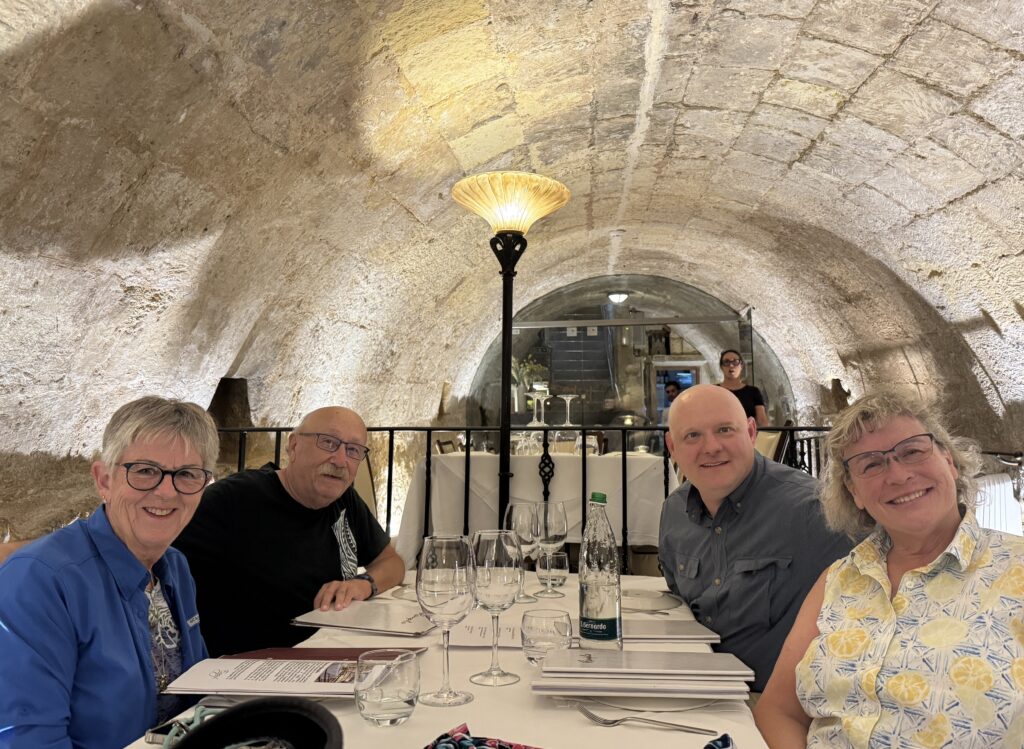
The Rotunda of Mosta is a relatively young church by European standards, only 190 years old. It is a Roman Catholic parish church and basilica in Mosta, Malta. Its interior design is neoclassical and strikingly fresh with pastel blue hues and an almost mid-century modern vibe. The design of the church is based on the Pantheon in Rome, has the third-largest unsupported dome in the world, and is Malta’s largest church. And it has an amazing WWII bomb story associated with it… read on.This is a replica of the WWII bomb that pierced the dome of the Mosta Rotunda church on April 9, 1942. After it pierced the dome it fell down into the front of the church, cracking the tiled floor, and then rolled up to the alter, without exploding. There were 300 people in the church that day and nobody was injured. This event is referred to as the “Miracle of the Bomb”.In Mosta, Malta, in front of the Mosta Rotunda, there is a very brief underground walk-through tour you can take of a World War II Air Raid shelter, and boy does it pack a punch! Malta was never overthrown / occupied by the Axis powers in WWII but it got really close at one point to having to surrender – they did not. The entire island was awarded the George Cross Award, which is the highest British award for gallantry not in the presence of the enemy, recognizing acts of the greatest heroism or courage in circumstances of extreme danger, and is primarily for civilians.In both cathedrals (St Paul’s in Mdina and St John’s in Valletta) of the Catholic Archdiocese of Malta, the entire floor is covered with ornate marble tombstones that are each about 5 ft long and 2.5 ft wide.The Metropolitan Cathedral of Saint Paul, commonly known as St Paul’s Cathedral or the Mdina Cathedral, is a Catholic cathedral in the 3,000 year old walled city of Mdina, Malta. The cathedral was founded in the 12th century. The original cathedral was severely damaged in the 1693 Sicily earthquake, so it was dismantled and rebuilt between 1696 and 1705. The cathedral is the seat of the Roman Catholic Archdiocese of Malta, and since the 19th century this function has been shared with St. John’s Co-Cathedral in Valletta.St John’s Co-Cathedral in Malta was built in the 16th century and later ornamented in the Baroque style of art. It is located in the Capital City of Valletta, that was founded by the Order of the Knights of St John in the 16th centuryLocated in the Oratory of St. John’s Co-Cathedral in Valletta, the Beheading of Saint John the Baptist is an enormous oil painting by the Italian artist Caravaggio. Measuring 12 ft (3.7 m) by 17 ft (5.2 m), it depicts the execution of John the Baptist. It is the only painting that Caravaggio ever signed his name on – in this case, using the red paint of the blood flowing from the neck of St John.The Mercury Tower is a high-rise, mixed-use building in St. Julian’s, Malta. At 121 metres (397 ft) tall, it is Malta’s tallest building. We attended a 3-D theater event and visited the roof top observation deck. We thought Malta’s overall infrastructure was pretty impressive. Their roads are in very good shape too.We visited the Malta National Aquarium in Saint Paul’s Bay. The creature in this photo is very rare albino stingray whose name is “Casper” – as in Casper the Friendly Ghost. A local fisherman caught him a few years ago and brought him to the aquarium. Albino stingray do not normally live to adulthood in the wild because their albino pigment renders them unable to hide from predators.Our wonderful family friends Jeep and Larry passed through Malta via their cruise ship about two weeks after we explored Athens with them (see our previous blog post). We spent the day touring Malta with them and capped it off with a delicious dinner at Rampila Restaurant under one of the walls of the the old city of Valletta.
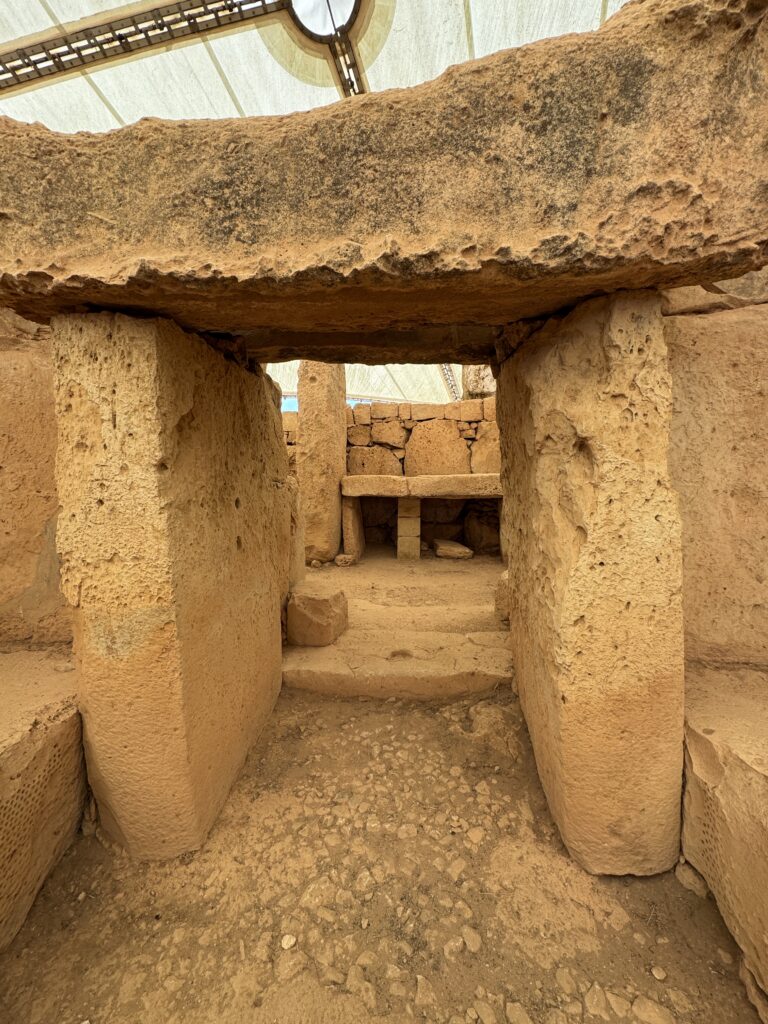
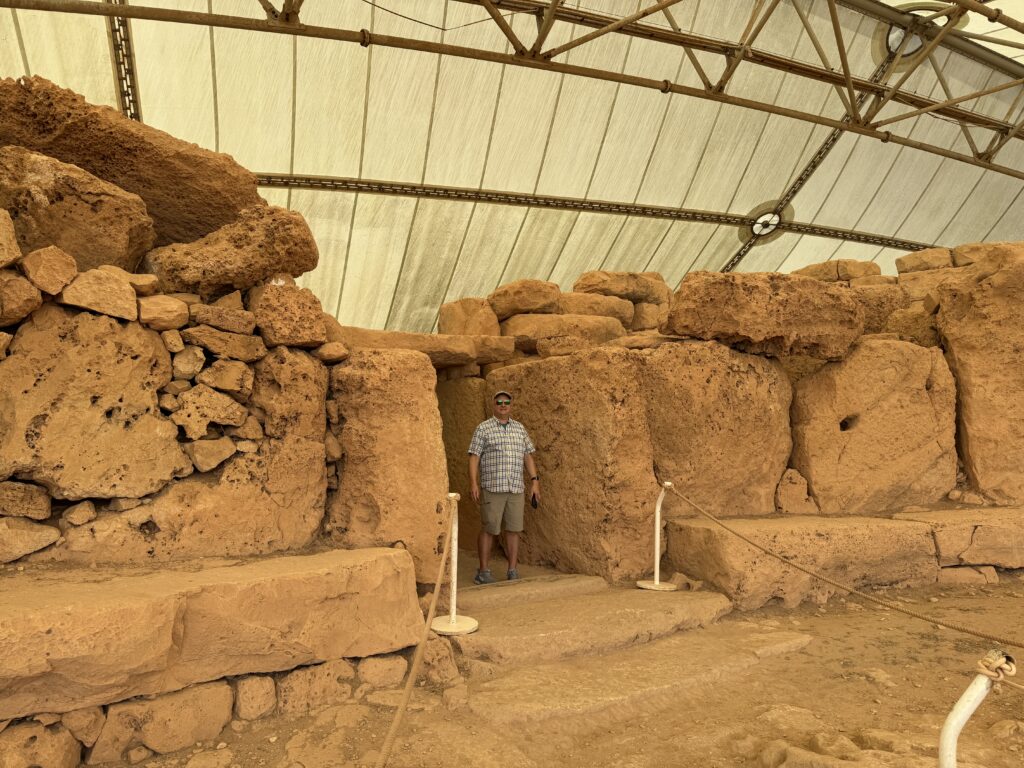
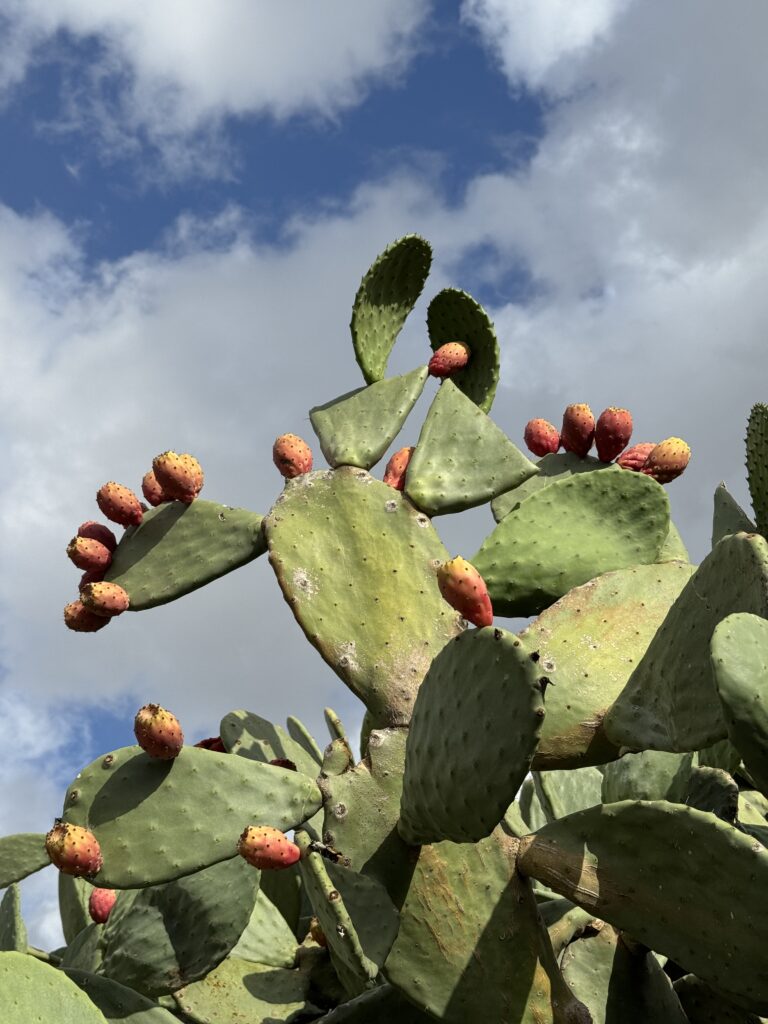
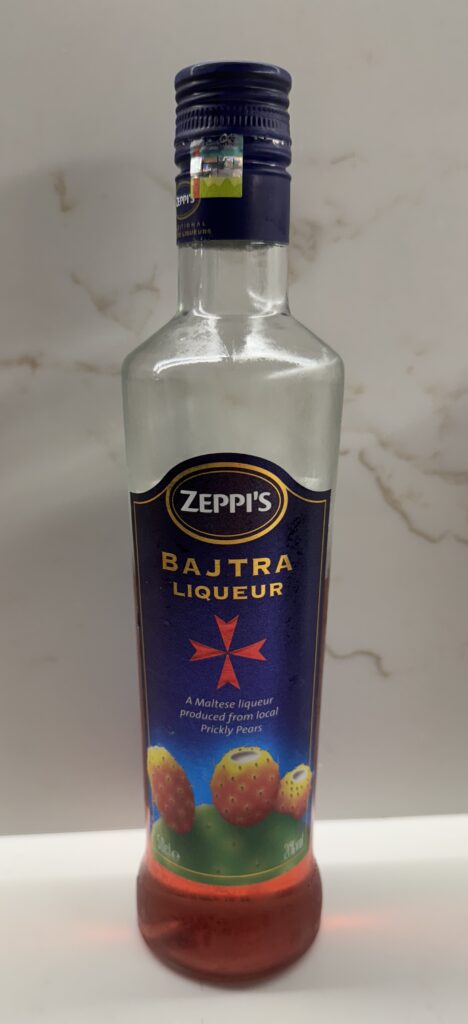
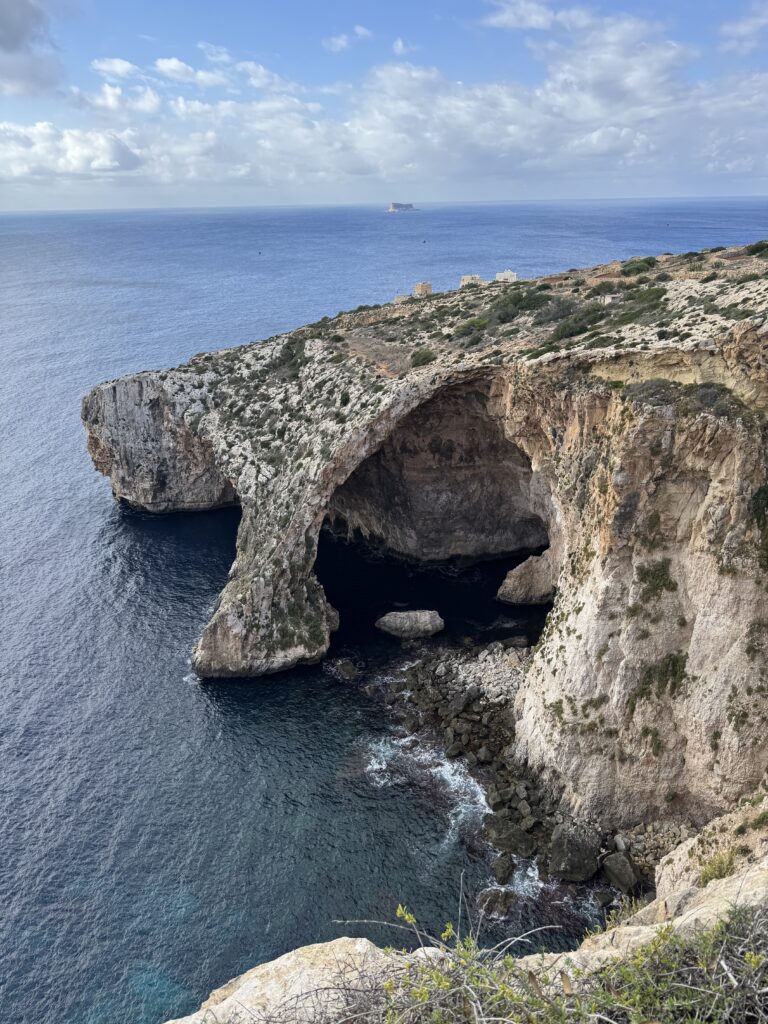
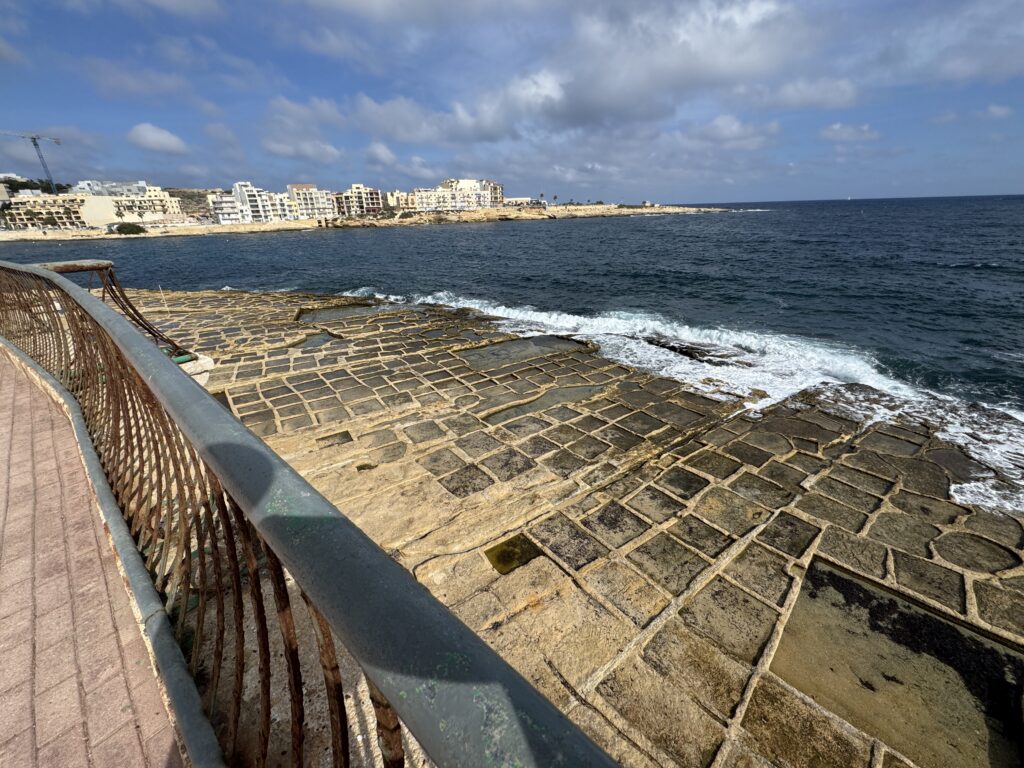
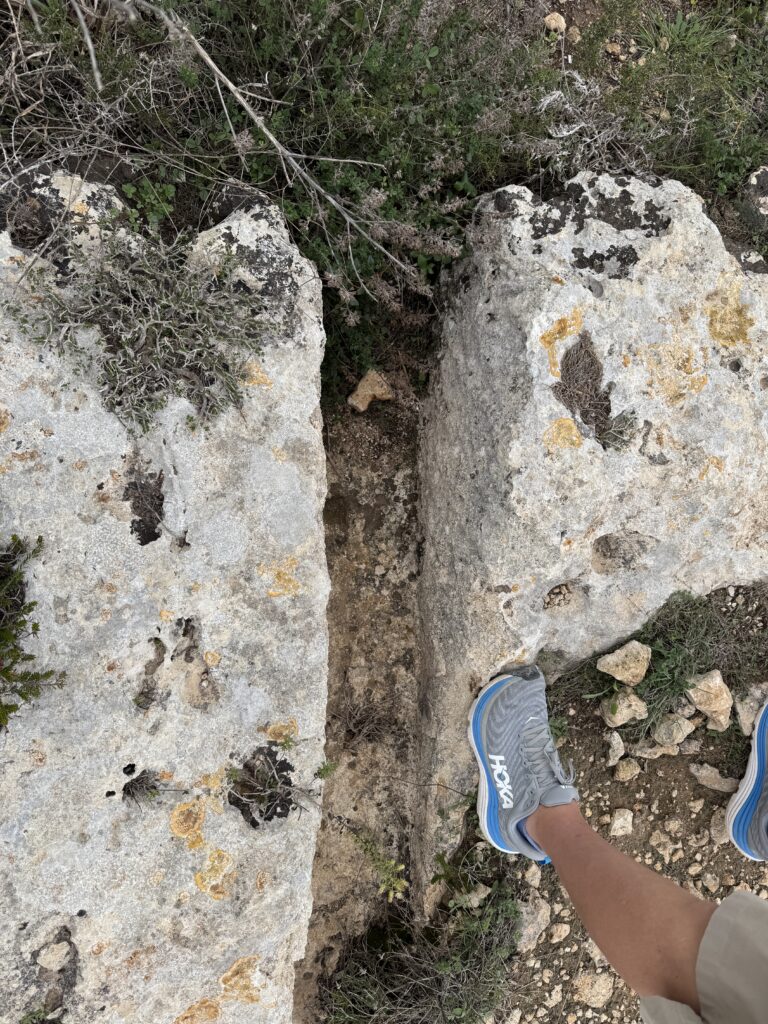
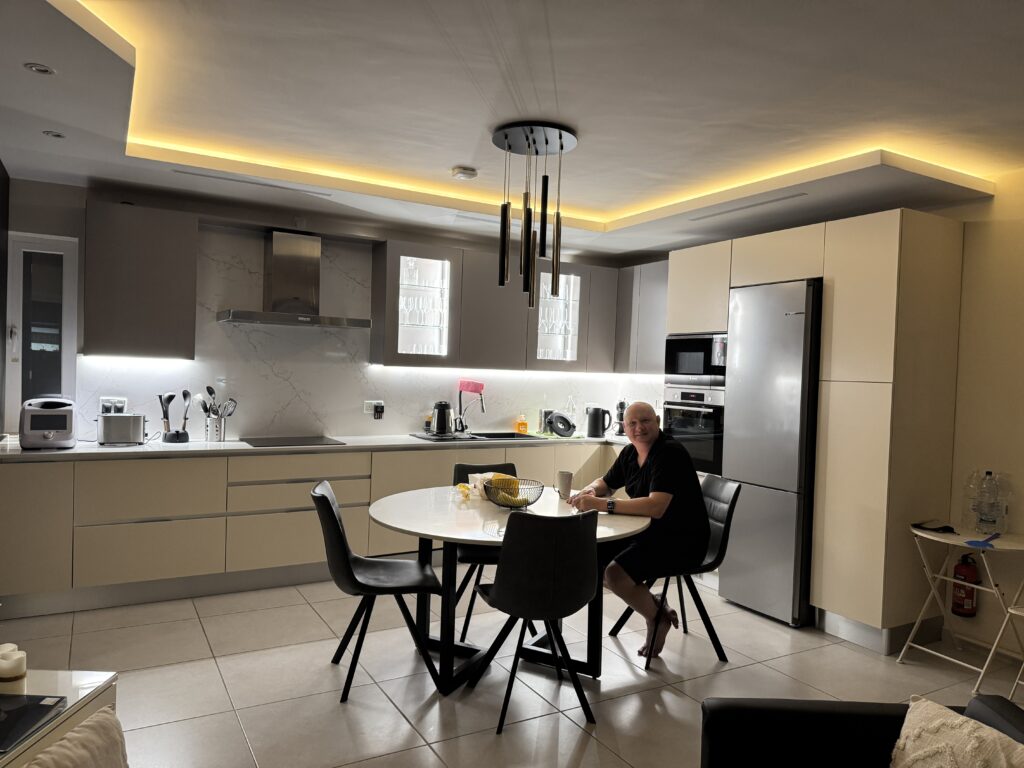
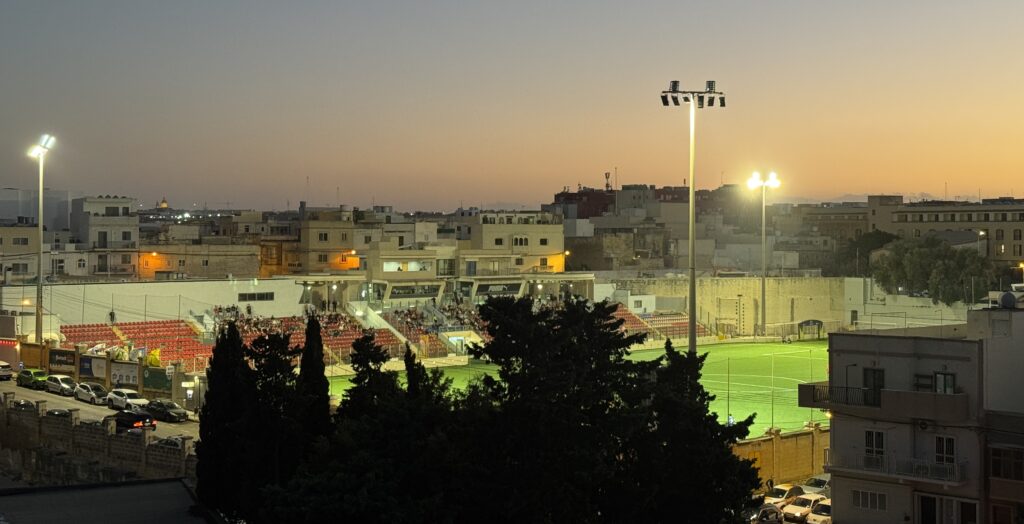
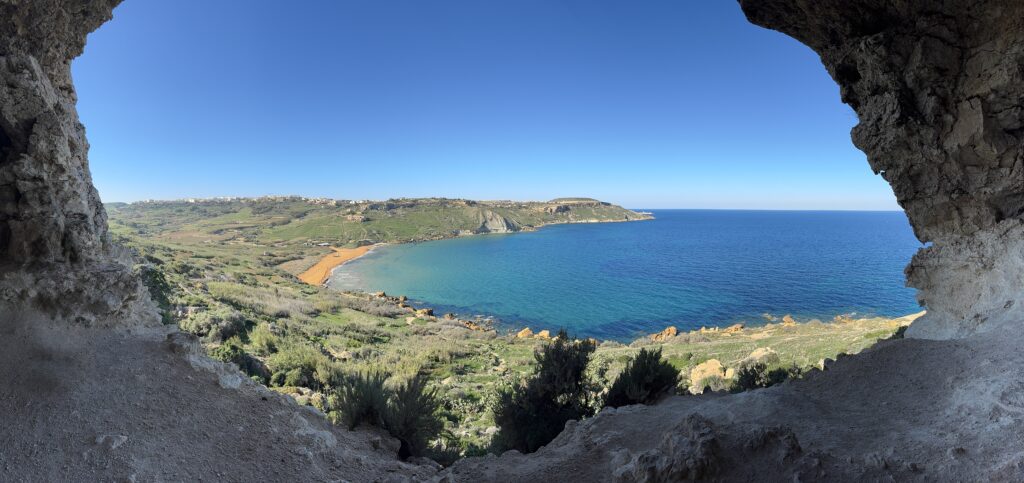
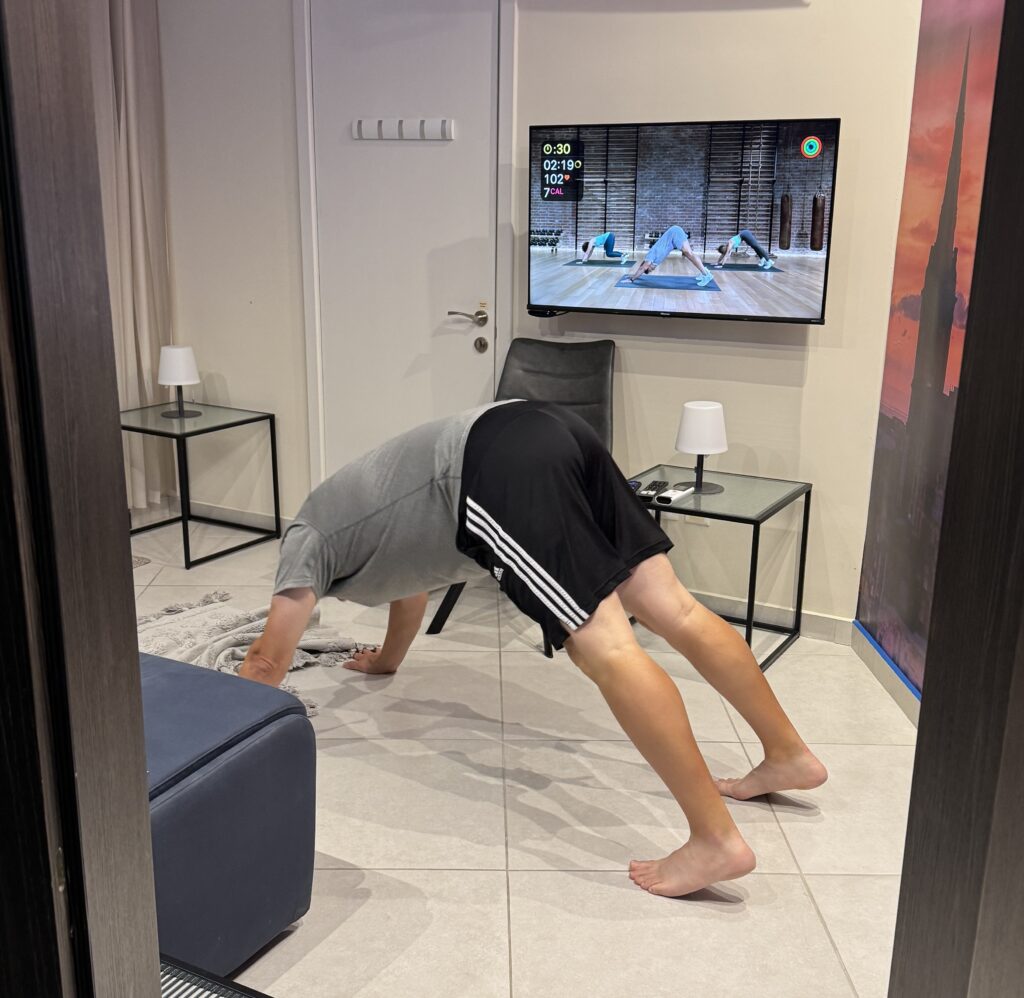
Ħaġar Qim is an ancient megalithic temple complex found on the island of Malta, dating from approximately 3600 BCE. That makes these structures about 5,600 years old, which is 1,000 years older than Stonehenge in England. It was declared a Unesco World Heritage site in 1992. This temple compound was fully exposed to the weather elements up until 2007, when a large protective tent structure was built over it. It is remarkably intact for its age.The temples at Ħaġar Qim are free -standing, with many large monolith stones, the largest of which weighs about 20 tons. Maltese folklore describes “Giants” as having built the temples since it was believed that only giant humans could move such heavy monoliths. The sister temple on the nearby island of Gozo is named Temple of the Giants. Prickly Pear Cactus are abundant on Malta and they are much larger than any of the ones I have seen in the USA. The one in this picture is about 8 feet tall and the fruit on it are as big as small oranges.The fruit of the prickly pear cactus is a delicacy on Malta and you can get it in a liquor, which is delicious. We liked the label on this bottle as it depicts the Maltese cross.This is a view of Malta’s famous blue grotto that if you view it when the sun angle is right, is a dazzling turqouise blue color. The sun angle was not good on this day but the limestone arch is impressively large. To give you a sense of scale, there are actually people standing on the hill above the arch but are too small to see in this picture.The historic salt pans at Marsaskala. The practice of salt harvesting in this region dates back centuries, although these particular pans are no longer actively used for harvesting. You can actually can walk through the pans, enjoy scenic views of the Mediterranean, and appreciate the unique patterns carved into the rock. The tide was coming up on this day so we simply surveyed them from the walking promenade above.The cart tracks of Malta are a network of ancient, parallel grooves carved into the island’s limestone bedrock, with origins debated but likely dating back over 4,000 years. Their exact purpose is unknown, but theories suggest they were used for transporting heavy loads like stone blocks for construction or for agricultural purposes, though they may have also had ritualistic functions or served as part of a water management system. Some tracks extend underwater, preserved due to rising sea levels. (Adam’s foot is provide for size reference). Our Air BnB was a beautiful top floor 2 bd 2 ba with everything we needed including a dishwasher. In this picture you can see some of it night lighting options, creating a really nice atmosphere to complement the terrace views. Our hosts were a local Maltese family, with whom we shared a really nice Saturday afternoon lunch during our stay.Our terrace view from our 6th floor penthouse Air BnB included a “futbol” (soccer) stadium. On some evenings the stadium was really thumping. We simply opened our big terrace sliding doors and enjoyed the energy.We spent a full day on Gozo island, which is an easy 45 minute catamaran ride from Valletta on Malta island. Gozo has a much smaller population than Malta island and has a very laid back vibe. This picture was taken from inside Mixta Cave on the east side of the island and is a view of Ramla Bay and Gozo’s only red sand beach.As full time travelers you still have to take care of normal things, like exercising. Adam used Apple fitness videos in the second bedroom (check out the picture on the TV in the background) to maintain his svelt form. While on Malta, we both received our Flu shots and Adam got his teeth cleaned.
Please feel free to leave a comment. If you leave a comment it will not show up right away. We have it set up so that we have to approve comments before they can show here (we do have to filter out spam unfortunately). We check for (and respond to) comments almost every day so you should be able to see it here soon. Take care.
3 Comments
🥰
Sorry about my very late comment! We had an amazing time with Adam and Susan! They were fantastic tour guides both in Athens and Malta! What a gift. We wish them happy travels! We will be watching!😁
Thank-you Jeep! We are now on our cruise ship “enjoying” the slow internet! See you in Feb!



🥰
Sorry about my very late comment! We had an amazing time with Adam and Susan! They were fantastic tour guides both in Athens and Malta! What a gift. We wish them happy travels! We will be watching!😁
Thank-you Jeep! We are now on our cruise ship “enjoying” the slow internet! See you in Feb!