Some places we visit deserve their own dedicated blog post, even if we only spent a few hours there – such is the case of the Alhambra in Granada, Spain. The Alhambra is a breathtaking medieval fortress and palace complex built by the Nasrid dynasty in the 13th and 14th centuries. As one of the finest examples of Islamic architecture globally, it is a UNESCO World Heritage Site renowned for intricate geometric stucco, reflective water features, and lush gardens. It is the second most visited attraction in all of Spain that routinely draws between 2.5 and 2.7 million visitors each year. We purchased our tickets several weeks in advance and took the first morning slot since we were expecting it to be really warm that time of year. The entire complex is gorgeous, with stunning views everywhere, and I lost track of the number of times I said “wow”.
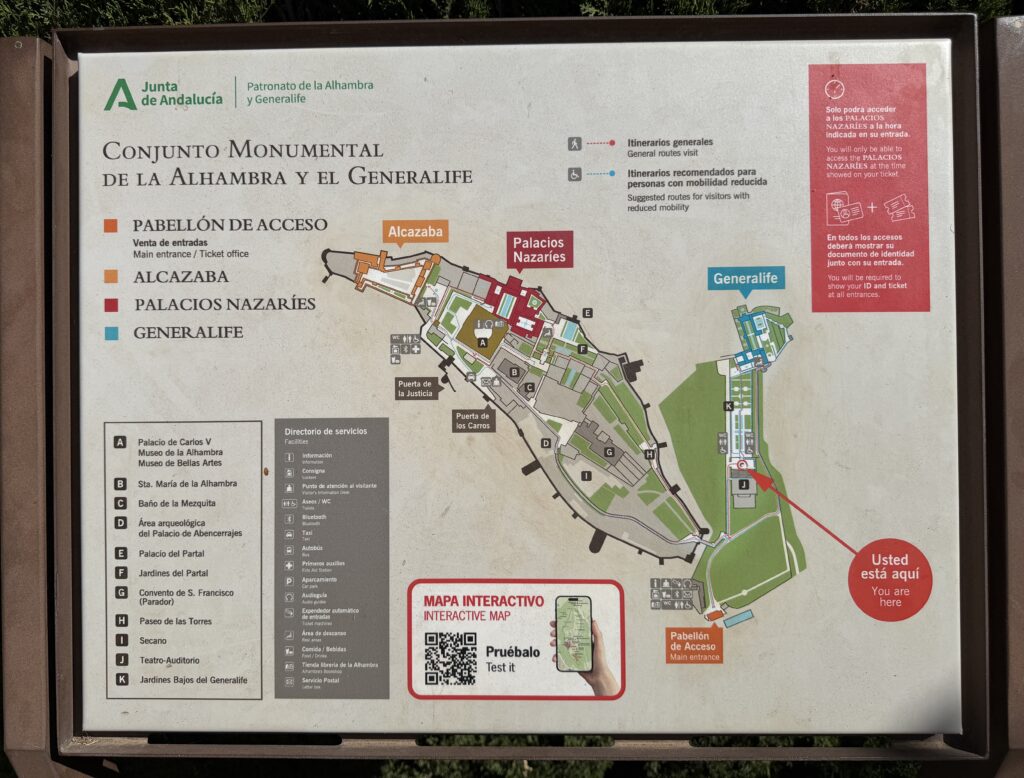
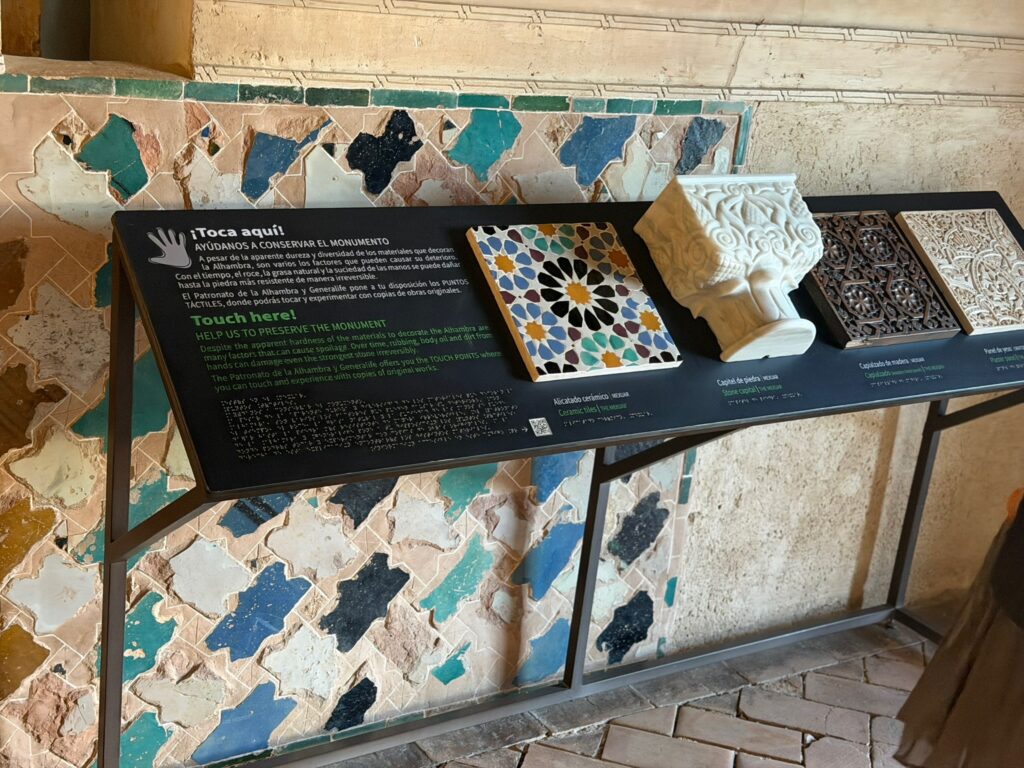
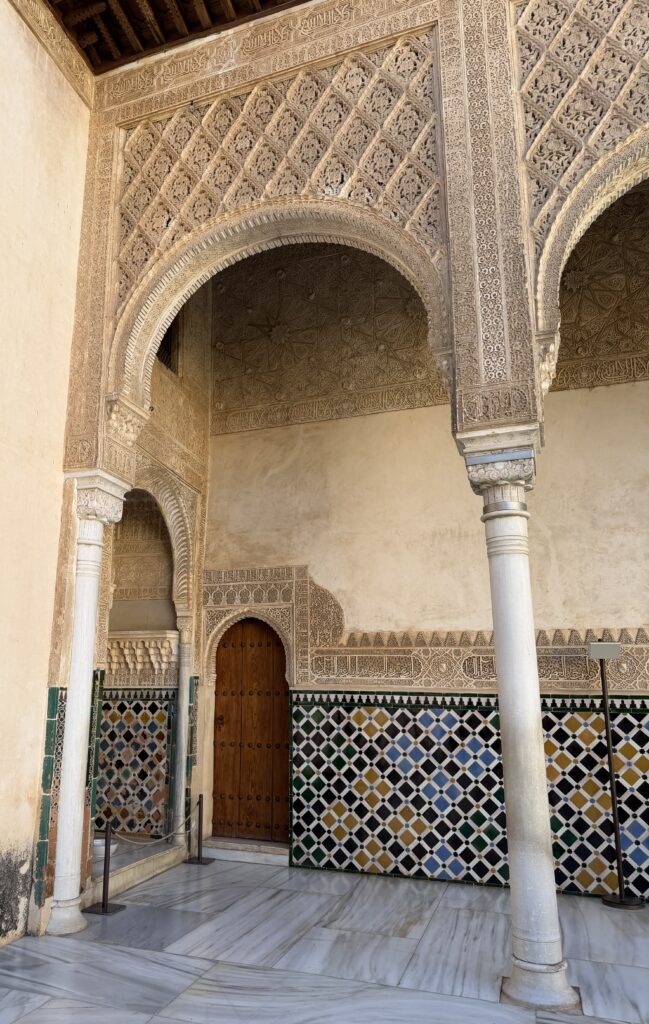
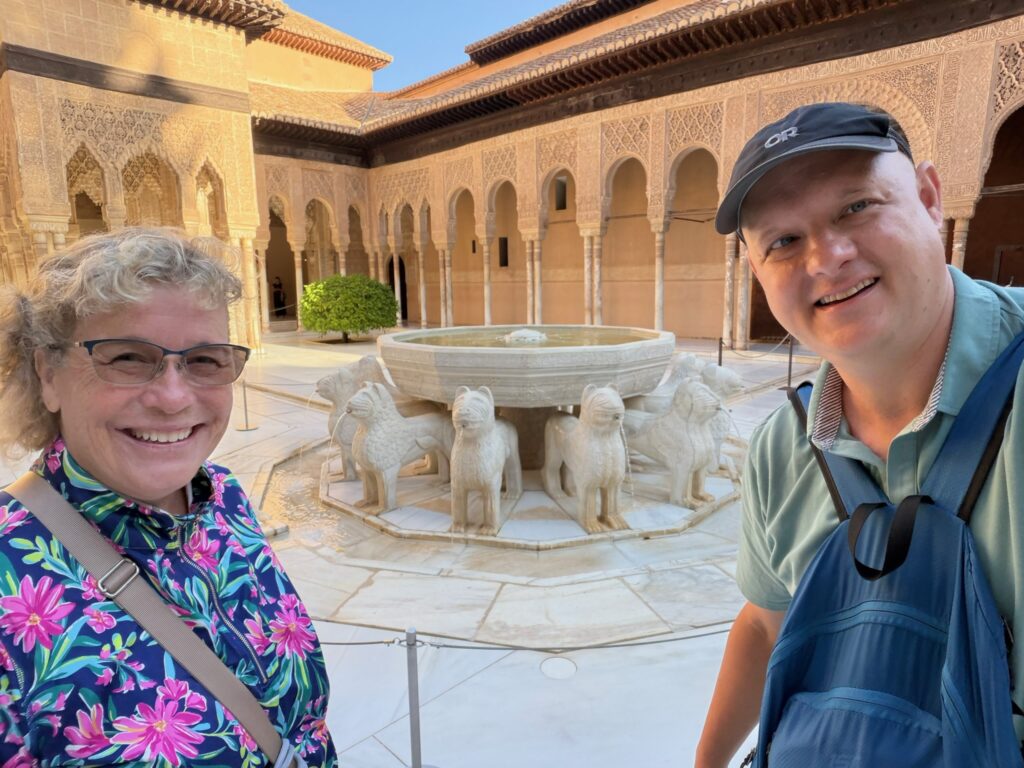
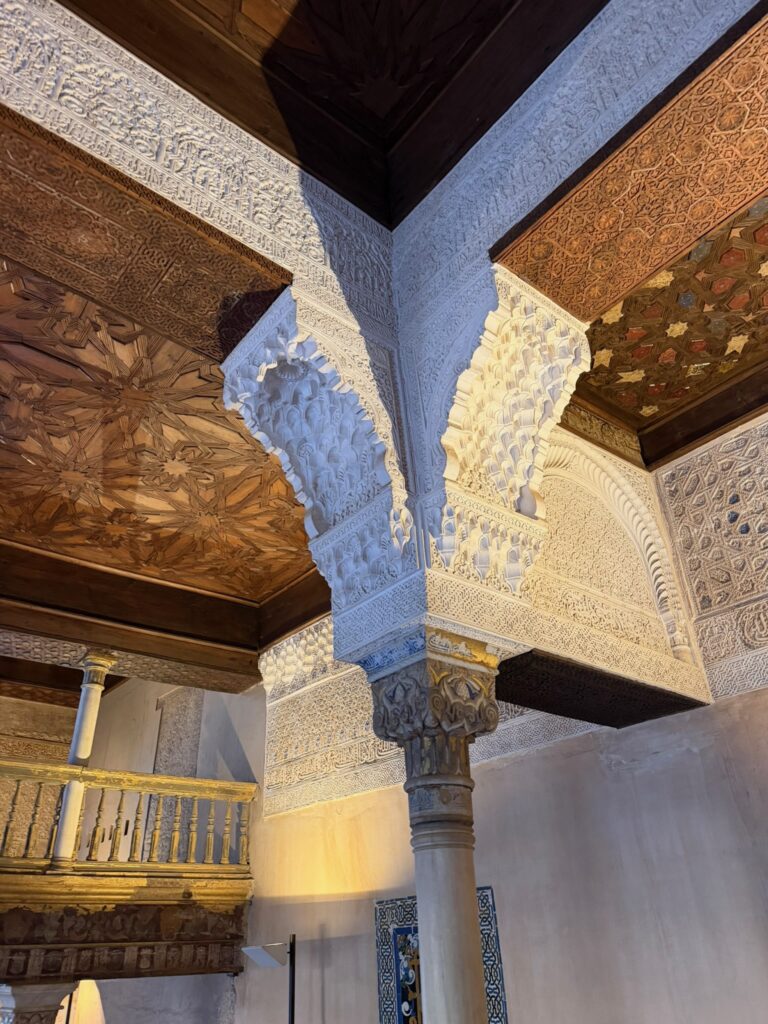
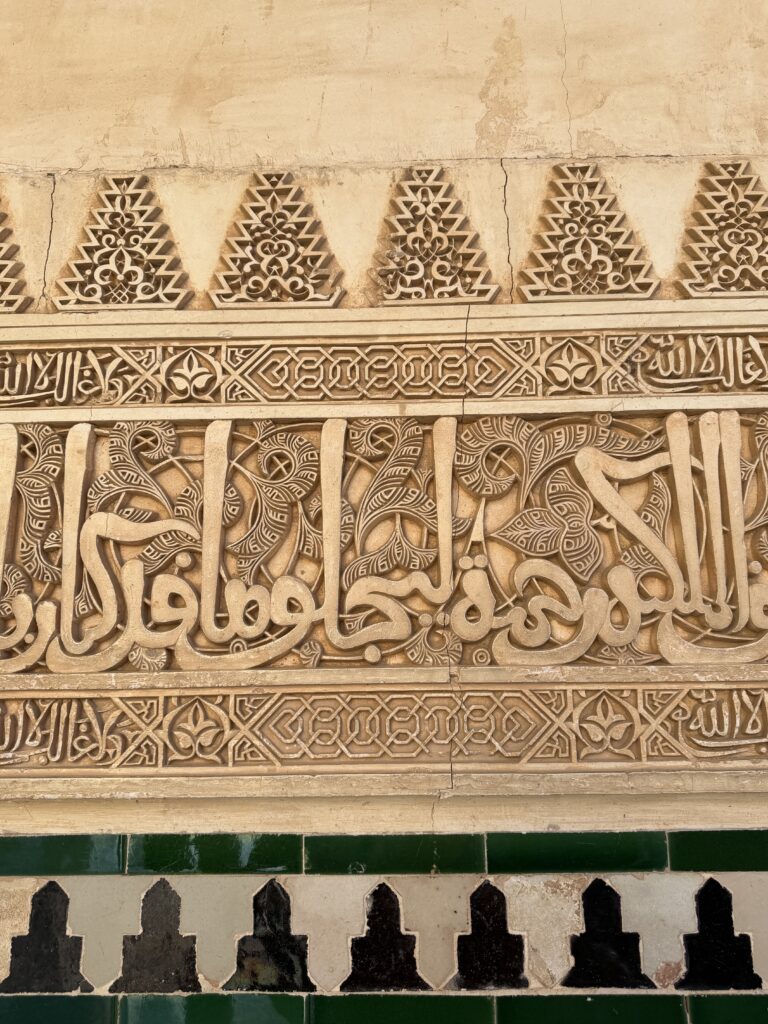
The Alhambra sits atop a high rocky plateau that overlooks the city of Granada in Southeast Spain. It is comprised of three main areas: Nasrid Palace: The architectural jewel of the Alhambra, featuring the famous Court of the Lions and Hall of the Ambassadors. The Alcazaba: The oldest section of the complex; this heavy military fortress offers panoramic views of Granada and the Albaicín quarter The Generalife: The serene summer palace and sprawling estate where Nasrid kings retreated, boasting beautifully terraced gardens and water channels.We began our visit in the Nasrid Palace since that is the one part of the Alhambra that requires a timed entry ticket. We had first morning light and the crowds were still fairly light.The building of the complex begun in 1238 CE by Muhammad I Ibn al-Ahmar, the first Nasrid emir and founder of the Emirate of Granada, the last Muslim state of al-Andalus. Later Nasrid rulers continuously modified the site. The most significant construction campaigns, which gave the royal palaces much of their defining character, took place in the 14th century. After the conclusion of the Christian Reconquista in 1492, the site became the Royal Court of Ferdinand and Isabella (where Christopher Columbus received royal endorsement for his expedition), and the palaces were partially altered.Not long after you enter the Nasrid Palace you are presented with this display which invites you to touch and feel their tile, plaster and wood on the display itself – and to please not touch the actual tile, plaster and wood on the walls. I thought this was very smart.The architecture of the Nasrid Palace reflects the tradition of Moorish architecture developed over previous centuries. It is characterized by the use of the courtyard as a central space and basic unit around which other halls and rooms were organized. Courtyards typically had water features at their centre, such as a reflective pool or a fountain. Decoration was focused on the inside of the building and was executed primarily with tile mosaics on lower walls and carved stucco on the upper walls. Geometric patterns, vegetal motifs, and Arabic inscriptions were the main types of decorative motifs. Additionally, “stalactite”-like sculpting, known as muqarnas, was used for three-dimensional features like vaulted ceilingsThis is the famous Lion Fountain in the Nasrid Palace. It was built in 1391 and features a white marble basin supported by twelve distinct stone lions. Historical and engineering studies suggest the fountain operated as a medieval water clock. Water filled a central bowl with internal holes connected to each lion, activating a new lion’s stream each hour until all twelve flowed at midday. A built-in siphon mechanism would automatically drain the central bowl and restart the cycle every 12 hours.
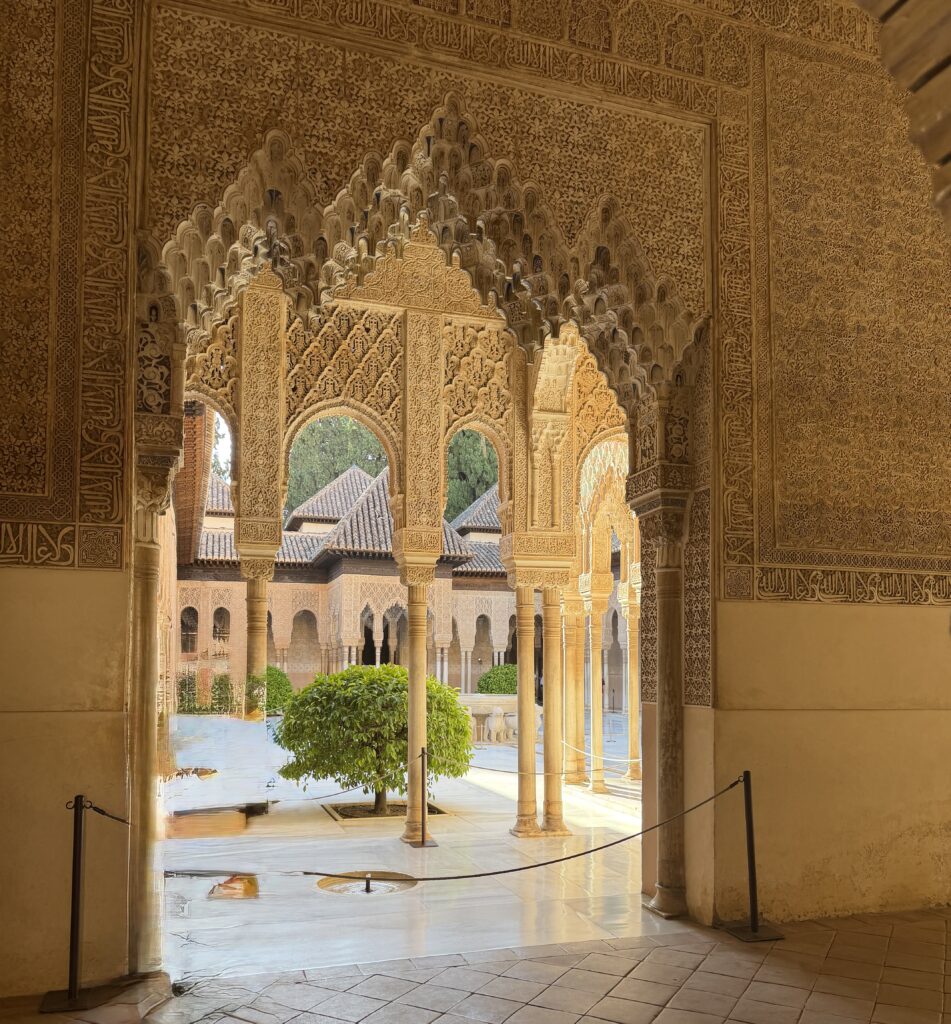
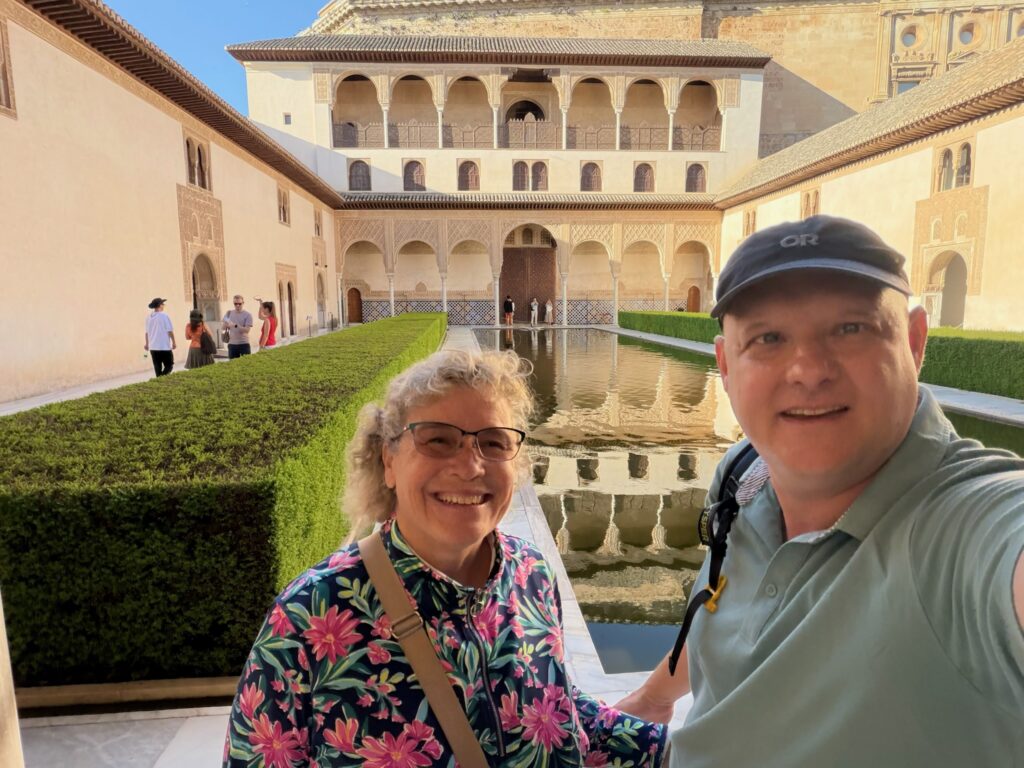
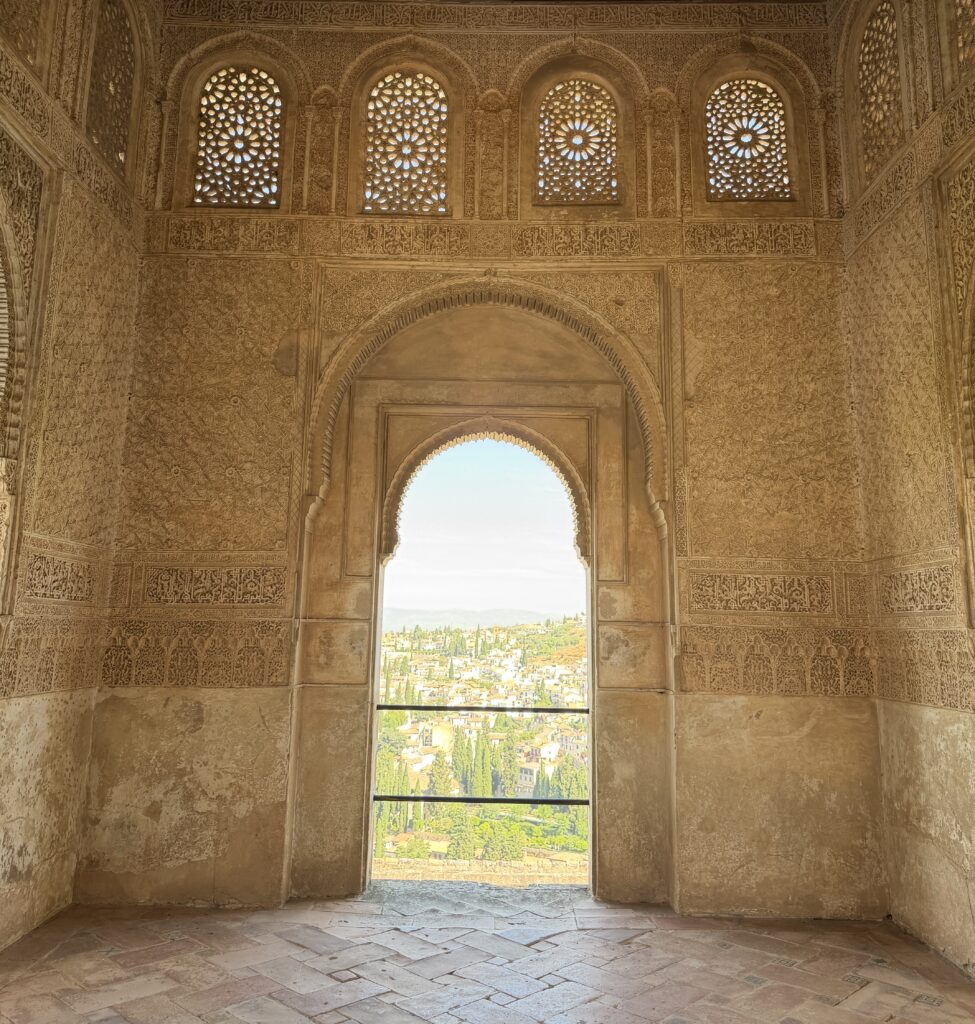
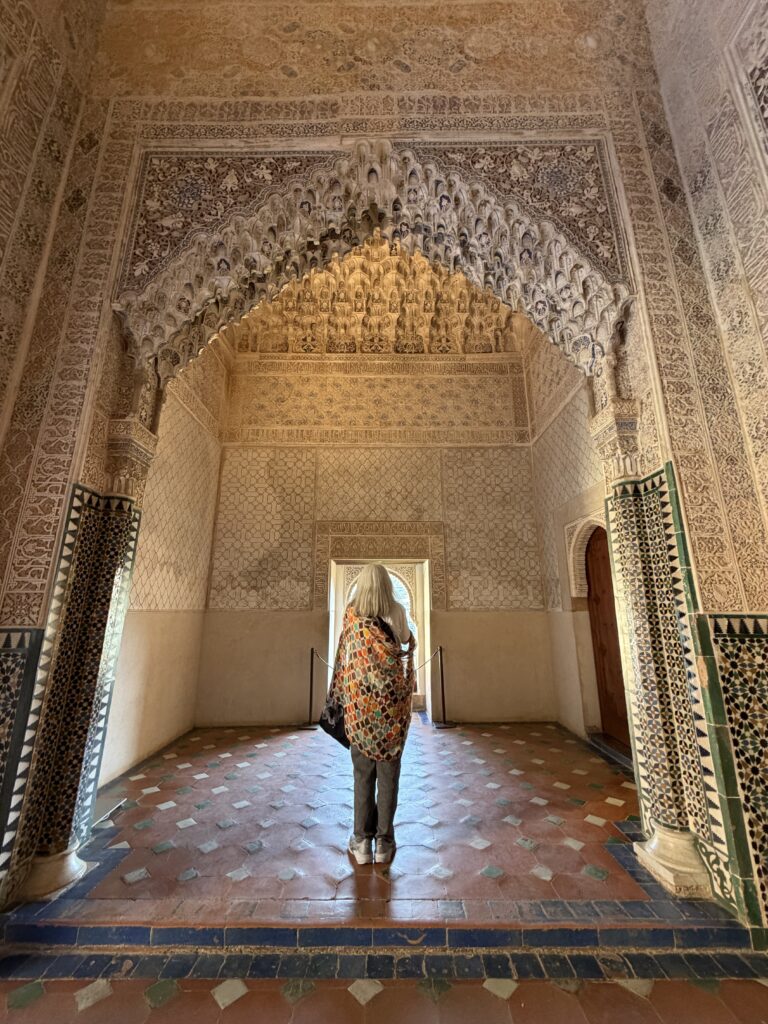
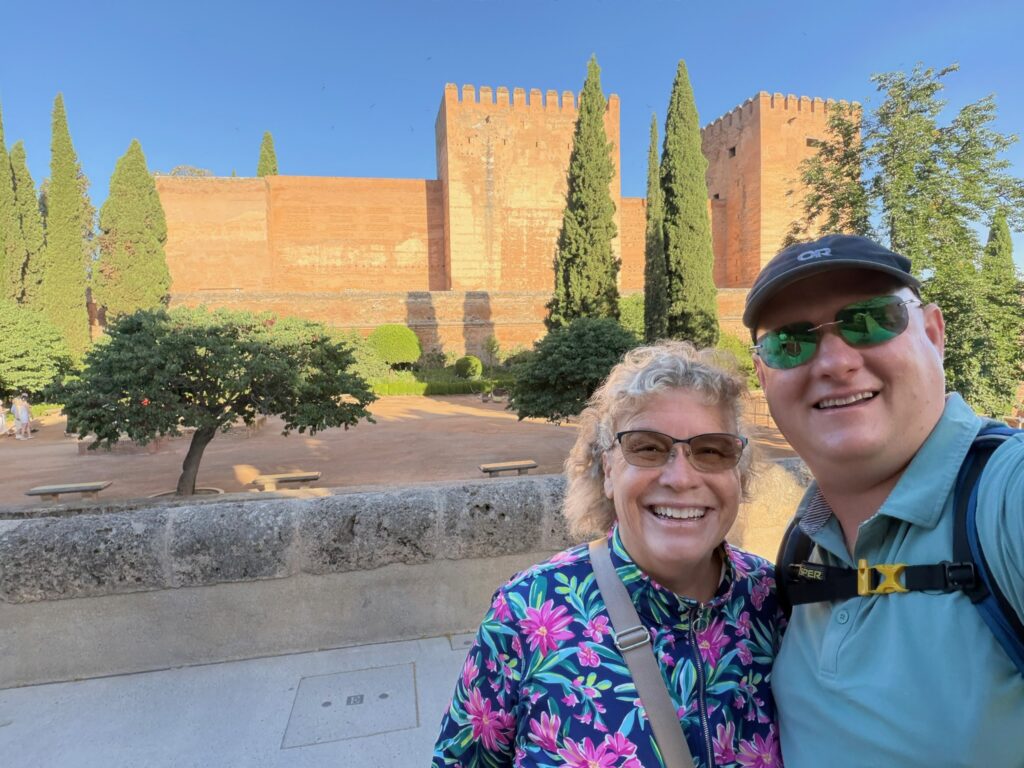
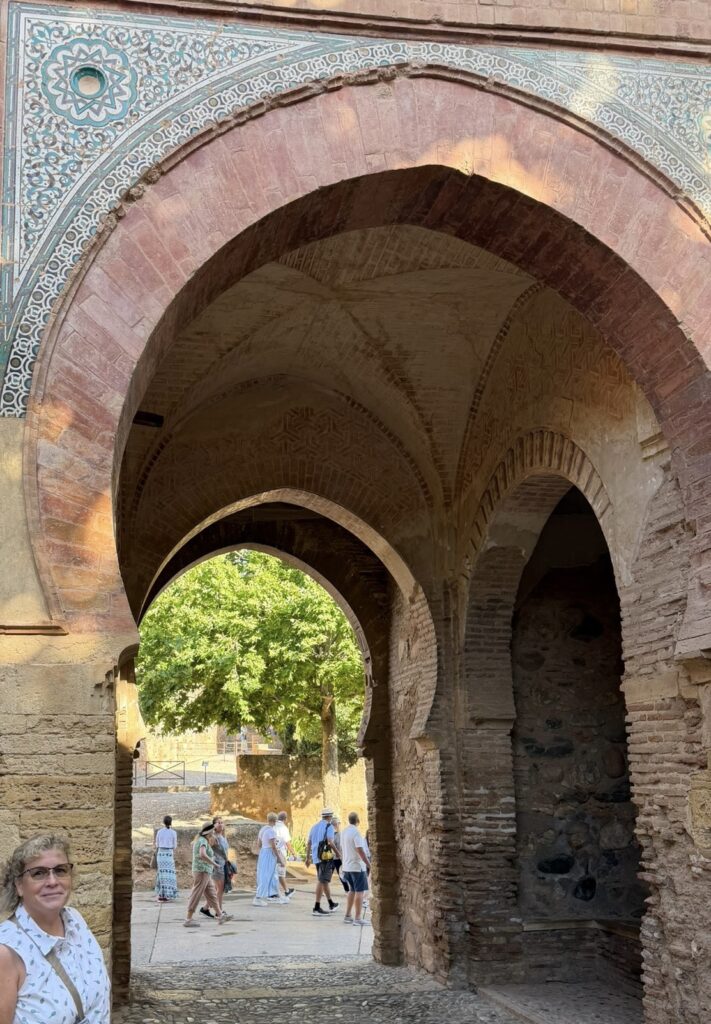
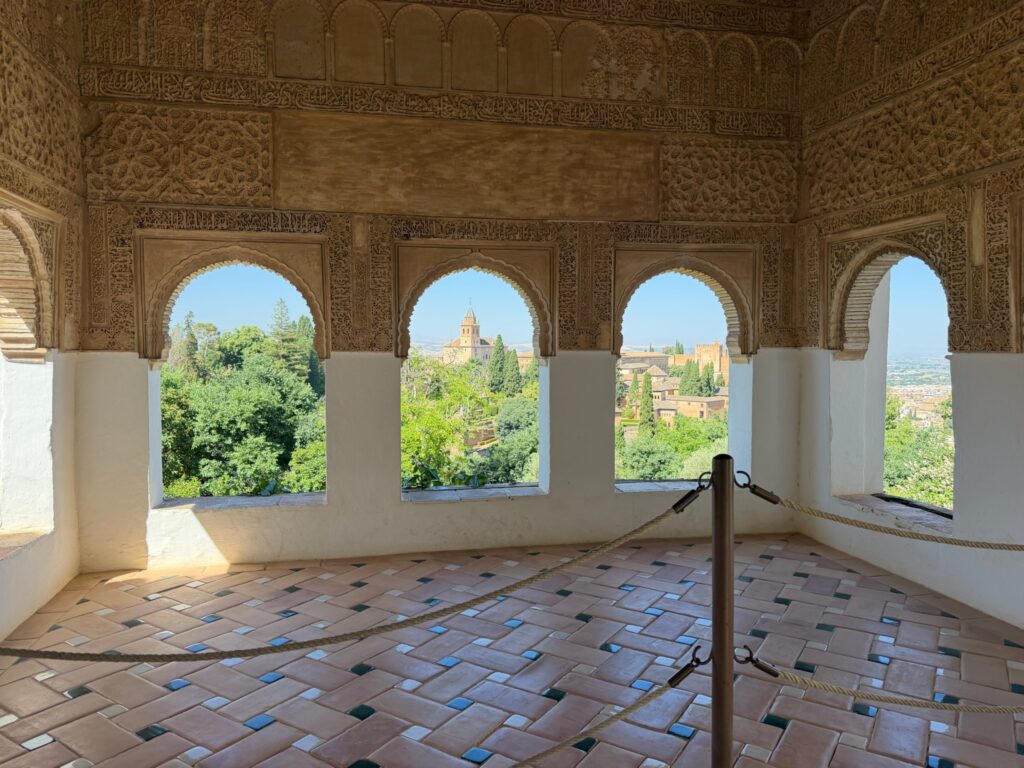
Every inch of the Nasrid Palace contains architectural detail and designThe plasterwork in the Nasrid Palace is incredible.The keyhole arch—commonly known as the horseshoe arch or Moorish arch—is a defining feature of many doorways at the Alhambra. Many of these arches frame incredible views of the surrounding area.I have no idea who this person is but her presence in the photo I think provides size perspective to this room. Her scarf is also very pretty.In the background behind us is the Alcazaba section of the Alhambra. As the oldest section of the complex, it was a heavy military fortress to protect its occupants. As such its design is pretty stark in contrast to the rest of the palaces within the Alhambra. This is the entrance to, and definitely the most ornate part of, the Alcazaba section of the Alhambra. And it happens to be a beautiful example of a moorish keyhole arch. After you pass through this arch everything becomes pretty austere.
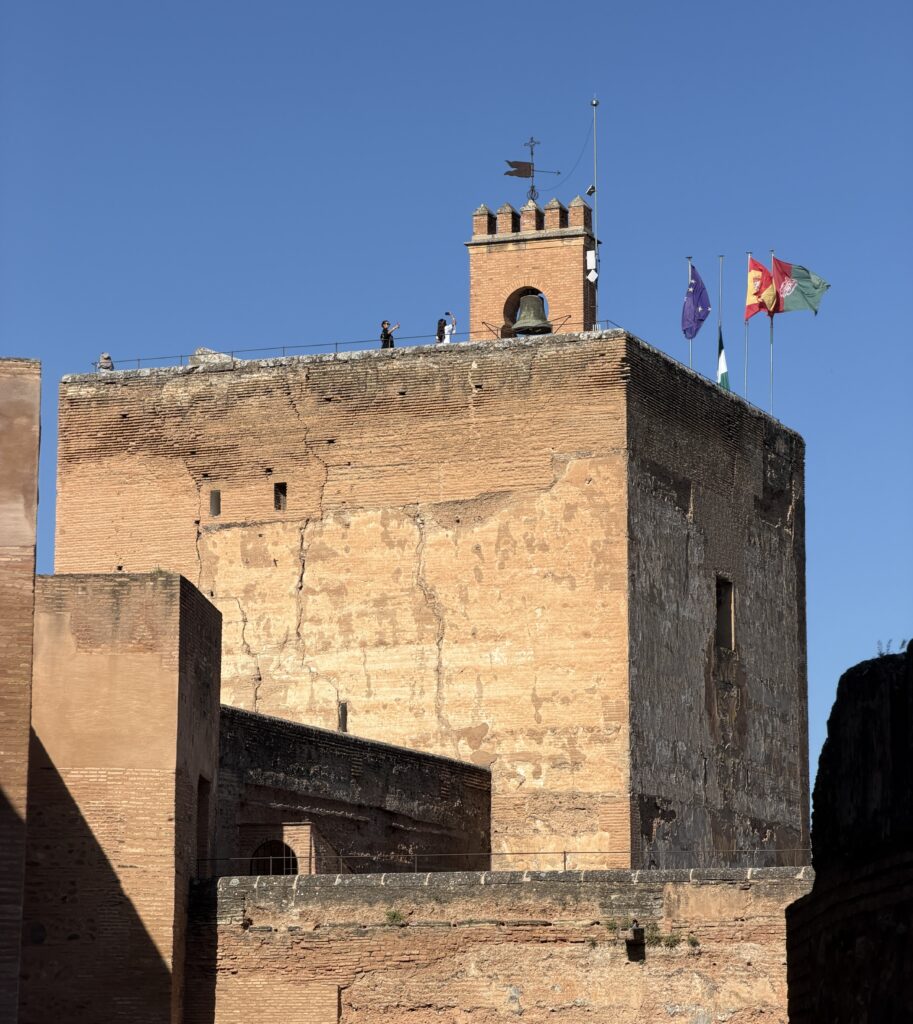
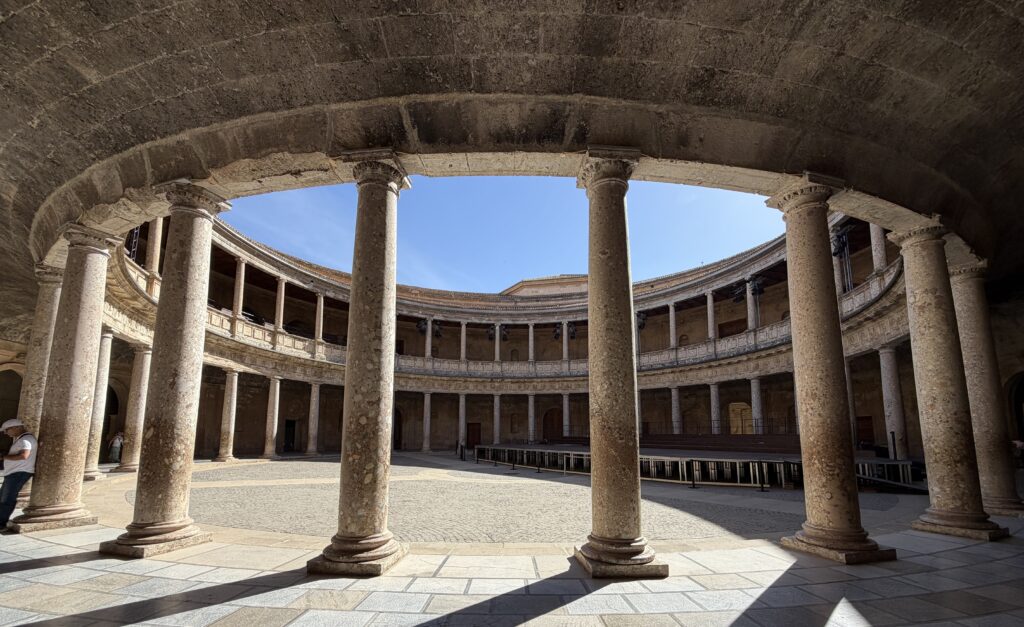
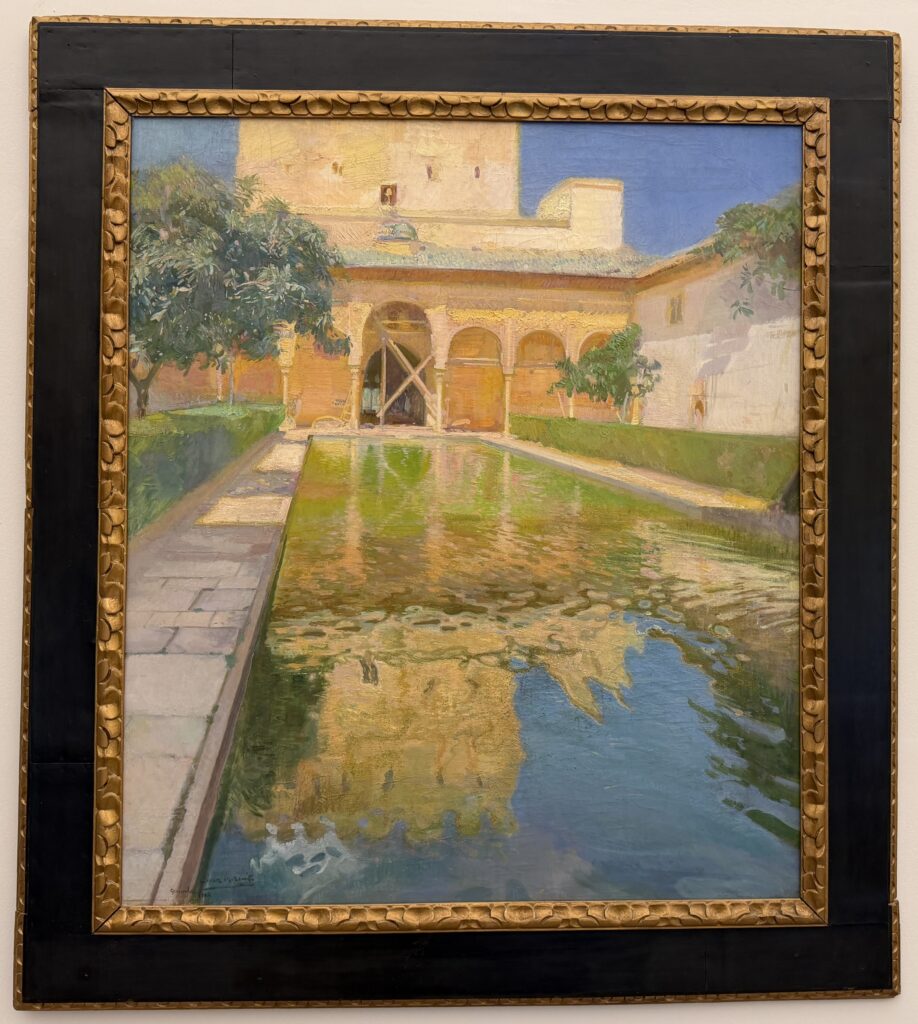
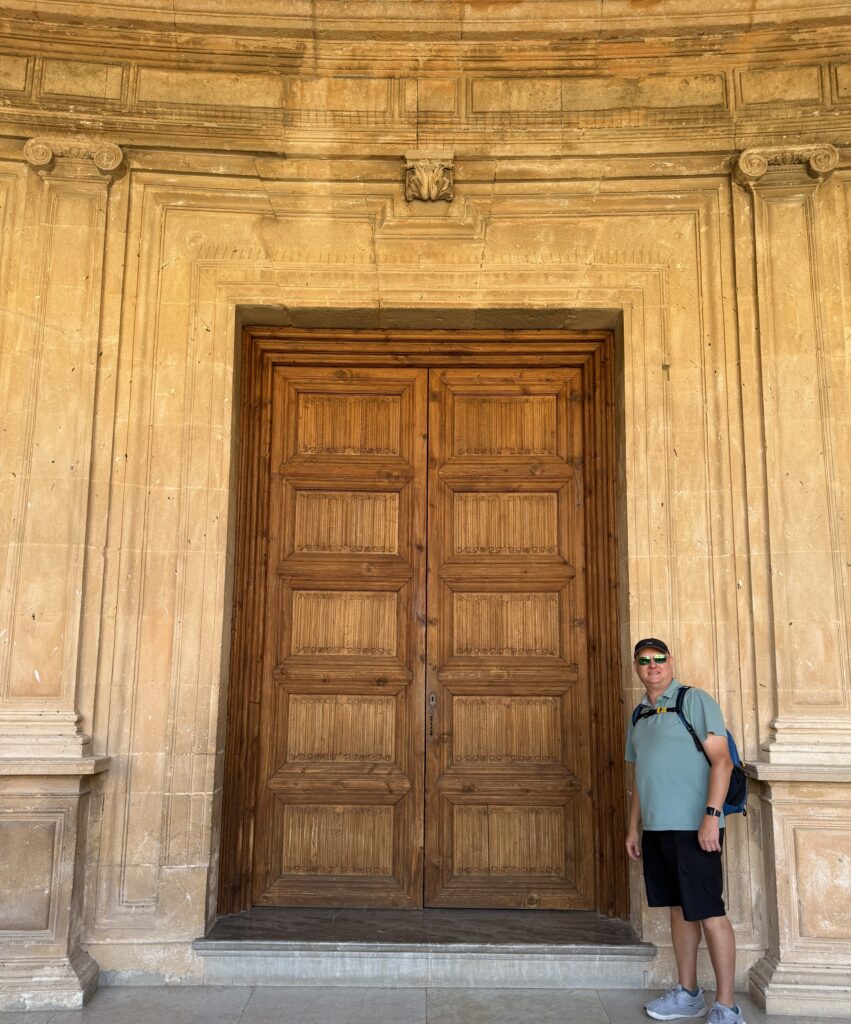
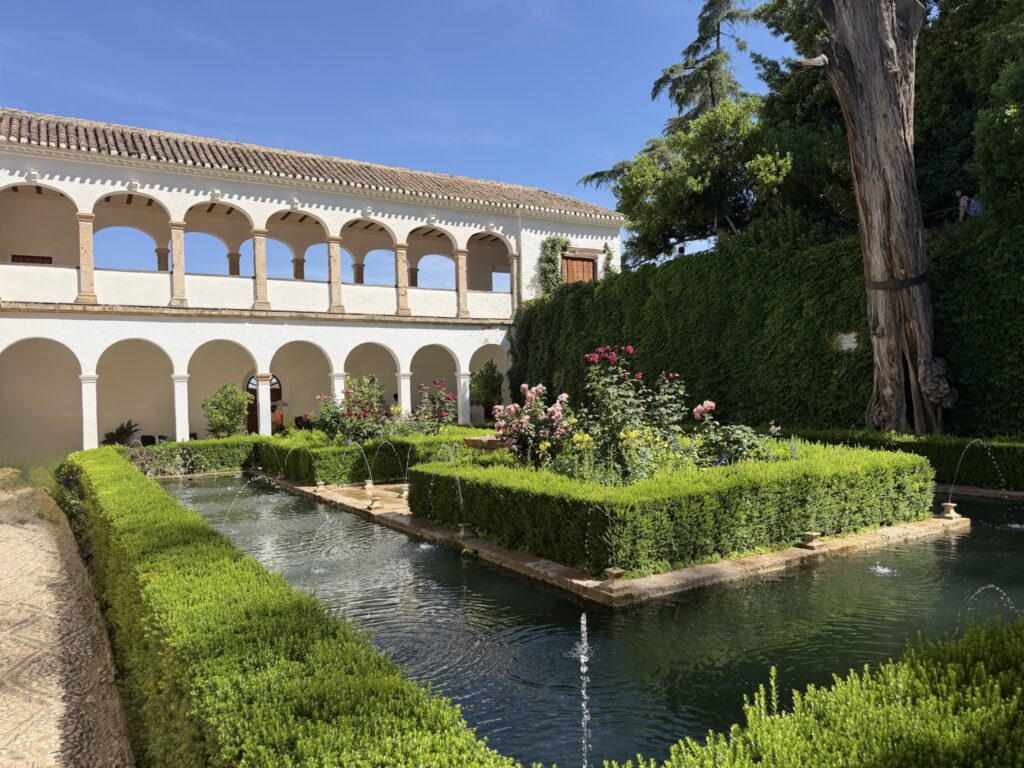
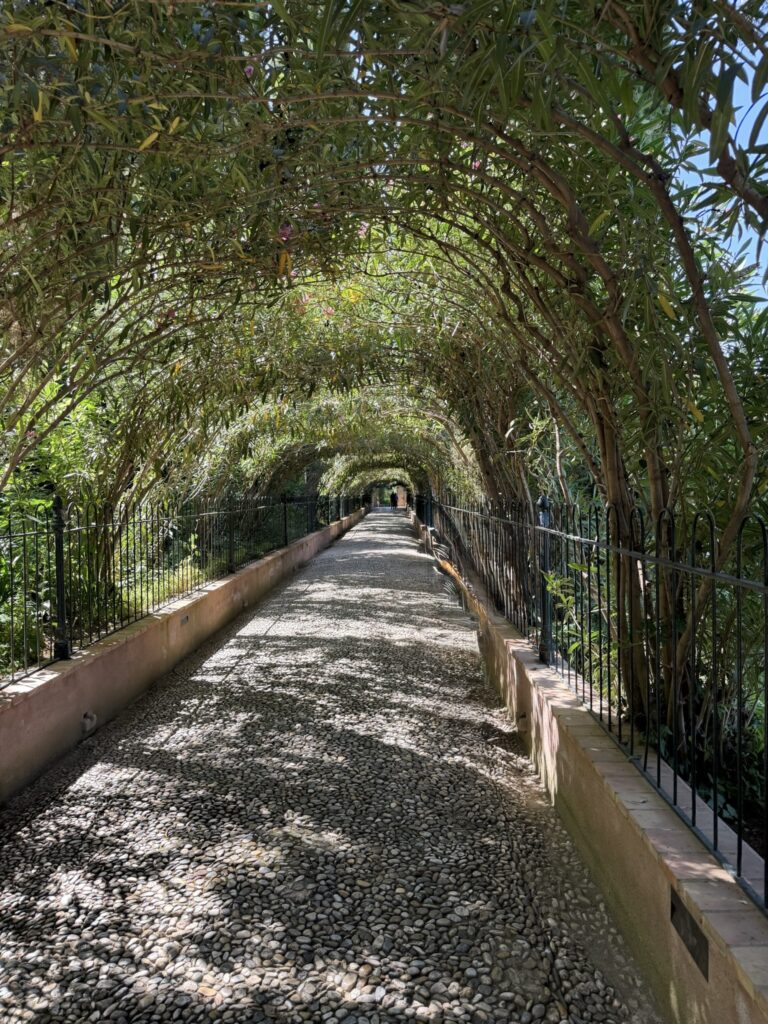
The Tower of Vela is the westernmost tower in the Alcazaba section of the Alhambra. It is a watchtower and as such has commanding views for many miles. The stairs to climb to the top are quite tall and steep.After visiting the Alcazaba section of the Alhambra, we toured the newest addition to the Alhambra, which is the Palace of Charles V. In 1526, Charles V commissioned this new Renaissance-style palace located right next to, and in direct juxtaposition with, the Nasrid Palace. It does not have any Moorish influences like the rest of the complex so it felt a little out of place architecturally speaking. The circular inner courtyard is quite large.The Palace of Charles V has an art gallery in it with many gorgeous paintings. This is one of the many very oversized doors in the palace of Charles V.The last section of the Alhambra we visited is called Generalife, which is another palace in the Alhambra, but with exceptional gardens and extra open architecture for enjoying the gardens in the shade.This is a view of just one of the many lush garden areas of the Generalife section of the Alhambra. You can see the extra open architecture in the background, allowing for covered, shaded, and breezy areas to enjoy the gardens and views.This beautiful tree tunnel is in the Generalife section of the Alhambra and is one of the last areas that you pass through on the predefined routes that everybody has to follow (due to the high number of visitors).
Feel free to leave a comment. If you leave a comment it will not show up right away. We have it set up so that we have to approve comments before they can show here (we do have to filter out spam unfortunately). We check for (and respond to) comments almost every day so you should be able to see it here soon. Unfortunately we have not yet figured out how to have the website send you an email to let you know when we have replied – so you would need to simply check back on the website for now.
6 Comments
The place looks huge! And amazing! Thanks for posting, what a fun trip through Spain.
Thanks for following 🙂
I love watching your travels. Keep up the good work on the blog.
Thanks for following 🙂
You both look like you are enjoying Spain and the iberian peninsula. I love the detail and history in your posts. Hugs and safe travels.
Hugs to you Lisa, we miss you and Andy. We hope your daughter and your new grandbaby are doing well.


The place looks huge! And amazing! Thanks for posting, what a fun trip through Spain.
Thanks for following 🙂
I love watching your travels. Keep up the good work on the blog.
Thanks for following 🙂
You both look like you are enjoying Spain and the iberian peninsula. I love the detail and history in your posts. Hugs and safe travels.
Hugs to you Lisa, we miss you and Andy. We hope your daughter and your new grandbaby are doing well.